James Baldwin (1924-1987), American poet, novelist, playwright, social critic
“Love takes off the masks that we fear we cannot live without and know we cannot live within. I use the word “love” here not merely in the personal sense but as a state of being, or a state of grace – not in the infantile American sense of being made happy but in the tough and universal sense of quest and daring and growth.” James Baldwin, The Fire Next Time
JAMES BALDWIN (1924-1987) was a novelist, essayist, playwright, poet, and social critic, and one of America’s foremost writers. His essays, such as Notes of a Native Son (1955), explore palpable yet unspoken intricacies of racial, sexual, and class distinctions in Western societies, most notably in mid-twentieth-century America. A Harlem, New York, native, he primarily made his home in the south of France.
Baldwin’s novels include Giovanni’s Room (1956), about a white American expatriate who must come to terms with his homosexuality, and Another Country (1962), about racial and gay sexual tensions among New York intellectuals. His inclusion of gay themes resulted in much savage criticism from the black community. Going to Meet the Man (1965) and Tell Me How Long the Train’s Been Gone (1968) provided powerful descriptions of American racism. As an openly gay man, he became increasingly outspoken in condemning discrimination against lesbian and gay people. Bio via James Baldwin’s Amazon page HERE.
If you are viewing this post from an email subscription, you will likely have to link through to the site to watch this video. I happened on it today, which inspired this evening post. Twenty-eight well-spent minutes.
Poet and writer, I was once columnist and associate editor of a regional employment publication. I currently run this site, The Poet by Day, an information hub for poets and writers. I am the managing editor of The BeZine published by The Bardo Group Beguines (originally The Bardo Group), a virtual arts collective I founded. I am a weekly contributor to Beguine Again, a site showcasing spiritual writers. My work is featured in a variety of publications and on sites, including: Levure littéraure, Ramingo’s Porch, Vita Brevis Literature,Compass Rose, Connotation Press, The Bar None Group, Salamander Cove, Second Light, I Am Not a Silent Poet, Meta / Phor(e) /Play, and California Woman. My poetry was recently read byNorthern California actor Richard Lingua for Poetry Woodshed, Belfast Community Radio. I was featured in a lengthy interview on the Creative Nexus Radio Show where I was dubbed “Poetry Champion.”
“What if our religion was each other. If our practice was our life. If prayer, our words. What if the temple was the Earth. If forests were our church. If holy water–the rivers, lakes, and ocean. What if meditation was our relationships. If the teacher was life. If wisdom was self-knowledge. If love was the center of our being.” Ganga White, teacher and exponent of Yoga and founder of White Lotus, a Yoga center and retreat house in Santa Barbara, CA
“Every pair of eyes facing you has probably experienced something you could not endure.” Lucille Clifton
Thank you for sharing your love of words. Comments will appear after moderation.
The Zeitgeist of Resistance—a Historical River Flowing
Justice is a historical river flowing to us, around us, and through us, toward freedom. The river’s current, like our current Zeitgeist, is one of resistance. In times of extreme injustice(s), people rise. This issue of The BeZine dedicated to Social Justice brings you some of the history and much of our Zeitgeist of resistance.
You will read about the current White House occupant, the state of race and gender relations, economic disparity, oppression, and more that disturbs us in our time. However, coming to The BeZine from unrelated directions—some invited, some offered, some come across by seeming chance—history has sent reminders to us that we are not alone. Others have lived in times of extreme injustice(s). And people rose up to defy and resist injustice, in the name of freedom. This river of historical struggle for justice can help sustain us in our resistance to the flood of today’s injustice(s).
The ongoing history of resistance certainly underlies the choices of music in a new album by New York guitarist Marc Ribot—Songs of Resistance 1942–2018. Ribot brings together songs from the Italian resistance, the Civil Right Movement, and new songs protesting Donald Trump—reminding us that movements need songs, and that fascism has been defeated in the past. Yes, also that we are in its shadow once again, and we have yet to get our race relations straightened out. In this issue, you can read more about the record, officially released Friday (September 14, 2018), and hear a cut from that album, with Tom Waits vocalizing Bella Ciao, an anthem of the Italian partisans.
While Marc Ribot chronicles this recent stream of freedom songs, Tamar Tracy Moncur’s poem in this issue sings of the problems facing the U.S. (and the world, I hasten to add), but reminds us that “America Still Sings of Freedom,” its title and chorus. Two poets, Michael C. Odiah and Joseph Hesch, sing to us about slavery. Odiah marks the continued echoes and reverberations of slavery today. Hesch touches on those, but in light of the Civil War—asking us if we don’t risk seeing the sacrifice of life during that bloody conflict negated as we witness democracy evaporating around us and a rise of white nationalism. Linda E. Chown sings about the mid-Twentieth Century fight against fascism in a poem about Isidora Dolores Ibárruri Gómez, aka “La Pasionaria,” a Spanish Republican leader of the Spanish Civil War. In another poem by Chown, the speaker returns to Spain in 1988, after Franco’s death. Chown’s third poem in this issue shows McCarthyism, the tactics of which continually float up in the flood of our time.
Word War II comes up in this historical river, also, in two essays in our Be the Peace section. A British Officer from World War I had a spiritual experience, so the story goes, that led him to propose during the Second World War that people in the U.K. take a minute of silence for prayer or meditation to help end—and win—the war, but more broadly, for a lasting peace. His effort was quite successful, gaining the support of the King of England and Prime Minister Winston Churchill. You can read about the Silent Minute’s history in John Anstie’s recounting, and about a recent movement to bring it back for the resistance in Lynne Salomon Miceli’s account of her own efforts.
These historical streams come together for our issue in what I have been calling a historical river at a time when the present overwhelms us and floods our sensibilities. How can we resist? How can we find peace and social justice while preserving the environment in the face of an administration that seems bent on shredding all of those apart like a level-5 hurricane stalled out just offshore? How can we protect children torn from their parents, denied health care, and deprived of a reasonable future (theirs being stolen from them in the present)? These questions help to define the Zeitgeist. The historical river perhaps offers some answers in its rushing water.
Slaves survived, rose up (see the history of Haiti), and while they often got beaten down, eventually others joined in a movement that abolished slavery. Yes, we have a long way to go to heal from that terrible injustice and to resolve the racist legacy of colonialist slave-holding mentality institutionalized throughout the West, but people continue to rise to the challenge and struggle toward equality and justice. Yes, Black Lives Matter!
The partisans fought the fascists, lost many battles (and the Spanish Civil War), but also won—Hitler and Mussolini fell, defeated. Stalin may have continued, Western Imperialism may have shifted into Capitalist Imperialism, its center moving from Western empires to a military-industrial complex held up by the remnants of those empires—but the tide went against the fascists. Democracy—real democracy, not “open markets”—still has a chance.
And yes, we now stand with fascism rising again, using anti-immigrant, nationalistic rhetoric throughout the world to once more inflame conflict and division. Yet, people are calling it by name, and many are saying: “No.” Despite the bleakness of the picture, people are rising up—more than ever, louder than ever, on social media, and in protests on the streets.
Most importantly, in the U.S., women and people of color are standing for election as progressives and winning elections. Incumbents who have not stood up to the current U.S. administration’s anti-democratic policies have fallen to new-comers / outsiders proudly projecting progressive values and proposing progressive policies in opposition to that administration. We don’t yet know where this will lead for the mid-terms, but the weather vanes seem to be pointed toward hope. Change can’t wait!
I hope, we at The BeZine hope, that the forces of social justice, peace, and (economic and environmental) sustainability will win and lead to freedom for all. And to get there, deb y felio reminds us that community action is the collective action of individuals. Each one of us must act, personally, for the community to function. Corina Ravenscraft opens the Be the Peace section on a similar theme, with some helpful hints for how to maintain our own peacefulness in these times.
The writers in this issue call out injustice, but they also offer us reasons to believe that we who believe in democracy and equality, who focus on humanity and our living planet, can prevail. The words we bring you with this issue come as songs along a river of resistance history, with concern for social justice, peace, and sustainability, tuned to melodies that harmonize with the song(s) of freedom.
—Michael Dickel, Contribuing Editor
Jerusalem, 14 September 2018
I’ve observed in the spiritual practice of various Indian traditions that “shanti”—the Sanskrit word for peace—is invoked three times in prayer and chant.
I learned from a friend that the first invocation is about making peace with ourselves. The thought is that we cannot make peace with and in the world without inner peace.
The second invocation is about making peace with – embracing – the human community, from our family, friends, neighbors and our smaller communities to the greater global family.
The third invocation is about making peace with nature.
Thus we have three spheres of peace action: personal, social, and the natural world.
For the personal, Corina Ravenscraft offers suggestions for balance, Miki Byrne gives insight into mental anguish, and Changming Yuan’s brilliant metaphysical gift to us presents the complex interplay of elements in the search for self and truth. Kerry Darbishire and Miki Byrne call our attention to forgiveness, letting go, and accepting the gift of love. Tricia Knoll and Joseph Hesch suggest healing, the former through love and the latter through art.
The Venerable Bhikkhu Bodhi and Paul Fullmer beautifully and wisely address our pathway to peace in the context of the social sphere. John Anstie and Lynne Salomon Miceli propose shared silent moment as a means to unify in a profound way, especially with the Silent Minute, borrowed from WWII England.
Our connection to nature is featured in Wabi Sabi, and in Anne Myers’ The Other World.
Yes to Blue
The work on this issue has been thoroughly enjoyable and made the more so by Michael Dickel’s genius, commitment, and hard work. This issue would not be half as good without him. His dedication each year to taking the lead on the September issue and on our virtual 100,000 Poets for Change on the fourth Saturday of September is the more remarkable because these always coincide with Jewish holy days, a busy time for him.
For my part, our editorial collaborations are fun and a delightful change of pace from the solitary endeavors of writing and poetry. I am in California and Michael is in Israel, so the back-and-forth of things is probably not as fluid and detailed as it might be under other circumstances, but there is an editorial flow, a sorting, strategizing, tossing, absorbing, updating, and always struggling with tech challenges (I struggle, Michael saves). Jim Haba‘s poem, Yes to Blue, rather captures the feel of it all…
Yes to blue after trying to separate green from yellow and hoping that everything will get simpler each time you bring an idea closer to the light which is always changing always being born day after day again and again now
So now, with love and gratitude for our indefatigable Michael Dickel, for all our wise contributors, our readers, and our dedicated core team, The Bardo Group Bequines…
In the spirit of peace, love (respect), and community, and
on behalf of The Bardo Group Bequines,
Here’s a sample from our next issue of “The BeZine,” which will post on the 15th. It’s the kind of quality and pleasure you can count on from our writers, poets, photographers and others. / J.D.
Are you familiar with The Little Match Girl by Hans Christian Anderson? It’s a tragic tale about a child trapped in a world of poverty and abuse, hunger and homelessness…
On New Year’s Eve, someone steals her ill-fitting shoes, so the little girl wanders barefoot through the snow, trying to sell matches to uncaring people hurrying home to warm houses and holiday feasts. No one has a farthing or even a second glance for the unfortunate waif. If she goes home having sold no matches, her father will beat her. To keep the cold at bay, she huddles against a wall and strikes her matches, one at a time. In each tiny flame she sees visions: a warm stove, an elegant feast, a Christmas tree lit by candles…
Then her dead grandmother, the only person who ever treated her with kindness, appears to the shivering child, and carries her soul off to Heaven. The next morning, the strangers who walked past her the night before discover the little match girl’s icy corpse, clutching the burnt-out matches in her frozen fingers. Too late they feel a twinge of pity. The end.
As a child, I hated that story. I was appalled that grownups could look away from a child’s suffering, without lifting a finger to help. Why would anyone invent such a depressing story, and who would want to hear it?
As an adult, I still hate that story, and even more now, because I realize that when Anderson wrote The Little Match Girl in 1845, except for the bit about the grandmother, he was fictionalizing a deplorable reality he himself was witnessing. He wrote during the Industrial Revolution, when the poor were miserable and overcrowded. Pollution from the unregulated burning of coal poisoned the air, and factories were dumping metals, chemicals, raw sewage, and other toxins into the lakes and rivers that people depended upon for drinking water.
Wages were so low that the working class toiled 12 to 16 hours a day, yet still couldn’t earn a living wage. On the brink of starvation, they sent their children to work in factories and mines. Many were separated from their families, left to the ‘mercy’ of strangers, working ungodly hours for only a place to sleep and the food they ate.
In 1832 it was reported, “…workers are abandoned from the moment an accident occurs; their wages are stopped, no medical attendance is provided, and whatever the extent of the injury, no compensation is afforded.”
The wealthy were given free reign to exploit the poor. When the Industrial Revolution sparked disputes over inhumane working conditions, the government introduced measures to prevent labor from organizing. The rich got richer, the poor remained poor, and children, who were forced to work all day or starve, couldn’t get an education to help them rise from poverty.
In the USA, industrialization occurred mostly in the North, with an influx of immigrants serving as factory fodder to keep up with attrition and demand. The South had its own foul history of systemic oppression, with its agrarian economy dependent upon human slavery.
Over time, Americans have fought and died for the cause of social justice. They organized labor unions, which brought an end to child labor, shortened the work week, and ushered in workman’s compensation for on-the-job-injuries. They are still trying to negotiate a living wage. Public education, Social Security, Medicare, Affordable Healthcare have all helped to even the playing field and a provide a social safety net. Civil rights, women’s suffrage, Affirmative Action, environmental protection have, too.
We still had a long way to go to overcome class, gender, religious, and racial discrimination, such as the legacy of Jim Crow that still exists. Yet we saw the middle class grow, the standard of living rise, and each generation doing better than the preceding one, until the 1970s. What in Hell happened? Ronald Reagan, and his trickle down economics, for starters. It has been a downhill slide since then, snowballing since the Trump administration took power.
Today there is a little match girl on every street corner. Our democratic republic has degenerated into an oligarchy, bought and run by big business, with puppet strings being yanked all the way from Russia. International treaties have been broken, environmental protections scrapped to increase company profit, families torn apart by inhumane ICE policies, cruelly punishing the innocent children of undocumented immigrants. Affordable Healthcare, Social Security and Medicare are in the administration’s crosshairs. The three richest men in America own more than half of this country’s wealth. Our society has regressed two hundred years to become a near perfect match for the one that inspired Hans Christian Anderson to write The Little Match Girl. A match made in Hell.
I will always hate that story. But we need to keep telling it, until we can pound out a new ending. We need to keep telling it, until we never need to tell it again.
NAOMI BALTUCK (Writing Between the Lines)~ is a Contributing Editor and Resident Storyteller at The BeZine. She is a world-traveler and an award-winning writer, photographer, and story-teller whose works of fiction and nonfiction are available through Amazon HERE.
Naomi conducts workshops such as Peace Porridge (multicultural stories to promote cooperation, goodwill, and peaceful coexistence), Whispers in the Graveyard (a spellbinding array of haunting and mysterious stories), Tandem Tales, Traveling Light Around the World, and others. For more on her programs visit Naomi Baltuck.com.
Naomi says, “When not actually writing, I am researching the world with my long-suffering husband and our two kids, or outside editing my garden. My novel, The Keeper of the Crystal Spring (Viking Penguin), can be read in English, German, Spanish, and Italian. My storytelling anthology, Apples From Heaven, garnered four national awards, including the Anne Izard Storytellers’ Choice. I am currently working on a contemporary women’s novel.”
Poet and writer, I was once columnist and associate editor of a regional employment publication. Currently I run this site, The Poet by Day, an information hub for poets and writers. I am the managing editor of The BeZine published by The Bardo Group Beguines (originally The Bardo Group), a virtual arts collective I founded. I am a weekly contributor to Beguine Again, a site showcasing spiritual writers.
My work is featured in a variety of publications and on sites, including: Levure littéraure, Ramingo’s Porch, Vita Brevis Literature,Compass Rose, Connotation Press, The Bar None Group, Salamander Cove, Second Light, I Am Not a Silent Poet, Meta / Phor(e) /Play, and California Woman.
Thank you for sharing your love of words. Comments will appear after moderation.
“When human beings are scared and feel everything is exposed to the government, we will censor ourselves from free thinking. That’s dangerous for human development.” Ai Weiwei (b. 1957, China)
PEN American announced this weekend that artist Ai Weiwei (Ai Weiwei’s blog,Writings, Interviews, and Digital Rants, 2006-2009) will receive the Artistic Expression Award at the organization’s 2018 LitFest Gala in Los Angeles. Ai is renowned for making bold aesthetic statements that expose fault lines, unmask hypocrisies, and unleash empathy on a global scale. This honor comes in the wake of the razing of Ai Weiwei’s Beijing studio, including the destruction of several artworks, purportedly to make way for gentrification.
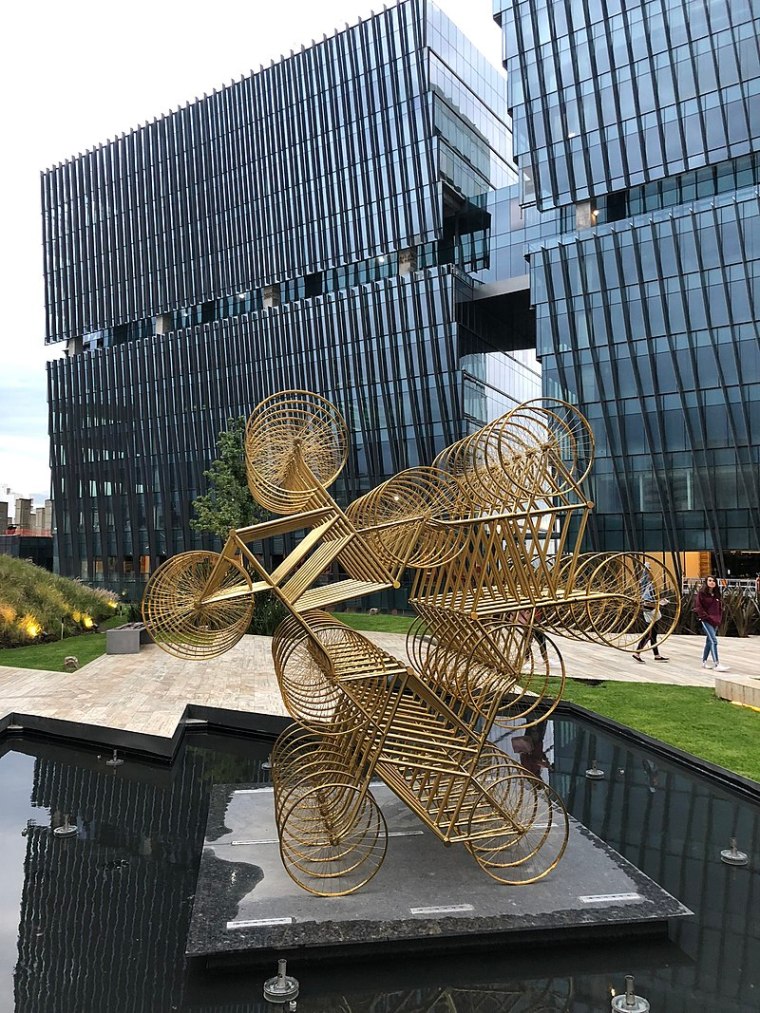
Ai Weiwei – Forever, 2018, Artz Pedregal, Mexico City courtesy of Keizers under CC BY-SA 4.0
“Ai Weiwei’s inventive, iconic, and utterly original lens on contemporary life both within and outside China have bridged the worlds of art and activism, awakening millions to the plight of refugees, government corruption, and human suffering. His dramatic, insistent, and impossible-to-forget films, artworks, and installations have jolted the art world, inspired millions, and stoked fear in the minds of governments alert to the power of creativity to spark social change,” said PEN America CEO Suzanne Nossel.
“Ai Weiwei has, for decades, endured the personal price of harassment, intimidation, and constraints on his freedom in his determination to speak out and be a voice for those who cannot. Coming without warning, the demolition of his studio last weekend was a vivid reminder of the arbitrary and unpredictable exercise of power that Ai’s work has consistently exposed and contested. PEN America has been proud to stand with Ai Weiwei in his courageous posture of artistic defiance, and is honored to present him with our Artistic Expression Award this year.”
From architecture to installations, social media to documentaries, Ai Weiwei uses a wide range of mediums as expressions of new ways for his audiences to examine society and its values.
Recent exhibitions include: Good Fences Make Good Neighbors with the Public Art Fund in New York City; Ai Weiwei on Porcelain at the Sakip Sabanci Museum in Istanbul; Maybe, Maybe Not at the Israel Museum in Jerusalem; and Ai Weiwei. Libero at Palazzo Strozzi in Florence. In the fall of 2018, Ai Weiwei will open three major exhibitions in Los Angeles.
Ai currently resides and works in Berlin. He is the current Einstein Visiting Professor at the Berlin University of the Arts (UdK) and the 2012 Václav Havel Prize for Creative Dissent from the Human Rights Foundation. Ai’s first feature-length documentary, Human Flow, premiered at the 74th Venice Film Festival in competition.
***
PEN America stands at the intersection of literature and human rights to protect open expression in the United States and worldwide. It champions the freedom to write, recognizing the power of the word to transform the world. Its mission is to unite writers and their allies to celebrate creative expression and defend the liberties that make it possible.
Poet and writer, I was once columnist and associate editor of a regional employment publication. I currently run this site, The Poet by Day, an information hub for poets and writers. I am the managing editor of The BeZine published by The Bardo Group Beguines (originally The Bardo Group), a virtual arts collective I founded. I am a weekly contributor to Beguine Again, a site showcasing spiritual writers. My work is featured in a variety of publications and on sites, including: Levure littéraure, Ramingo’s Porch, Vita Brevis Literature,Compass Rose, Connotation Press, The Bar None Group, Salamander Cove, Second Light, I Am Not a Silent Poet, Meta / Phor(e) /Play, and California Woman. My poetry was recently read byNorthern California actor Richard Lingua for Poetry Woodshed, Belfast Community Radio. I was featured in a lengthy interview on the Creative Nexus Radio Show where I was dubbed “Poetry Champion.”
Thank you for sharing your love of words. Comments will appear after moderation.
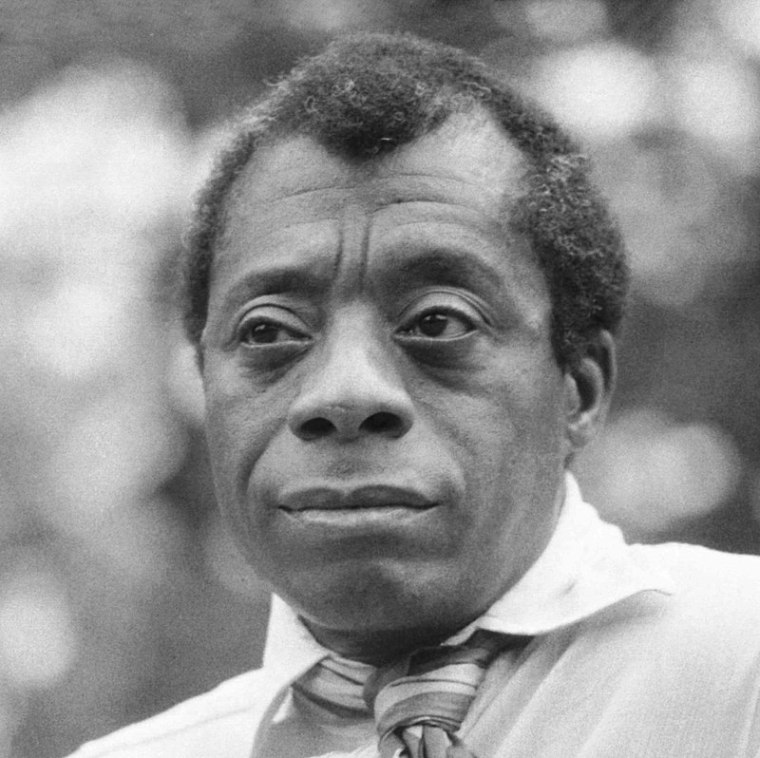
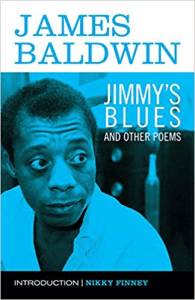 JAMES BALDWIN (1924-1987) was a novelist, essayist, playwright, poet, and social critic, and one of America’s foremost writers. His essays, such as Notes of a Native Son (1955), explore palpable yet unspoken intricacies of racial, sexual, and class distinctions in Western societies, most notably in mid-twentieth-century America. A Harlem, New York, native, he primarily made his home in the south of France.




 Jamie Dedes' THE POET BY DAY Webzine