“Who wants to become a writer? And why? Because it’s the answer to everything … It’s the streaming reason for living. To note, to pin down, to build up, to create, to be astonished at nothing, to cherish the oddities, to let nothing go down the drain, to make something, to make a gret flower out of life, even if it’s cactus.” British Author and Playwright, Enid Bagnold (1998-1981), best known for Natonal Velvet (1935)
It was a tough. TOUGH! If I could I would nominate everyone who has contributed, but there were constraints on the types of submissions, dates of publication, and number of nominations editors can submit. So, here we are … The BeZine Best of Net nominations for June 2017 – July 2018.
We are leaving 100TPC Virtual up through end-of-day October 6th so that those who weren’t able to share their work – or even fave pieces on theme (Peace, Sustainability, Social Justice) by other authors – still have time to do so. Instructions in the post explain how to share your poems or other art … check it out …
Poet and writer, I was once columnist and associate editor of a regional employment publication. I currently run this site, The Poet by Day, an information hub for poets and writers. I am the managing editor of The BeZine published by The Bardo Group Beguines (originally The Bardo Group), a virtual arts collective I founded. I am a weekly contributor to Beguine Again, a site showcasing spiritual writers. My work is featured in a variety of publications and on sites, including: Levure littéraure, Ramingo’s Porch, Vita Brevis Literature,Compass Rose, Connotation Press, The Bar None Group, Salamander Cove, Second Light, I Am Not a Silent Poet, Meta / Phor(e) /Play, and California Woman. My poetry was recently read byNorthern California actor Richard Lingua for Poetry Woodshed, Belfast Community Radio. I was featured in a lengthy interview on the Creative Nexus Radio Show where I was dubbed “Poetry Champion.”
Thank you for sharing your love of words. Comments will appear after moderation.
“Poetry. It’s better than war!” Michael Rothenberg, cofounder of 100,000 Poets (and friends) for Change
The slide show below displays some of the posters for 100TPC events happening in different parts of the world. To find something in your area check 100tpc.org or Michael Rothenberg’s 100,000 Poets for Change Communication Hub. I’ve also been trying to track the events and post links to them on The Poet by Day Facebook Page. The Zine is an online event, so you can go to an event in your area and still participate inThe BeZine‘s virtual 100TPC on Saturday, September 29th.
Over 2,000 groups and individuals have signed-up to read poems to children (part of 100TPC Global 2018) from September 24-29.
If you are reading this post from an email subscription, you’ll likely have to click through to this site to view the slide show.
This slideshow requires JavaScript.
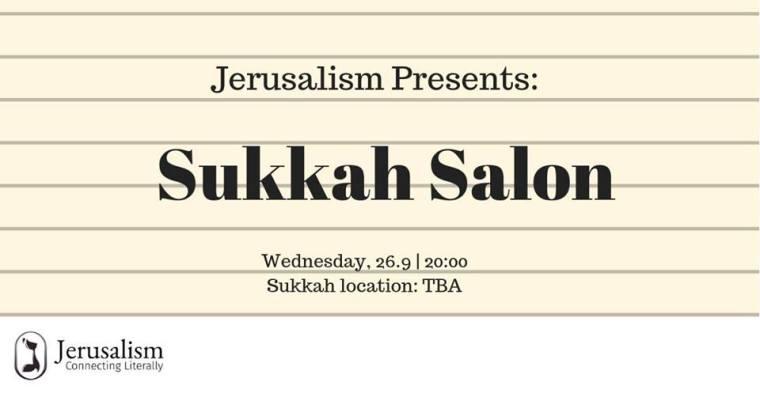
HEADS-UP ISRAEL …
SEP
26
Sukkah Salon
Public · Hosted by Jerusalism.
This 100TPC event is hosted by our own Michael Dickel (Meta/ Phor(3) /Play) and his friends.
Our poster for 100TPC 2018. It was designed by Corina Ravenscraft (Dragon’s Dreams)
Michael Dickel is also the Master of Ceremonies for The BeZine Virtual 100TPC event, Sept 29. Join with us on Saturday and support this great global effort, read some fine work, share your poetry and other art, and meet poets and other artists who share your values and concerns.
By focusing on efforts across the country to remove or restrict access to books, Banned Books Week draws national attention to the harms of censorship. The books featured during Banned Books Week have all been targeted with removal or restrictions in libraries and schools. While books have been and continue to be banned, part of the Banned Books Week celebration is the fact that, in a majority of cases, the books have remained available. This happens only thanks to the efforts of librarians, teachers, students, and community members who stand up and speak out for the freedom to read. Banned Books Week is an annual event celebrating the freedom to read. Typically held during the last week of September, it highlights the value of free and open access to information. Banned Books Week brings together the entire book community – librarians, booksellers, publishers, journalists, teachers, and readers of all types – in shared support of the freedom to seek and to express ideas, even those some consider unorthodox or unpopular.
About Book Bans and Challenges
Books are still being banned and challenged today. A challenge is an attempt to remove or restrict materials, based upon the objections of a person or group. A banning is the removal of those materials.
While books have been and continue to be banned, part of the Banned Books Week celebration is the fact that, in a majority of cases, the books have remained available. This happens only thanks to the efforts of librarians, teachers, students, and community members who stand up and speak out for the freedom to read.
Poet and writer, I was once columnist and associate editor of a regional employment publication. Currently I run this site, The Poet by Day, an information hub for poets and writers. I am the managing editor of The BeZine published by The Bardo Group Beguines (originally The Bardo Group), a virtual arts collective I founded. I am a weekly contributor to Beguine Again, a site showcasing spiritual writers.
My work is featured in a variety of publications and on sites, including: Levure littéraure, Ramingo’s Porch, Vita Brevis Literature,Compass Rose, Connotation Press, The Bar None Group, Salamander Cove, Second Light, I Am Not a Silent Poet, Meta / Phor(e) /Play, and California Woman.
Thank you for sharing your love of words. Comments will appear after moderation.
The Zeitgeist of Resistance—a Historical River Flowing
Justice is a historical river flowing to us, around us, and through us, toward freedom. The river’s current, like our current Zeitgeist, is one of resistance. In times of extreme injustice(s), people rise. This issue of The BeZine dedicated to Social Justice brings you some of the history and much of our Zeitgeist of resistance.
You will read about the current White House occupant, the state of race and gender relations, economic disparity, oppression, and more that disturbs us in our time. However, coming to The BeZine from unrelated directions—some invited, some offered, some come across by seeming chance—history has sent reminders to us that we are not alone. Others have lived in times of extreme injustice(s). And people rose up to defy and resist injustice, in the name of freedom. This river of historical struggle for justice can help sustain us in our resistance to the flood of today’s injustice(s).
The ongoing history of resistance certainly underlies the choices of music in a new album by New York guitarist Marc Ribot—Songs of Resistance 1942–2018. Ribot brings together songs from the Italian resistance, the Civil Right Movement, and new songs protesting Donald Trump—reminding us that movements need songs, and that fascism has been defeated in the past. Yes, also that we are in its shadow once again, and we have yet to get our race relations straightened out. In this issue, you can read more about the record, officially released Friday (September 14, 2018), and hear a cut from that album, with Tom Waits vocalizing Bella Ciao, an anthem of the Italian partisans.
While Marc Ribot chronicles this recent stream of freedom songs, Tamar Tracy Moncur’s poem in this issue sings of the problems facing the U.S. (and the world, I hasten to add), but reminds us that “America Still Sings of Freedom,” its title and chorus. Two poets, Michael C. Odiah and Joseph Hesch, sing to us about slavery. Odiah marks the continued echoes and reverberations of slavery today. Hesch touches on those, but in light of the Civil War—asking us if we don’t risk seeing the sacrifice of life during that bloody conflict negated as we witness democracy evaporating around us and a rise of white nationalism. Linda E. Chown sings about the mid-Twentieth Century fight against fascism in a poem about Isidora Dolores Ibárruri Gómez, aka “La Pasionaria,” a Spanish Republican leader of the Spanish Civil War. In another poem by Chown, the speaker returns to Spain in 1988, after Franco’s death. Chown’s third poem in this issue shows McCarthyism, the tactics of which continually float up in the flood of our time.
Word War II comes up in this historical river, also, in two essays in our Be the Peace section. A British Officer from World War I had a spiritual experience, so the story goes, that led him to propose during the Second World War that people in the U.K. take a minute of silence for prayer or meditation to help end—and win—the war, but more broadly, for a lasting peace. His effort was quite successful, gaining the support of the King of England and Prime Minister Winston Churchill. You can read about the Silent Minute’s history in John Anstie’s recounting, and about a recent movement to bring it back for the resistance in Lynne Salomon Miceli’s account of her own efforts.
These historical streams come together for our issue in what I have been calling a historical river at a time when the present overwhelms us and floods our sensibilities. How can we resist? How can we find peace and social justice while preserving the environment in the face of an administration that seems bent on shredding all of those apart like a level-5 hurricane stalled out just offshore? How can we protect children torn from their parents, denied health care, and deprived of a reasonable future (theirs being stolen from them in the present)? These questions help to define the Zeitgeist. The historical river perhaps offers some answers in its rushing water.
Slaves survived, rose up (see the history of Haiti), and while they often got beaten down, eventually others joined in a movement that abolished slavery. Yes, we have a long way to go to heal from that terrible injustice and to resolve the racist legacy of colonialist slave-holding mentality institutionalized throughout the West, but people continue to rise to the challenge and struggle toward equality and justice. Yes, Black Lives Matter!
The partisans fought the fascists, lost many battles (and the Spanish Civil War), but also won—Hitler and Mussolini fell, defeated. Stalin may have continued, Western Imperialism may have shifted into Capitalist Imperialism, its center moving from Western empires to a military-industrial complex held up by the remnants of those empires—but the tide went against the fascists. Democracy—real democracy, not “open markets”—still has a chance.
And yes, we now stand with fascism rising again, using anti-immigrant, nationalistic rhetoric throughout the world to once more inflame conflict and division. Yet, people are calling it by name, and many are saying: “No.” Despite the bleakness of the picture, people are rising up—more than ever, louder than ever, on social media, and in protests on the streets.
Most importantly, in the U.S., women and people of color are standing for election as progressives and winning elections. Incumbents who have not stood up to the current U.S. administration’s anti-democratic policies have fallen to new-comers / outsiders proudly projecting progressive values and proposing progressive policies in opposition to that administration. We don’t yet know where this will lead for the mid-terms, but the weather vanes seem to be pointed toward hope. Change can’t wait!
I hope, we at The BeZine hope, that the forces of social justice, peace, and (economic and environmental) sustainability will win and lead to freedom for all. And to get there, deb y felio reminds us that community action is the collective action of individuals. Each one of us must act, personally, for the community to function. Corina Ravenscraft opens the Be the Peace section on a similar theme, with some helpful hints for how to maintain our own peacefulness in these times.
The writers in this issue call out injustice, but they also offer us reasons to believe that we who believe in democracy and equality, who focus on humanity and our living planet, can prevail. The words we bring you with this issue come as songs along a river of resistance history, with concern for social justice, peace, and sustainability, tuned to melodies that harmonize with the song(s) of freedom.
—Michael Dickel, Contribuing Editor
Jerusalem, 14 September 2018
I’ve observed in the spiritual practice of various Indian traditions that “shanti”—the Sanskrit word for peace—is invoked three times in prayer and chant.
I learned from a friend that the first invocation is about making peace with ourselves. The thought is that we cannot make peace with and in the world without inner peace.
The second invocation is about making peace with – embracing – the human community, from our family, friends, neighbors and our smaller communities to the greater global family.
The third invocation is about making peace with nature.
Thus we have three spheres of peace action: personal, social, and the natural world.
For the personal, Corina Ravenscraft offers suggestions for balance, Miki Byrne gives insight into mental anguish, and Changming Yuan’s brilliant metaphysical gift to us presents the complex interplay of elements in the search for self and truth. Kerry Darbishire and Miki Byrne call our attention to forgiveness, letting go, and accepting the gift of love. Tricia Knoll and Joseph Hesch suggest healing, the former through love and the latter through art.
The Venerable Bhikkhu Bodhi and Paul Fullmer beautifully and wisely address our pathway to peace in the context of the social sphere. John Anstie and Lynne Salomon Miceli propose shared silent moment as a means to unify in a profound way, especially with the Silent Minute, borrowed from WWII England.
Our connection to nature is featured in Wabi Sabi, and in Anne Myers’ The Other World.
Yes to Blue
The work on this issue has been thoroughly enjoyable and made the more so by Michael Dickel’s genius, commitment, and hard work. This issue would not be half as good without him. His dedication each year to taking the lead on the September issue and on our virtual 100,000 Poets for Change on the fourth Saturday of September is the more remarkable because these always coincide with Jewish holy days, a busy time for him.
For my part, our editorial collaborations are fun and a delightful change of pace from the solitary endeavors of writing and poetry. I am in California and Michael is in Israel, so the back-and-forth of things is probably not as fluid and detailed as it might be under other circumstances, but there is an editorial flow, a sorting, strategizing, tossing, absorbing, updating, and always struggling with tech challenges (I struggle, Michael saves). Jim Haba‘s poem, Yes to Blue, rather captures the feel of it all…
Yes to blue after trying to separate green from yellow and hoping that everything will get simpler each time you bring an idea closer to the light which is always changing always being born day after day again and again now
So now, with love and gratitude for our indefatigable Michael Dickel, for all our wise contributors, our readers, and our dedicated core team, The Bardo Group Bequines…
In the spirit of peace, love (respect), and community, and
on behalf of The Bardo Group Bequines,
Behind the scenes people all over the world – including those of us at The BeZine – are getting ready to promote poetry and other arts as game changers. Words can have legs after all and 100,000 Poets (and friends) for Change (100TPC) puts “act” into activism and community involvement. Under the direction of Cofounders Michael Rothenberg and Terri Carrion, the focus for 2018 Global is on reading poetry to children. From all over the world 2,000 individuals and groups have committed to participate in this initiative from March 24 – 29.
Will you read a poem to a child on September 29 as part of the 100 Thousand Poets for Change Global initiative “Read A Poem To A Child?”
This seems to be an important year to highlight the significance of children in the world. We are increasingly aware of their fragility.It is time to take a moment in this busy, crazy life we live, and share something we cherish.
“My Aunt Yvonne and Uncle Larry gave me The Golden Book of Poetry, which was published in 1947. I kept it for years. Sometimes my aunt would read it to me. Absolute delight! (I can still hear her voice.) As I grew older I became aware that famous writers wrote the poems: Robert Louis Stevenson, Walter de la Mare and others. The poems were playful, relevant and stayed with me. There was one by Walter de la Mare, The Cupboard, in which a fat little grandmother rations out Banbury Cakes and lollipops.
“Of course my own small plump grandmother – called Sidto by us – wouldn’t have known Banbury Cake. Our “cake” would be baklava and our “lollipops” would be semsemiyeh (sesame candy) but, like the grandma in the poem, my grandmother was indeed the keeper of the cupboard and she was in charge of dishing up sweet and savory. So the poem was a joy and my first hint that poetry crosses borders.”
At the Zine, we’ll celebrate 100TPC with a focus on Social Justice for our upcoming issue, September 15. Michael Dickel (Meta/ Phor(e) /Play) is heading our peaceful charge for that edition and also for our virtual 100TPC event on Saturday, September 29. This has become a tradition at the Zine and Michael is skilled in handling both these responsibilities. We hope you’ll join us on the 15th for the September issue of the Zine and for 100TPC on the 29th to help us support this global effort and its ideals.
– Jamie Dedes, Managing and Founding Editor, The BeZine
Thank you for sharing your love of words. Comments will appear after moderation.
We are leaving 100TPC Virtual up through end-of-day October 6th so that those who weren’t able to share their work – or even fave pieces on theme (Peace, Sustainability, Social Justice) by other authors – still have time to do so. Instructions in the post explain how to share your poems or other art … check it out …





 Jamie Dedes' THE POET BY DAY Webzine