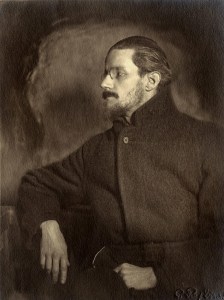
“The life of an artist … differs from the lives of other persons in that its events are becoming artistic sources even as they command his present attention. Instead of allowing each day, pushed back by the next, to lapse into imprecise memory, he shapes again the experiences, which have shaped him. He is at once the captive and the liberator.” Richard Ellmann in James Joyce(Recommended)
American literary critic Richard Ellmann (1918-1987) was also an excellent biographer and wrote about Joyce, Wilde and Yeats. As far as I know, all three books are still in publication.
Joyce photo is in the public domain.
Thank you for sharing your love of words. Comments will appear after moderation.
“You can say anything you want, yes sir, but it’s the words that sing, they soar and they descend ….. I bow to them . . . I cling to them, I run them down, I bite into them . . I love words so much … The ones I wait for greedily … they glitter like colored stones, they leap like silver fish… They are foam, thread, metal, dew … I stalk certain words… They are so beautiful that I want to fit them all into my poem… I catch them in mid-flight, as they buzz past, I trap them, clean them, peel them, I set myself in front of the dish, they have a crystalline texture to me, vibrant, ivory, vegetable, oily, like fruit, like algae, like agates, like olives… And I stir them, I shake them, I drink them, I gulp them down, I mash them, I garnish them …. I leave them in my poem like stalactites, like slivers of polished wood, like coals, like pickings from a shipwreck, gifts from the waves … Everything exists in the word.” Pablo Neruda in his Memoirs
Photo credit ~ U.S. Public Domain, 1966, Neruda recording his poetry
Thank you for sharing your love of words. Comments will appear after moderation.
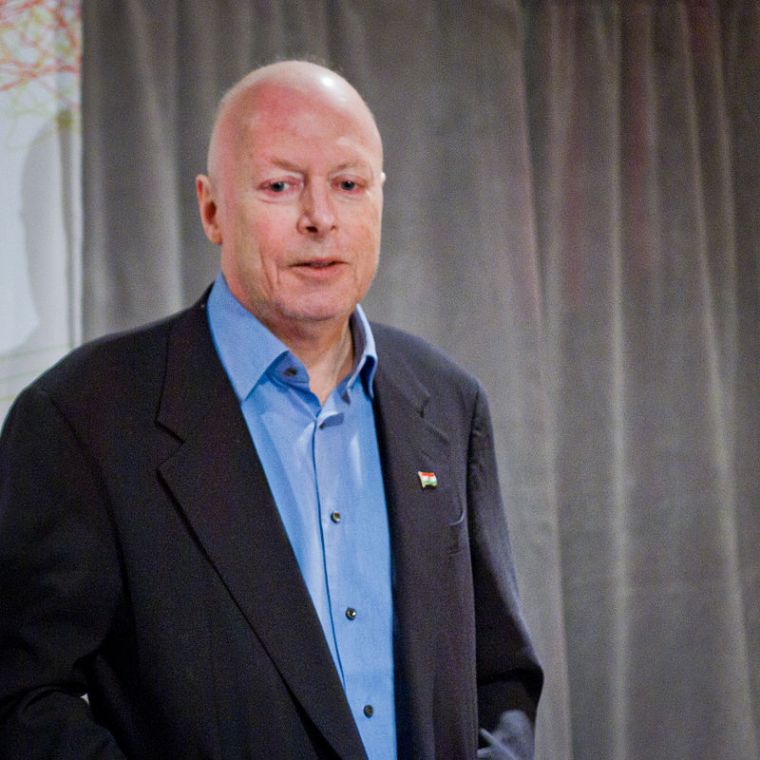
Christopher Hitchens (1949-2011), English-American writer, polemicist, social and literary critic
“I am no prophet—and here’s no great matter;
I have seen the moment of my greatness flicker,
And I have seen the eternal Footman hold my coat, and snicker …” The Love Song of J. Alfred Prufrock, T.S. Eliot
I was reminded once again of Hitch when his name came up in conversation at our last book club meeting on June 26th. CHRISTOPHER “HITCH” HITCHENS died in December 2011 of esophageal cancer. He was sixty-two. Famous or infamous – depending on your view – for his atheism among other things, he was a writer who wrote well and prodigiously, was unapologetic for his views and his lifestyle, and who died gracefully. When faced with death, he made it clear that he hadn’t amended his opinion as expressed in his best-selling book of 2007, God Is Not Great: How Religion Poisons Everything,
His opinions are controversial and debatable and that’s part of what makes him fun. How dull when there are no differences. Life would be an intellectual wasteland. As long as we take our differences to the debate halls (Hitchens was splendid at debate), the op-eds, the magazines/newspapers/blogs and the voting booth and not to the killing fields, it’s okay. When we know who we are, we are not easily shocked or threatened by perspectives and opinions that differ from our own.
I appreciate Hitch’s honesty and acuity. Nonsmoking teetotaler I am, yet I admire the spirit in this – quoted from his New York Times obituary – “He also professed to have no regrets for a lifetime of heavy smoking and drinking. ‘Writing is what’s important to me, and anything that helps me do that…'” He was true to himself right to the end even as he admitted that his lifestyle contributed to his illness.
In his writing and in debates, Hitch did attack our sacred cows. Hitch’s gift was to make us re-examine our dusty old assumptions and the positions we sometimes take for granted, having been spoonfed them since childhood by parents, clergy, teachers and culture. Indeed, upon examination, there is much that comes up lacking, needing to be abandoned, reformulated or expressed in a more coherent manner.
Perhaps more than anything, I admire the grace with which Christopher Hitchens lived with dying. He did a more principled and dignified job of it than many of us in our faith communities. He was diagnosed in June 2010 and wrote about this journey in his Vanity Fair columns. The “cynical contrarian” had heart, perhaps even a kinder more tolerant and generous heart than many an avowed theist.
I sometimes wish I were suffering in a good cause, or risking my life for the good of others, instead of just being a gravely endangered patient.”
He wrote that the …
Prospect of death makes me sober, objective.”
He pursued his craft right to the end.
‘Cancer victimhood contains a permanent temptation to be self-centered and even solipsistic,’ Hitchens wrote . . . but his own final labors were anything but: in his last 12 months, he produced for this magazine a piece on U.S.-Pakistani relations in the wake of Osama bin Laden’s death, a portrait of Joan Didion, an essay on the Private Eye retrospective at the Victoria and Albert Museum, a prediction about the future of democracy in Egypt, a meditation on the legacy of progressivism in Wisconsin, and a series of frank, graceful, and exquisitely written essays in which he chronicled the physical and spiritual effects of his disease. At the end, Hitchens was more engaged, relentless, hilarious, observant, and intelligent than just about everyone else—just as he had been for the last four decades.” Vanity Fair
He wrote with excruciating honesty.
Like so many of life’s varieties of experience, the novelty of a diagnosis of malignant cancer has a tendency to wear off. The thing begins to pall, even to become banal. One can become quite used to the specter of the eternal Footman, like some lethal old bore lurking in the hallway at the end of the evening, hoping for the chance to have a word. And I don’t so much object to his holding my coat in that marked manner, as if mutely reminding me that it’s time to be on my way. No, it’s the snickering that gets me down.
“On a much-too-regular basis, the disease serves me up with a teasing special of the day, or a flavor of the month. It might be random sores and ulcers, on the tongue or in the mouth. Or why not a touch of peripheral neuropathy, involving numb and chilly feet? Daily existence becomes a babyish thing, measured out not in Prufrock’s coffee spoons but in tiny doses of nourishment, accompanied by heartening noises from onlookers, or solemn discussions of the operations of the digestive system, conducted with motherly strangers. On the less good days, I feel like that wooden-legged piglet belonging to a sadistically sentimental family that could bear to eat him only a chunk at a time.” Except that cancer isn’t so … considerate.” MORE [Vanity Fair]
Thank you, Hitch, for making us think and rethink.
Thank you, Vanity Fair, for hosting Christopher Hitchens so regularly for us to read.
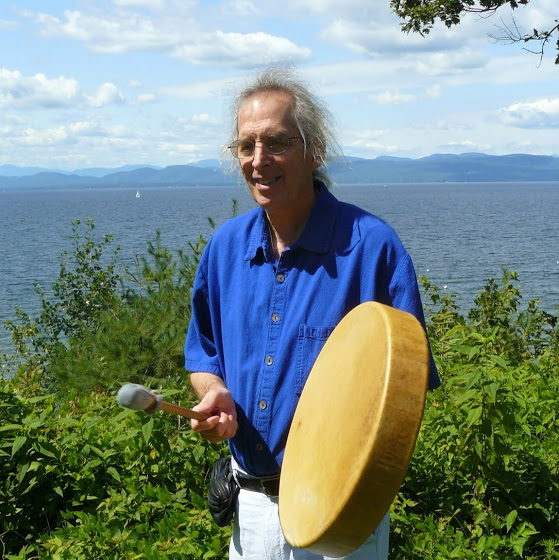
MICHAEL WATSON, M.A., Ph.D., LCMHC is a poet of the spirit, if not of the pen, and a contributing editor to The BeZine, an essayist and a practitioner of the Shamanic arts, psychotherapist, educator and artist of Native American and European descent.
Michael lives and works in Burlington, Vermont,where he recently retired from his teaching position in undergraduate and graduate programs at Burlington College,. He was once Dean of Students there. He also had wonderful experiences teaching in India and Hong Kong, which are documented on his blog. In childhood Michael had polio, an event that taught him much about challenge, struggle, isolation, and healing.
This interview was originally featured in the June issue of The BeZine.
JAMIE: I often tell people that if they have time for only one blog, it should be yours, DREAMING THE WORLD. You bring such a wealth of understanding, experience and education to your posts, so gently delivered and so healing. Thank you! You write a lot about nature. Did you grow up in the country?
MICHAEL: Thank you, Jamie. I am deeply moved and honored. My dad was in the Air Force so we moved periodically. He hailed from Southwest Indiana, from a hillside farm overlooking the Ohio river. My mom grew up on a farm in Texas, a couple of hours west of Dallas. The upshot was we tended to be stationed near one family or the other. When I was six or so, we lived in rural Lincolnshire, England, on an estate, complete with a game warden, where I spent untold hours in the woods with friends. Then we moved to rural Illinois, where we lived on the edge of a small town, and I was free to roam the countryside. From there we spent a year in suburban Ft. Worth, Texas, then we lived in urban Ohio while I finished high school and college. No matter where we were my parents had a garden, and made sure we kids had access to Nature. Given the option, I would head for the forest or prairie. I spent quite a few fabulous summers on my uncle’s farm in the fertile Ohio river valley near Madison. My dad’s family encouraged me to understand myself as part of the Natural world.
JAMIE:How did you get interested in therapy as a profession?
MICHAEL: I had a good therapist in college, then was clinical coordinator for a large “Free Clinic”. After working for the Soil Conservation Service for a while (I had a splendid job where I was outside most of the time, often in wilderness), I realized my legs were not going to tolerate the demands on them, and I had best find a more sedentary job. I already had an MA in Studio Art, and was offered a position as a community based artist, so I grabbed the opportunity to explore engaging people in arts for healing. I also went back to school to get a degree in counseling. During that time I provided some services to patients in the local university medical center, and when I finished my degree they offered me a part-time position, as did an outpatient clinic in town. One of my teachers worked in the clinic, and when he decided to leave his private practice, he essentially gave it to me.
JAMIE:What spurred your interest in shamanism?
MICHAEL: My dad’s side of the family has always identified as Native, although they steadfastly refused to tell us our tribal identity. One of my cousins, who is a genealogist, has tried several times to trace our family, without success. There are birth certificates for family members that go back three or four generations, then there is simply no record. All the birth certificates list us as being Caucasian. Indiana was a very nasty place for Native people during much of the last two centuries and it was very common for light skinned Natives to pass. My grandmother used to say, “We must protect the children.”
Anyway, I mostly didn’t think much about Natives, except to identify with the cowboys when we kids played cowboys and Indians. I could never figure out why my dad got upset with me for being a cowboy! Then in college there were all these books about Native American healers and shamans. A lot of those books turned out to be fraudulent but they got my attention. When I went to New Mexico for grad school I had many Native friends. I ran a small ranch in the mountains so I could afford school, and got a real hit of the sacredness of that country. Eventually I moved to California, then back East. I kept meeting Native elders who offered to teach me something. I’d protest that I wasn’t Native and they would look at me as though I was completely out to lunch. Often they would say, “We know more about you than you do.” I guess they were right.
When I was living in northern California I had a vision that turned my life upside down, and set me to trying to understand what I was being asked to do. That was forty years ago. I still ask the Powers what they want, and I’m still not the best at engaging with them.
JAMIE: You have lived virtually all your life with polio: traumatic, painful and disabling. I know you’ve thought a lot about disability, about cultural misconceptions and about meaning. What is the most important thing you think we need to know as a culture about the nature of disability and the impact – not so much of the disability itself – but of the assumptions that are made about people with disability?
MICHAEL: I was seven when we came back from England. I started school, second grade, and after a week we had the Labor Day weekend holiday. I developed Polio during that weekend and spent the next year trying to recover. I was in the iron lung and had significant paralysis; I made a rapid recovery (one of those “miraculous” recoveries that happened fairly often) and left the hospital after only a bit more than three months. We Polios were encouraged to believe we were not disabled, but many of us were. Much later, we discovered there is a correlation between the severity of the illness, the degree of one’s recovery, and the disabling that comes with Post-Polio Syndrome. PPS had been studied for about a hundred years, but everyone conveniently forgot about it once the vaccines arrived and the epidemics ended. (The same thing happened with us Polios, we were forgotten, even by the March of Dimes, an organization that had promised to support us, and our families, for as long as we needed them.)
Being an enlisted person in the military means one is not well paid; a lot of military families are on food stamps! As it turned out, I most likely survived Polio only because I was in a military hospital, and the Air Force literally did whatever was necessary to support me during the acute phase of the illness; they even flew in two top Polio docs to help me.
Being a closet Native and a Polio who tried, rather unsuccessfully, to pass as able, I learned a lot about the way our culture attends to people with disabilities. There is a strong Calvinistic streak in the culture, one that subtly, or not so subtly, places the blame for disabling events on the disabled person and their family. There is a strange cultural belief that disability is a moral failure, rather than an act of Fate; there is also a belief that physical disability implies cognitive impairment. (There are more reportedly Ph.D.s among Polio survivors than any other segment of the population.) There is also a willful refusal to notice and address all sorts of physical and cultural barriers that greatly affect disabled people.
I have worked on issues of disability throughout my adult life. When I am teaching about the experience of disability I remind students/participants that disability is largely a social construct; even the medical definition of disability is socially constructed, a fact many doctors forget. (Actually, younger physicians tend to be much more aware of this.) I often ask those present to speak about the experiences that disable them; I find it immensely useful to aid individuals to understand the experience of being disabled by locating parallel experiences in their own lives. The truth is, most of us have had moments when someone else’s attitudes, behaviors, or beliefs are/were disabling to us. Disability is created!
Oh, one more thing. There is, in North America, a cultural expectation that persons with disability will be either unceasingly cheerful or despondent. We should never be angry. Well, what is one to say to that? I have a wide array of responses to my experience, certainly including anger.
[I very much appreciate this written by Michael on his blog: “We find it useful to define disability as a lack of access to the social and/or physical environment, a lack created by the beliefs and behaviors of self, or, especially, others. While many disability activists and theorists find this definition overly broad, we believe it aids people to understand the experience of disability, building empathy and community.”
JAMIE:You also have been involved in education at the university level for good part of your life. How do you feel about the current emphasis on vocational vs. liberal arts/humanities? What price do we pay or will we pay for this?
MICHAEL: I have long encouraged students to explore widely, to engage the fine and liberal arts, and to create internships and other avenues for applying their learning in the everyday world. Being educated in the fine/performing arts, and the liberal arts, gives one models for being creative, and understanding historical and cultural context, as well as opportunities to learn about human nature. Hopefully, one also gets enough science to be able to understand the broader ecosystem implications of one’s behavior. Unfortunately, those who have overly specialized training tend to be lacking in tools.
JAMIE:What is the major work or interest of the next year for you?
MICHAEL: I’m dealing with progressive Post-Polio Syndrome, and approaching seventy, so I am practicing becoming more choosy about the projects I take on. I will continue to see clients in my counseling and healing practices. I have a list of photographic and writing projects, and Jennie, my wife, and I are working on new toy theater shows. Now that I am no longer classroom teaching, I’m also working to create time to read for fun!




 Jamie Dedes' THE POET BY DAY Webzine