Page 2 of 8

Japanese-American Poet and Photojournalist, Jun Fujita, is the focus of Newberry Library and the Poetry Foundation Exhibition

Photographer Unknown, Courtesy of Graham and Pamela Lee private collection. More photographs HERE.

The November sky without a star
Droops low over the midnight street;
On the pale pavement, cautiously
A leaf moves.
– Jun Fujita


Groundbreaking poet and photojournalist Jun Fujita is the focus of a new exhibition presented by the Newberry Library and the Poetry Foundation. A multi-media experience comprising poetry, photographs, personal correspondence and archival artifacts, Jun Fujita: American Visionary explores the life and career of one of Chicago’s master chroniclers.

As the first Japanese American photojournalist, Fujita captured many of the most infamous moments in Chicago history, including the Eastland Disaster, the 1919 race riots and the St. Valentine’s Day massacre. As an English-language poet writing in the Japanese tanka tradition, his poems appeared regularly in Poetry magazine, published in Chicago since 1912.

Jun Fujita was a visionary ahead of his time, both in his visual and written art forms, as well as his contemporary 45-year partnership with Florence Carr,” said Katherine Litwin, Poetry Foundation library director and exhibition cocurator. “We’re honored to partner with the Newberry to further expand and unfold the layers of his life and Chicago legacy through this exhibition.”

As anti-Japanese xenophobia crested during World War II, Fujita faced hostility, prejudice, and persecution. The U.S. government declared him an “enemy alien,” and his assets were frozen. Yet despite this adversity, Fujita achieved unprecedented success in his profession and offered an alternative model of what it means to be “American.”

“Jun Fujita put forth a vision for what’s possible, particularly love, acceptance, and sanctuary in a place bent on exclusion,” adds Fred Sasaki, Poetry art director and exhibition curator.


Morning Woods
A static mood, in the morning woods
Wet and clear –
In a majestic pattern, leaves are spellbound
By a fawn, ears perked.

JUN FUJITA was born Junnosuke Fujita on 13 December 1888 in Nishimura, a village near Hiroshima, Japan. When he was older, Fujita moved from Japan to Canada, where he worked odd jobs to save enough money to move to the United States of America, which he considered to be a “land of opportunity.” He moved to Chicago, Illinois, where he attended and graduated from Wendell Phillips Academy High School, a four-year predominantly African-American public school whose notable alumni include Nat “King” Cole, Gwendolyn Brooks, and Archibald Carey, Jr. Following his high school graduation, he studied mathematics at the Armour Institute of Technology, which later became the Illinois Institute of Technology, with plans to become an engineer. To help pay his way through college, Fujita took a job as the first and only photojournalist at the Chicago Evening Post, which later became the Chicago Daily News. MORE [Wikipedia]

Read more of Jun Fujita’s poetry HERE at Poetry Foundation. His collection is available through Amazon but is unfortunately prohibitively priced. It is not available through the Gutenberg Project or Internet Archive. Poems and journal articles about Fujita’s photography are accessible at JSTOR HERE.


Jun Fujita: American Visionary runs from January 24 through March 31 at the Newberry. The exhibition is free and open to all.

Throughout the exhibition, a series of related public programs will further explore its major themes. These programs include:

Curator Talk with Katherine Litwin, Fred Sasaki, and Graham Lee
Tuesday, February 4, at 6:00 PM

The Love and Life of Jun Fujita
Thursday, February 13, at 6:00 PM

Photographic Memory: Carlos Javier Ortiz Reflects on Jun Fujita’s Iconic Images
Tuesday, March 10, at 6:00 PM

*****

This post is compiled courtesy of the Poetry Foundation, Wikipedia, and Amazon. The poems are courtesy of Poetry Foundation in concert with JSTOR.

The Poetry Foundation, publisher of Poetry magazine, is an independent literary organization committed to a vigorous presence for poetry in American culture. It exists to discover and celebrate the best poetry and to place it before the largest possible audience. The Poetry Foundation seeks to be a leader in shaping a receptive climate for poetry by developing new audiences, creating new avenues for delivery, and encouraging new kinds of poetry through innovative literary prizes and programs.

Follow the Poetry Foundation and Poetry on Facebook at facebook.com/poetryfoundation,  Twitter @PoetryFound and @Poetrymagazine, and Instagram @PoetryFoundation.

About the Newberry Library
At the Newberry Library, visitors and researchers explore centuries of human history, from the Middle Ages to the present. The library’s collection—some 1.6 million books, 600,000 maps, and 5 million manuscript pages—is accessible to all in Newberry reading rooms, program spaces, exhibition galleries, and online digital resources. Since its founding in 1887, the Newberry has remained dedicated to deepening our collective understanding of ourselves, others, and the world around us. As individuals engage with Newberry collections and staff, they discover stories that bridge the past and present and illuminate the human condition.


Jamie DedesAbout /Testimonials / Disclosure / Facebook / Medium Ko-fi

Your donation HERE helps to fund the ongoing mission of The Poet by Day in support of poets and writers, freedom of artistic expression, and human rights.

Poetry rocks the world!


FEEL THE BERN

For Peace, Sustainability, Social Justice

The Poet by Day officially endorses Bernie Sanders for President.

The New New Deal

Link HERE for Bernie’s schedule of events around the country.

“Democracy is not a spectator sport.” Bernie Sanders


“Every pair of eyes facing you has probably experienced something you could not endure.”  Lucille Clifton

Environmental reporter Philip Jacobson was detained and provisionally released this week, purportedly due to a visa issue.

Deforestation in Riau, Sumatra, to make way for an oil palm plantation, HaydenOil Palm Concession under CC BY 2.0 license

“Journalism is clearly not a crime. This case is an administrative matter, a visa problem, not a criminal one,” Harsono said. [Andreas Harsono, Indonesian research at Human Rights Watch] HERE.


The detention of a U.S. journalist in Indonesia may have been linked to his news outlet’s reporting critical of the government. Environmental reporter Philip Jacobson was detained and provisionally released this week, purportedly due to a visa issue. PEN America advises Indonesian officials to resolve the case promptly and drop any criminal charges.

“While we are relieved that Philip has been temporarily released, we remain concerned that he is being targeted for his work in an attempt to send a warning signal to those journalists and news outlets who undertake investigative reporting on sensitive topics in Indonesia,” said Karin Karlekar, director of Free Expression at Risk Programs at PEN America. “Even if there is evidence of a visa-related violation, it should be handled as an administrative rather than a criminal matter and be resolved as quickly as possible, and we call on the authorities to allow both Indonesian and foreign journalists to work freely and without fear of retaliation.”

Jacobson, a U.S. citizen who works as an editor and strategist at Mongabay, a multilingual environmental news website, was in Indonesia on a business visa. On December 17, the day Jacobson was scheduled to leave the city Palangkaraya, immigration officers came to the guesthouse where he was staying and instructed him to remain in the city while they conducted an investigation into an alleged violation of his visa. They also confiscated Jacobson’s passport.

On January 21, authorities took him into custody and held him in a detention center for three days. On Friday, he was released into “city detention.” Law enforcement officials said he violated the terms of his visa and could face a prison sentence of up to five years. The day before he was approached by officials, he had attended a hearing between local lawmakers and an indigenous rights group but was not reporting on the event. His employer Mongabay has recently published articles that criticize Indonesia’s handling of conflict with indigenous communities over land rights, deforestation of Indonesian rainforests, and corruption.

This post is courtesy of PEN America, Reuters, and Wikipedia

***

PEN America stands at the intersection of literature and human rights to protect open expression in the United States and worldwide. It champions the freedom to write, recognizing the power of the word to transform the world. Its mission is to unite writers and their allies to celebrate creative expression and defend the liberties that make it possible.


Jamie DedesAbout /Testimonials / Disclosure / Facebook / Medium Ko-fi

Your donation HERE helps to fund the ongoing mission of The Poet by Day in support of poets and writers, freedom of artistic expression, and human rights.

Poetry rocks the world!


FEEL THE BERN

For Peace, Sustainability, Social Justice

The Poet by Day officially endorses Bernie Sanders for President.

The New New Deal

Link HERE for Bernie’s schedule of events around the country.

“Democracy is not a spectator sport.” Bernie Sanders


“Every pair of eyes facing you has probably experienced something you could not endure.”  Lucille Clifton

How to Write a Limerick by Esther Spurrill-Jones, The Word Artist

An illustration of the fable of Hercules and the Wagoner by Walter Crane in the limerick collection “Baby’s Own Aesop” (1887) under CC BY-SA 2.0 license

The limerick packs laughs anatomical
Into space that is quite economical.
But the good ones I’ve seen
So seldom are clean
And the clean ones so seldom are comical.
Leonard Feinberg, The Secret of Humor (Rodopi, 1978)


There was an old man with a beard,
Who said: ‘It is just as I feared!
Two owls and a hen,
Four larks and a wren
Have all built their nests in my beard.
-Edward Lear

Most people have heard or read a limerick, even if you don’t read poetry as a rule. A limerick is one of the most fun forms of poetry, as it is meant to be tongue-in-cheek.

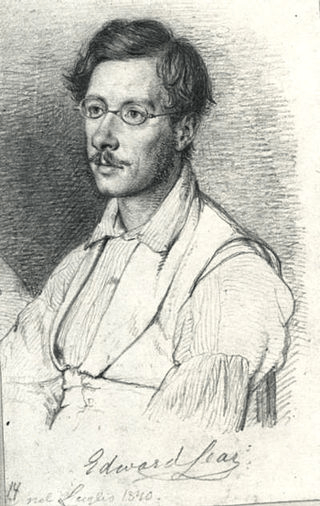
Lear by Wilhelm Marstrand / Public Domain

Edward Lear is probably the most famous, or at least the most prolific, limerick writer. He is credited with popularizing the form. His pieces are pretty much pure nonsense, while other poets often create “bawdy” limericks.

A limerick is a five-line poem with a strict rhyme and rhythm. The rhyme scheme is aabba and the rhythm is anapestic (dadaDUM). This gives the poem a bouncy feel that suits the light subject matter.

Lines 1, 2, and 5 are anapestic trimeter and lines 3 and 4 are anapestic dimeter. This means the first, second, and last lines have three stressed syllables, while the third and fourth have only two. With the two unstressed syllables for each stressed, the lines don’t feel overly short. There are nine or ten syllables in the longer lines and five or six in the shorter ones. There is some variance in syllable count as you can drop the first unstressed syllable of each line if you like.

Technically you can use the limerick form for any subject matter you like, but if it’s not silly, is it really a limerick? Here’s one I did with more serious subject matter. Does it feel like a “real” limerick? I don’t know. I don’t really think so.

Spring is a season of birth,
As winter lets go of the earth.
The days become longer;
The light becomes stronger,
And we put off our furs and go forth.

The style doesn’t really lend itself to the subject matter that well. Nonsense words fit better, don’t they? But you can do whatever you like if you write your own.

Here’s a better one I wrote recently:

Overdrawn

If you don’t have the money to cover,
And the debits come out and go over,
Be sure that the fees
Will advance your unease,
And assist you in going e’er lower!

It’s not nonsense, but it is a kind of dark humour.

You’ll notice that I used some near rhymes rather than exact rhymes. For more information on how to do this, check out my article on rhyming HERE.

Now, it’s your turn. Find something silly or annoying or whatever to write about and try your hand at crafting a limerick. Have fun!

Originally published in The Writing Cooperative, a Medium Publication. Shared here with Esther’s permission.

© 2020, Esther Spurrill-Jones

ESTHER SPURRILL-JONES (Esther Jones, I Just Live Here) is a poet, lover, thinker, human. She tells us, “I am not an open book although I wish that I could be. A part of me is all you see—the rest is hidden deep inside. Words have always been my art. They dance for me and sing for me. They laugh for me and cry for me. They are my paint and brushes. They are my clay.”  Connect with Esther: FacebookTwitterMediumInstagramBlog; Email; Amazon.


Jamie DedesAbout /Testimonials / Disclosure / Facebook / Medium Ko-fi

Your donation HERE helps to fund the ongoing mission of The Poet by Day in support of poets and writers, freedom of artistic expression, and human rights.

Poetry rocks the world!


FEEL THE BERN

For Peace, Sustainability, Social Justice

The Poet by Day officially endorses Bernie Sanders for President.

The New New Deal

Link HERE for Bernie’s schedule of events around the country.

“Democracy is not a spectator sport.” Bernie Sanders


“Every pair of eyes facing you has probably experienced something you could not endure.”  Lucille Clifton

H.R. 2054 Has Bipartisan Support and would set ground rules for how Google, Facebook use news content; could potentially help local news outlets

Woodcut by Tommaso Garzoni depicting a town crier with a trumpet / Public Domain

PEN America says proposed law would set ground rules for how Google, Facebook use news content; could potentially help local news outlets


A bill that would provide a temporary exemption to antitrust rules for news outlets represents a potentially positive step toward addressing the economic crisis affecting local news outlets throughout the country, PEN America announced this week,  but cautioned that the effectiveness of the bill will hinge on whether small- and mid-sized news outlets are meaningfully represented in any resulting negotiations.

The Journalism Competition and Preservation Act of 2019 aims to provide news providers a two-year enxemption from federal antitrust laws in order to collectively negotiate with Google and Facebook over how the digital giants can use those outlets’ online content. Enjoying bi-partisan backing and supported by the newspaper trade group the News Media Alliance—which represents almost 2,000 news organizations—the bill is currently being considered in both the House and the Senate.

“Local news is in crisis, something that affects not only the media sector but that deeply impacts access to critical information for millions of Americans,” said Thomas O. Melia, PEN America’s Washington director. “It is heartening to see bipartisan support for legislation responding to this crisis, and the Journalism Competition and Preservation Act offers an important opportunity for news outlets to negotiate a more equitable arrangement with the tech giants.”

Since 2005, newspapers have lost more than $35 billion in ad revenue. More than 20 percent of the nation’s newspapers have shuttered within the last twenty years. Numerous journalists, media reform advocates, and analysts—including PEN America—have concluded that local news is in crisis. One of the key drivers of this crisis, PEN America argued in its November 2019 report “Losing the News,” is the fact that news outlets see little of the ad revenue for users who find or read their news articles through Facebook or Google.

“To address the crisis in a meaningful way, negotiations between tech companies and news publishers will have to include independent small and mid-sized outlets, as well as those that specifically serve those communities most affected by the decline of local news ecosystems: communities of color and low-income and rural communities,” said PEN America’s Melia.

“Ultimately, the success of this act will be determined by whether it helps ensure Americans continue to have access to original, local, quality news on critical issues in their lives. We welcome this effort to take a creative approach to the local news crisis and urge that hearings on this legislation be convened as soon as possible to refine the proposal.

“Finally, we note that this act represents only one step towards addressing the local news crisis. For such an urgent and serious problem, more—much more—will be needed. That is why PEN America continues to call for a Congressional commission on the local news crisis, to help craft the solutions that will ensure the future of local American journalism.”

This content is courtesy of PEN America and Wikipedia.

PEN America stands at the intersection of literature and human rights to protect open expression in the United States and worldwide. It champions the freedom to write, recognizing the power of the word to transform the world. Its mission is to unite writers and their allies to celebrate creative expression and defend the liberties that make it possible.


Jamie DedesAbout /Testimonials / Disclosure / Facebook / Medium Ko-fi

Your donation HERE helps to fund the ongoing mission of The Poet by Day in support of poets and writers, freedom of artistic expression, and human rights.

Poetry rocks the world!


FEEL THE BERN

For Peace, Sustainability, Social Justice

The Poet by Day officially endorses Bernie Sanders for President.

The New New Deal

Link HERE for Bernie’s schedule of events around the country.

“Democracy is not a spectator sport.” Bernie Sanders


“Every pair of eyes facing you has probably experienced something you could not endure.”  Lucille Clifton