“If you have any young friends who aspire to become writers, the second greatest favor you can do them is to present them with copies ofThe Elements of Style. The first greatest, of course, is to shoot them now, while they’re happy.” Dorothy Parker (1893-1967), American poet, writer, critic and satirist
When I started as a young writer, I was shocked to see my work edited if accepted and sometimes dramatically so. There were a few occasions when I didn’t even recognize it as my own. I eventually got it. If I wanted to be sure my work was published the way I meant it to be, that it said what I meant it to say, the trick was to fine-tune content and flow, proofread and copy edit. I learned to let work gestate (a day or a week or more depending on length) and to repeat the editing process more than once. These habits were a boon to me when I was a columnist. It kept the editor from shooting work back to me saying “fix it,” which then allowed me to get on with something else.
As my own responsibilities grew to include editing, I began to see such efforts as the difference between a dabbler and a professional and a courtesy to the editors who often have an overwhelming amount of material to review. Remember that most editorial offices are not well staffed and editors not well paid. Lit journals may be edited by volunteers who still need to clear enough time for their own lives and to produce enough of their own writing to make a living. These efforts are labors of love: a love of literature and a love of other writers and artists.
There’s always room for improvement. At seventy, I still work on refinements to my own writing, research, and editing skills and my management of various projects and commitments. For me this has become more cumbersome as I also juggle the progression of several catastrophic illness that result in severe fatigue. Here again though, success may be just a matter of continued refinements: workable routines and policies. Among the later, I am no longer as sanguine about work that is not submitted properly or professionally.
Tomorrow in Part ll: Ten-tips for self-editing
“Don’t get discouraged because there’s a lot of mechanical work to writing. There is, and you can’t get out of it. I rewrote the first part of A Farewell to Arms at least fifty times. You’ve got to work it over. The first draft of anything is shit. When you first start to write you get all the kick and the reader gets none, but after you learn to work it’s your object to convey everything to the reader so that he remembers it not as a story he had read but something that happened to himself.” Hemingway as quoted by Arnold Samuelson, With Hemingway: a Year in Key West and Cuba (Random House, 1984), Page 11
Your donation HERE helps to fund the ongoing mission of The Poet by Day in support of poets and writers, freedom of artistic expression, and human rights.
Poetry rocks the world!
FEEL THE BERN
For Peace, Sustainability, Social Justice
Maintain the movement.
“Democracy is not a spectator sport.” Bernie Sanders
“Every pair of eyes facing you has probably experienced something you could not endure.” Lucille Clifton
Thank you for sharing your love of words. Comments will appear after moderation.
“The numbers in this Index are, of course, far too high, but we also know that advocacy to free those unjustly behind bars does work. In this moment, when truth is vulnerable, and when the world faces a time of reckoning in which a new future waits to be written, it is imperative that we defend the freedom to write, and work to free those who remain behind bars for daring to exercise that power.” Karin Deutsch Karlekar, PEN America’s director of free expression at risk programs
On Tuesday PEN America released the inauguralPEN America Freedom to Write Index. It’s the first annual global count of writers and public intellectuals unjustly detained or imprisoned worldwide. Covering calendar year 2019, the inaugural Freedom to Write Index shows that at least 238 writers, academics, and public intellectuals were imprisoned or held in detention in 2019, facing often brutal treatment and baseless charges. The Index includes novelists, poets, playwrights, songwriters, biographers, memoirists, essayists, bloggers, and genre writers. Nearly sixty percent were being held by just three countries: China, Saudi Arabia, and Turkey.
“The Index spotlights governments’ nefarious will to suppress truth and control the public mind by silencing writers who dare challenge authority or portray social and political alternatives that rulers reject or fear,” said Suzanne Nossel, CEO of PEN America. “Many of these writers use the imagination to pierce ideological orthodoxies, give voice to suppressed populations, and rally readers to think and act in new ways. This is what makes great writing potent, but also threatening. Rather than treasuring literary icons, too many regimes regard esteemed independent-minded writers as a menace to the brittle state, and seek to prevent words, stories and ideas from chipping away their iron control.”
China tops the Freedom to Write Index, having held at least 73 writers and public intellectuals in prison or detention for their writing in 2019. The new PEN America analysis, drawing on sources including the extensive casework of PEN International, finds that most often, China uses the excuse of national security and “subversion of state power” to imprison writers. In the first few months of 2020, writers, citizen journalists, and activists in China have been detained by authorities as part of a government campaign to control both the domestic and international narratives on the COVID-19 pandemic. Rounding out the top three, Saudi Arabia held thirty-eight writers and intellectuals in detention or prison last year, and Turkey held thirty.
“Speaking out on behalf of individual writers at risk around the world has long been the bedrock of PEN America’s advocacy work,” said Karin Deutsch Karlekar, PEN America’s director of free expression at risk programs. “When writers are in jail, they know that the PEN global network will not let them be forgotten. We hope that this report with names and personal stories will help raise the profile of these writers, mobilizing journalists, legislators, human rights advocates, and political leaders to protest their unjust detention. The numbers in this Index are, of course, far too high, but we also know that advocacy to free those unjustly behind bars does work. In this moment, when truth is vulnerable, and when the world faces a time of reckoning in which a new future waits to be written, it is imperative that we defend the freedom to write, and work to free those who remain behind bars for daring to exercise that power.”
The PEN America Freedom to Write Index shows that in 2019, some thirty-four countries held writers, academics, and public intellectuals. The Index also found:
Countries in the Asia-Pacific region held one-hundred writers and intellectuals in detention or prison during 2019—making up forty-two percent of the 2019 Index—while countries in the Middle East and North Africa held thirty-one percent of the global count. Together, these two regions accounted for almost three-quarters of the cases in the 2019 Index. Countries in Europe and Central Asia held forty-one imprisoned/detained writers, or seventeen percent of the 2019 Index.
Of the 238 writers and intellectuals in the 2019 Freedom to Write Index, over half were prosecuted under laws concerned with national security. All thirty of the writers and intellectuals in the Index detained or imprisoned in Turkey face national security charges. In China, “national security” violations comprise over half of the seventy-three cases of writers and intellectuals in detention or prison, fifty-three percent.
At least fifty-three writers and intellectuals were held in detention on secret, unknown or undisclosed charges; this amounts to over a fifth of writers and intellectuals in the 2019 Index, and is particularly prevalent in Saudi Arabia.
Over two-thirds (sixty-nine percent) of individuals counted in the 2019 Index remain in state custody at the time of this report’s publication. Just under a third are out of state custody but continue to face ongoing legal battles or appeals of convictions; probationary restrictions on work, travel, and local movement; and/or harassment from state and non-state actors.
The report also reveals patterns in terms of what motivates governments to target writers. The drive to suppress ethnic identities and nationalism puts individuals writing in or advocating for ethno-linguistic minority languages under heightened threat, including in the context of crackdowns on Uyghur culture and language in China and Kurdish in Iran and Turkey.
Countries like China and Russia are also attacking writers who seek to expose painful truths about their countries’ respective histories, challenging enforced storylines propagated to reinforce ruling regimes. PEN America also found that while most writers being detained are men, women comprised sixteen percent of the cases documented. Many were targeted directly for their writing and advocacy on women’s rights, particularly in Iran and Saudi Arabia.
Alongside the Index, PEN America is launching a new, searchable database of Writers at Risk, containing details of each of the writers in our 2019 Index along with hundreds of other cases of writers, journalists, artists, and intellectuals under threat around the world. This database offers researchers, rights advocates, and the public a wealth of actionable evidence of ongoing global threats to free expression.
Poet P. Varavara Rao; photograph courtesy of Chaithu under CC BY-SA 3.0
WORDS
Words, smothered in the folds of the self,
Must be stirred awake,
Made to amble and watch
See if wings can bear aloft
The crippled limbs
And soar into the sky.
Like the first showers after the drought
To my parched ears, my own worlds,
Not any other’s, remain strange.
Like the marvel of the sky
Discovering its lost monsoon
I long to sprout on a soil
In the vibrations of a sonorous world.
Once again I yearn to learn the utterance
At school and on the commune,
From pupils and plebeians
I dream of seizing syllables
From each of history’s furrows.
Without this voicing peal
How will this silence,
Loaded for so long in the self,
Explode?
Without this booming resonance
How will this scene,
Cryptic for so long in the eyes,
Scintillate?
Once again I must learn to utter
In communing with and listening to
Our people;
I must be tethered to the word and abide by it
What’s man’s legacy after betraying the word?
Nothing debases the word:
In the blazing furnaces of time
Under the plummeting hammer clangs,
This, as the fittest moment,
I go on forging expressions.
– P. Varavara Rao
Cases highlighted in the 2019 report include:
The poet and leftist intellectual P. Varavara Rao, writer and artist Arun Ferreira, and writer and scholar Vernon Gonsalves, who were all detained in India in August 2018 alongside a number of other activists in relation to their writing and work on behalf of minority and marginalized groups in India. Other writers have issued pleas for their release, especially in light of the COVID-19 pandemic.
Iranian writer Golrokh Ebrahimi Iraee, first arrested in 2014 and sentenced to six years in prison in 2015 on propaganda charges for an unpublished fictional story concerning the practice of stoning as a criminal punishment. Released in April 2019, when she had served over half her sentence, Iraee was rearrested in November 2019.
Tashi Wangchuk, a Tibetan language rights activist who documented his work in a microblog and was detained in 2016 after he appeared in an article and short video feature published by The New York Times. He was sentenced to five years in prison on charges of “separatism” in 2018, and remains behind bars.
Egyptian poet and songwriter Galal El-Behairy, who is serving a three-year sentence on charges of spreading false news and insulting the military, in relation to both his lyrics to the song “Balaha,” which criticized the state of the Egyptian economy and government corruption, and to his unreleased book of poetry. The filmmaker who worked on the videos for Balaha, Shady Habash, died in prison on May 2 at age 24.
Poet and blogger Ahmed Mansoor, who is serving a ten-year prison sentence in the United Arab Emirates for criticizing the government on social media. The official charges against him include insulting the “status and prestige of the UAE and its symbols” and seeking to damage the UAE’s relationship with neighboring countries by publishing false reports and information on social media.
Yury Dmitriev, a Russian historian and head of the Karelia branch of the Russian human rights center, who has worked to uncover and document mass graves from the era of Stalinist purges.
Chimengül Awut, a Uyghur poet and editor at Kashgar Publishing House, was arrested in 2018, reportedly for editing the novel Golden Shoes by Uyghur writer Halide Isra’il. Authorities have since confirmed her editing as the reason for her detention, but explicit legal charges are undisclosed.
By highlighting the threats experienced by a broad range of writers, the Freedom to Write Index and database complement existing datasets that focus on journalists or scholars, helping paint a more holistic picture of attacks on freedom of expression globally, and shining a light on the impact when individual creative voices are silenced.
PEN America is deeply grateful to the John Templeton Foundation for its generous support of the Freedom to Write Index and Writers at Risk Database.
This post is compiled courtesy of PEN America, Wikipedia, and Poem Hunter
PEN America stands at the intersection of literature and human rights to protect open expression in the United States and worldwide. It champions the freedom to write, recognizing the power of the word to transform the world. Its mission is to unite writers and their allies to celebrate creative expression and defend the liberties that make it possible.
Your donation HERE helps to fund the ongoing mission of The Poet by Day in support of poets and writers, freedom of artistic expression, and human rights.
Poetry rocks the world!
FEEL THE BERN
For Peace, Sustainability, Social Justice
Maintain the movement.
“Democracy is not a spectator sport.” Bernie Sanders
“Every pair of eyes facing you has probably experienced something you could not endure.” Lucille Clifton
Thank you for sharing your love of words. Comments will appear after moderation.
Copyright Angora Poets World Cafe, Designer Mohammed Tariq Anis
“Poetry empowers the simplest of lives to confront the most extreme sorrows with courage, and motivates the mightiest of offices to humbly heed lessons in compassion.” Aberjhani, Splendid Literarium: A Treasury of Stories, Aphorisms, Poems, and Essays
“Angora Poets World Caffé. Sundays at 8 p.m. Paris time. Our mission is to demonstrate a global fraternity of literary and musical artists of divers styles and backgrounds. Under the nearly worldwide confinement the caffé is attracting artists who are now traversing borders and cultures. The caffé attracts poets, prose writers, singers and musicians from the 4 corners of our planet. To date we have presented artists from France, USA, U.K., Canada, Berlin, Serbia,Tibet, Sri Lanka, Lesotho, Sudan, Egypt, Morocco, Algeria, Abu Dhabi, Russia and China Our artists present mostly in English, French and Arabic. We also listen to participants voicing in a number of other languages which is very well received by our listeners. We ask of our artists to be developed, young and old, published and unpublished, so we enjoy a high caliber of artisan quality.” Founder and Moderator, Moe Seager (Moe Seager- Paris Calling)
Your donation HERE helps to fund the ongoing mission of The Poet by Day in support of poets and writers, freedom of artistic expression, and human rights.
Poetry rocks the world!
FEEL THE BERN
For Peace, Sustainability, Social Justice
Maintain the movement.
“Democracy is not a spectator sport.” Bernie Sanders
“Every pair of eyes facing you has probably experienced something you could not endure.” Lucille Clifton
Thank you for sharing your love of words. Comments will appear after moderation.
“With hundreds of millions of people sheltering at home during the coronavirus pandemic, some dream experts believe that withdrawal from our usual environments and daily stimuli has left dreamers with a dearth of “inspiration,” forcing our subconscious minds to draw more heavily on themes from our past.” The pandemic is giving people vivid unusual dreams. Here’s why., Rebecca Rener, National Geographic
A fulgurous moon on pandemic nights
Piercing the substrates of dreamland
Doing a lindy-hop with my hippocampus
Retrieving data records and videos
The oddly stored sentences and mental
Photographs, well-played scenes
Of midnight Mass at St. Pat’s, my
Baby’s sticky kisses, a swan-dive into
The red of Valentine’s roses, the feel
Of champagne fizz-tickling my lips
Visions cavorting at length, nothing
Fear-filled or surreal, just the good old
Joys of life, resurrected to counter the
Green phlegm of a COVID-19 lunascape
I’ve been having the most interesting and engaging dreams since the lockdown started. Rather odd since for me “lifestyle” hasn’t changed that much. I wondered if I was alone in this and did some research. Not alone. Some people are having dreams that are frightening or bizarre. I wonder what your experience is. Tell us about your pandemic dream-scape in your own poem/s and …
please submit your poem/s by pasting them into the comments section and not by sharing a link
please submit poems only, no photos, illustrations, essays, stories, or other prose
PLEASE NOTE:
Poems submitted on theme in the comments section here will be published in next Tuesday’s collection. Poems submitted through email or Facebook will not be published. If you are new to The Poet by Day, Wednesday Writing Prompt, be sure to include a link to your website, blog, and/or Amazon page to be published along with your poem. Thank you!
Deadline: Monday, May 25th by 8 pm Pacific Time. If you are unsure when that would be in your time zone, check The Time Zone Converter.
Anyone may take part Wednesday Writing Prompt, no matter the status of your career: novice, emerging or pro. It’s about exercising the poetic muscle, showcasing your work, and getting to know other poets who might be new to you.
You are welcome – encouraged – to share your poems in a language other than English but please accompany it with a translation into English.
Your donation HERE helps to fund the ongoing mission of The Poet by Day in support of poets and writers, freedom of artistic expression, and human rights.
Poetry rocks the world!
FEEL THE BERN
For Peace, Sustainability, Social Justice
Maintain the movement.
“Democracy is not a spectator sport.” Bernie Sanders
Thank you for sharing your love of words. Comments will appear after moderation.

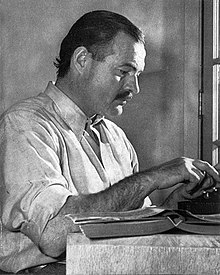 “Don’t get discouraged because there’s a lot of mechanical work to writing. There is, and you can’t get out of it. I rewrote the first part of A Farewell to Arms at least fifty times. You’ve got to work it over. The first draft of anything is shit. When you first start to write you get all the kick and the reader gets none, but after you learn to work it’s your object to convey everything to the reader so that he remembers it not as a story he had read but something that happened to himself.” Hemingway as quoted by Arnold Samuelson, With Hemingway: a Year in Key West and Cuba (Random House, 1984), Page 11




 Jamie Dedes' THE POET BY DAY Webzine