Poets, Poetry, News, Reviews, Readings, Resources & Opportunities for Poets and Writers
Author: Jamie Dedes
Jamie Dedes is a Lebanese-American poet and free-lance writer. She is the founder and curator of The Poet by Day, info hub for poets and writers, and the founder of The Bardo Group, publishers of The BeZine, of which she was the founding editor and currently a co-manager editor with Michael Dickel. Ms. Dedes is the Poet Laureate of Womawords Press 2020 and U.S associate to that press as well. Her debut collection, "The Damask Garden," is due out fall 2020 from Blue Dolphin Press.
The #MeToo (Fair Acre Press, March 8, 2018) anthology camestraight out of a long thread on my Facebook page in October 2017, just as we were talking about the Harvey Weinstein allegations on the news and before I had even heard of the #MeToo campaign. I asked women friends of mine to add their name on the thread if they hadn’t experienced any form of sexual harassment in their lives and I was surprised to find that of the 200 women that started to share some of their stories , 2 or 3 told us that it had never happened to them. My surprise was not that there were so few, but that there were any women at all.
Of course over the years we have shared these stories with our friends, sisters, mothers, partners and sometimes with the police, or in court. It has been the water we swim in as women. But saying something publicly has always been difficult and brave. The words would stick in our throats, for so many reasons.
But something was released and given a space within social media. It was easy to add our voice to the rising shout of #MeToo. We felt the sisterhood. Many women were emboldened by this to share more difficult stories, more details.
I’m a poet, and an editor and someone suggested we collect these stories somehow and it was obvious to collect them as poems. It was what I could do.
I am very proud of this book, proud of the poets for sharing and for the courage in putting their names to their words. I have been amazed by the wonderful collaboration in its making; all of us women. Jessamy Hawke is the daughter of an online friend and she came forward and offered to make new line drawings for the book, the striking cover was made for the book by my friend Sandra Salter and all the work of editing and publishing was donated. Jess Phillips MP gave us her introduction and it’s been endorsed by Amanda Palmer and Rachel Kelly amongst others.
I do recognise that it is a painful and difficult to read a great deal of the time. But when taken slowly, and with reading only what you can bear, I trust the reader will hear its rallying cry of anger and impatience. We have had enough.
We share an attic room. In the corner is an old double bed that smells and sags on one side. My side. Late at night I hear my heart beat. Loud. So loud he will hear it. He will think my heart is calling him up the attic stairs. His footsteps are heavy. He smells of old spice and cherry tobacco. My eyes shut tight. I know he is there. I feel his weight. Never on my side. Always on the side she sleeps. When the bed-springs sing their sad song I fly away. Up to the ceiling. My sister is already there. Together we hold hands. Looking down we see our bodies. We are not moving. We are as still as the dead.
The Return of Persephone, c.1891 (oil on canvas) by Leighton, Frederic (1830-96); 203×152 cm; Leeds Museums and Galleries (City Art Gallery) U.K.; English, public domain
PERSEPHONE’S DAUGHTERS is published online, in print and in film. This magazine’s content is based on a mission to empower women / femme individuals who have experienced various forms of gendered abuse (sexual, emotional, physical, racial, verbal, etc), or other forms of degradation (harassment, catcalling, threats, etc). Persephone’s Daughterswelcomes all identities.
Online Sunday Stories feature personal accounts of those surviving abuse. There is also a film submission category that aligns with the mission. Accepted works are featured online on Film Fridays. Of note is a post-election mini-issue, a writing and art collection by people who are negatively effected by the outcome of the 2016 U.S. election. Proceeds from the sales of that collection go to the Young Center for Immigrant Children’s Rights, which provides services, legal help, and advocacy to unaccompanied immigrant children fleeing trafficking, conflict, poverty and more.
The editor’s say that submissions for Issue 5 will likely open in April. The theme is “Sexual Assault Awareness.” Sunday Stories and Film Fridays are currently open for submissions. Link HERE.
“It is no measure of health to be well-adjusted to a profoundly sick society.” Jiddu Krishnamurti
USING OUR WORDS: Michael Rothenberg and Terri Carrion, cofounders of 100,000 Poets for Change, are wonderful at finding ways for us gather online and off and to use our words to raise awareness of justice issues, encourage one another, make connections with like-minded, become a force for positive change, and show those in turmoil that we are present.
Michael announced today ..
“So far Coconut Creek, Miami, Orlando, Tampa, Jacksonville, St. Augustine, and Tallahassee have scheduled 100 Thousand Poets for Change associated readings as tribute to the students murdered at Marjory Stoneman Douglas High School in Parkland. These readings will be held in March and address the topic of gun control. We are waiting for confirmation for Pensacola, St. Petersburg and Gainesville and welcome additional organizers in Florida and around the country who wish to participate in this initiative.”
PEN America presents the 2018 PEN World Voices Festival: Resist and Reimagine, this year’s incarnation of the renowned international literary festival, which will bring together the world’s foremost authors and other luminaries at a time when many are turning to literature and the arts not for escapism, but as a guide to navigate contemporary crises.
Salman Rushdie founded the festival in the isolationist aftermath of September 11, 2001, to fortify links with the rest of the world; now again the need to connect and draw inspiration from beyond America’s borders is pressing.
PEN America Festival Director Chip Rolley explains, “For the first time in its history, we are deliberately training the Festival’s wide lens on America itself, probing the fissures and inconsistencies in our own culture, alongside those of writers visiting from overseas. We will examine different kinds of resistance—the internal and the external, the political and the personal—and tap into the imagination that is at the core of the best fiction, nonfiction, and poetry, joining together in a week that reaffirms our faith in the power of the word to transform our society, our politics, and our daily lives.”
The Festival will unfold across sixty-plus events in dozens of venues in four of the five New York City boroughs, April 16-22. It kicks off on April 16 with Resist and Reimagine: Opening Night in Three Acts. Colson Whitehead will speak about applying one’s imagination to elucidate historical truths, as the novelist did for his “carefully built and stunningly daring” (The New York Times), Pulitzer Prize-winning novel The Underground Railroad.
Novelist Leila Slimani—a Muslim immigrant from Morocco to France whose novel The Perfect Nanny won France’s prestigious Prix Goncourt—will speak with New Yorker staff writer Adam Gopnikabout how worlds can be reimagined by bending the lenses of ethnicity and geography.
Australian performance poet and author Maxine Beneba Clarke will read from “A Letter from Manus Island: A Refugee Resistance Manifesto,” by Behrouz Boochani, the Iranian Kurdish poet and journalist who has been held for over four years in Australia’s detention center on Manus Island while awaiting asylum. Boochani writes here about how “the refugees were able to reimagine themselves in the face of the detention regime.”
In a separate opening night event, Dave Eggers will talk with Mokhtar Alkhanshali, the Yemeni-American historian, community organizer, and coffee innovator whose aim to revitalize Yemen’s coffee industry through worker empowerment is the subject of Eggers’ latest book, The Monk of Mokha.
The resistance embodied in the disclosures of the #MeToo movement has inspired a number of events in this year’s festival, which extend the examination of gender and power begun in the 2017 festival. On April 20, critically acclaimed, best-selling author Roxane Gay will speak with #AMtoDM co-host and BuzzFeed Books founding editor Isaac Fitzgerald on the intersecting subjects her writing famously tackles. Zeroing in on the ongoing fight for female autonomy, Handmaid in America (April 21) will bring together a group of women writers, including Siri Hustvedt and Leni Zumas, who will discuss literature and its responses to encroachments on women’s reproductive rights. On April 17, Us Too, a powerful program of poetry, readings and conversation about violence against women will include Tishani Doshi, Maxine Beneba Clarke, Dunya Mikhail, and Mona Eltahawy. These open conversations on the traumas the female body endures strive to liberate women during this movement of reckoning.
With The M Word: Hasan Minhaj and Wajahat Ali (April 22), comedian and Daily Show senior correspondent Minhaj and writer/lawyer Ali will speak about the varieties of Muslim American experiences, the pressures of being public ambassadors for a vastly multifaceted group that America just as vastly generalizes, and how comedy and creativity have changed under Trump. The M Word: No Country for Young Muslim Women (April 18) will see Sudanese-Australian author/mechanical engineer Yassmin Abdel-Magied and MuslimGirl founder Amani Al Khatahtbeh—both of whom left their home countries, Australia and America, respectively, due to harassment and vilification—discussing the complexities of being Muslim and female in Western countries. Abdel-Magied will also speak with Sick author Porochista Khakpour, and Anita Sarkeesian, the feminist media critic who endured a barrage of #GamerGate harassment and death threats in Take Back the Net: Fighting Online Hate (April 21). Looking into the real-world impact of virtual bullying, those who have refused to be silenced will discuss productive means for resisting and reimagining the Internet as a free and fearless space.
Addressing authorship and cultural alienation, Cry, the Beloved Country (April 19) will unite Ryszard Krynicki, Serhiy Zhadan,Marcos Aguinis, Domenico Starnone,Ngugi wa Thiong’o, Hwang Sok-yong,Basma Abdel Aziz, and Negar Djavadi to articulate the particular rage of oppressed populations in their home countries. Meditations on Exile (April 20) will feature Chinese novelist Xiaolu Guo, Iraqi-Assyrian poet Dunya Mikhail, and Iranian screenwriter/novelist Hossein M. Abkenar. They will discuss their experiences of having fled their home countries to avoid censorship and the potentially severe repercussions of their self-expression, and how these experiences have shaped the way they write about place. The Trick of Translation (April 21), will speak to a more formal means of border transcendence—the attempt to capture the spirit of a work in another language. Jhumpa Lahiri will talk with Domenico Starnone about Starnone’s novels Trick and Ties, translated from Italian to English by Lahiri.
The chronicled lessons from the past can act as living guides, particularly as threats to key rights swell. Taking a moment to look back to America’s most fearless activists and writers, Jelani Cobb, Nikole Hannah-Jones, and Pulitzer Prize-winner Gregory Pardlo mark the 50th Anniversary of Martin Luther King Jr.’s assassination in Where Do We Go from Here? (April 20), which asks, with hope at its core, the titular question of Dr. King’s last book. Looking further back in history, biographer Ron Chernow talks to MSNBC host and author Chris Hayes about Ulysses S. Grant, one of our most underappreciated presidents, who worked for justice and the political enfranchisement for African Americans. Exploring what should be inalienable rights, Mother Jones reporter Ari Bermanand historian Carol Anderson will delve into racialized voter suppression in Killing Democracy (April 19). One of the festival’s central aims is to defend and provide a platform for open discourse; Masha Gessen,Patrisse Cullors, and PEN America Executive Director Suzanne Nossel will shed light on first amendment tensions in America today in Resistance Report Card: Grading the Groundswell(April 21).
In Legacy of an LGBTQ Countercultural Icon (April 21), translators Bonnie Huieand Ari Larissa Heinrich and poet Eileen Myles will examine the work of the late Qiu Miaojin, whose cinematically experimental novels dauntlessly depict lesbian life in Taiwan long before any form of queerness was socially accepted. While she was writing up through the 90s, to this day, globally queer communities remain vulnerable.
As so much of what literature explores politically and personally is inherently connected to place, several events will probe location’s distinct impact on personhood. The city of New York has functioned as an iconic and figurative setting across myriad art forms: in New York Stories (April 21), Salman Rushdie,Sergio De La Pava, and others will talk about encapsulating the city in fiction. With a more panoramic gaze, in America, Real and Imagined (April 22), authors from different corners of the country will discuss their shared interest in the American landscape’s profound ability to shape identity. Francisco Cantú—a former-border-patrol-agent-turned-author—will join acclaimed Sunshine Stateauthor Sarah Gerard and poet/author Joy Harjo, a member of the Mvskoke Nation whose memoir Crazy Brave won the 2013 PEN Center USA prize for creative nonfiction. Cantú, who wrote the “sharply political and deeply personal” (New York Magazine) The Line Becomes a River, will also look into a particularly fraught section of the American landscape, the Mexican-United States border in Borders of Our Imagination, where he will speak with novelist and essayist Valeria Luiselli and playwright and DREAMer Amalia Rojas (April 20).
Young people are just as likely as adults to be curious about the often puzzling, sometimes troubling, world around them, and there is a growing body of books and other publications that cater to this curiosity. For the first time in its history, the festival will feature a day of storytelling, interactive events, comics and freestyle poetry workshops for children, tweens, and young adults as part of its new Next Generation Now series curated by Meg Lemke of MUTHA Magazine. Little Activists: A Workshop and Mini-March (April 21) will encourage children to express their own ideas of democracy, equality, and freedom, and learn how to translate their thoughts into political engagement. Leila Sales, who will lead he workshop, created The Little Book of Little Activists after being inspired by children in the Women’s March. R.J. Palacio, author of the best-settling novel Wonder (recently adapted as a live-action film with Jacob Tremble in the leading role) will speak on the importance of acceptance, and the pivotal lessons that literature can teach us from a young age. Tony Medina, Ilyasah Shabazz, and Toni Blackman are also among the featured Next Generation Now authors.
PEN America Executive Director Suzanne Nossel says, “While the present political moment in the United State feels unprecedented and unparalleled, when we turn toward the rest of the world the tide of revanchism we are enduring is neither new nor confined to our own borders. International writers and thinkers offer a well of lessons and insights on how to thwart and protest, to sustain and nurture resistance, to shore up threatened values, and to look beyond the present impasse. PEN America has always worked as a bridge across cultures and geographies, forging relationships and solidarity that are a counterweight against hatreds and polarization. In the digital age, with so much of our discourse reduced to tweets and sound bites, face-to-face conversation across cultures about how to realize a different collective future is essential. If frayed relationships between the world’s governments are ever to be repaired, it will be because we nurtured relationships, empathy, and understanding among peoples—that’s what the PEN World Voices Festival does.”
Peter Barbey, President and Chief Executive OfficerofThe Village Voice, which co-sponsors the 2018 PEN World Voices Festival, says, “This year’s theme, Resist and Reimagine, couldn’t be more timely or topical. It resonates here at The Village Voice since those very same principles have been reflected in our mission since our inception in 1955, at the beginning of an American cultural revolution. As Official Media Sponsor of the Pen World Voices Festival, we call on all New Yorkers to join the conversation.”
Originally published in the December 2016 issue of The BeZine
by
Mendes Biondo and Deborah Alma
If I have a headache, I generally take a pill. But are we really sure that only medicines are able to heal our illnesses? Deborah Alma, poet and poemedic, said no. Poetry can give us a great hand to face our problems, in particular those that are hidden in our deepness. We had a brief chat about Deborah’s wonderful work and this is what came out.
Mendes: The theme of this issue of The BeZine is the healing power of art. Before asking you about The Emergency Poet, I would like to know your personal experience with art self-healing.
Deborah: That’s an interesting question and quite a difficult one to answer briefly. I think my own experience is like most people’s: extremely varied, very common and often very unconscious.
The moments that stand out for me I suppose were in the compulsion I felt to write myself through and out of an abusive and damaging relationship, watching my own grandmother’s solace in reading poetry after the death of her husband and as she was dying. I remember also being overwhelmed by an exhibition in London of the works of Frieda Kahlo and how bravely she painted her pain. I have worked for a few years with people with dementia and at the end of their lives using poetry.
For me, there is no doubt that art is where we can best connect with each other in ways that are intimate, empathetic and authentic.
MENDES: Now it’s the time of the Poemedic as you like to call yourself. A white coat, a stethoscope and a poetry book are the main objects you need when you ask your patients to open themselves up and then you suggest to them the right poem. What happens when patient and poem match each other?
Deborah: Ah this has been the most amazing thing for me! I had no idea when I started prescribing poetry just how much this process can work. People love to have a poem hand-picked for them after some careful listening. They see the gift and make it their own. It seems to bring a lot of joy and sometimes relief and comfort.
Mendes: Why people are frightened about reading poems and how can people involved in culture help readers to start loving poetry?
Deborah: I think that something happens, at least in the UK in secondary school where often pupils are asked to examine texts as though they were a forensic scientist, pulling out the meaning and the poet’s intention, leaving the student with a sense that somehow poems are difficult, like a puzzle to be decoded rather than being asked to respond emotionally and intuitively. They also seem to stop writing creatively themselves and being a writer yourself is the easiest way into loving poetry.
I think that there is a certain amount of snobbery in the poetry world, that asserts that poetry is not for everyone, that likes to encourage this perception of difficulty. Certainly some poetry is ‘difficult’ and the reader is rewarded and flattered by understanding it, its clever tricks, its craft, its vocabulary; but instead of saying it is just for us few, I believe we can help others in. This comes from reading widely, from a developing confidence in approaching a poem and through being invited in. This is what I aim to do with Emergency Poet, invite them in.
Mendes:You worked also with people with dementia. How can it help, in this case, reading poetry?
Deborah: I have worked using poetry with people with dementia and also with people in care homes and in hospice care for the last five years. As a poet I do know something about what it is to be intimate and honest and authentic. The thread joining poetry and these areas of work for me is this intimacy and honesty. Poetry I believe, more than any other art, with the exception perhaps of music (and they have much in common), speaks as though directly from one human being to another. It is about connection and empathy.
Most of the people that I’ve worked with who have some degree of dementia, are from the generation that learnt poetry by heart at school. As a poet working with a small group of people in a care home or day care centre I have often had the experience described so beautifully in Gillian Clarke’s poem Miracle on St David’s Day that describes the poet reading Wordsworth’s much-loved poem Daffodils in a care setting somewhere, where the words of the poem long ago learnt by heart ignite something deep inside the mind of a long mute man:
“He is suddenly standing, silently, huge and mild, but I feel afraid. Like slow movement of spring water or the first bird of the year in the breaking darkness, the labourer’s voice recites The Daffodils.”
It is a gift and a privilege to be the one who brings this to a group of people. I worked with a group of people with sight-loss last year and as I started to read Masefield’s ‘I must go down to the sea again, to the lonely sea and sky…’ and to have at least twenty voices take it up with me, one woman reciting it word perfect all the way to the end was a joy to all present and it brings a tear to my eye even now as I write this and remember it.
Mendes: Best and the worst experience you have had with the Emergency Poet?
I think the best experiences I have had with Emergency Poet, and I have had so many, was when taking the ambulance to Bristol Southmead Hospital for a few days and parking near the other ambulances and prescribing poetry to patients, stressed staff and visitors . There was something very uplifting for people , (one woman still attached to her drip and in slippers) answering questions that were gentle, uplifting and being given the gift of a poem. It worked really well there. I’m starting to work in hospices prescribing poetry, which is wonderful and intense and extremely rewarding.
Bad experiences are usually to do with bad weather, wind, rain and cold. The hardest thing for me is to prescribe poetry to people who have never really read at all, not even as children.
Mendes: We always need a box of aspirin in our pockets. Who is, for you, the poetical aspirin? Can you suggest any “everyday” poems?
Mendes: The ambulance is riding down the street. What and when is the next stop?
Deborah: It’s quiet over the winter because of the weather, but the next stop is to set up an inside surgery and run a workshop on compassion at a conference in London for Psychology and Psychological Therapies which will be fascinating for me. I will have fun having psycotherapists on my couch.
To know more about Deborah Alma and her work, you can visit her website The Emergency Poet, The world’s first and only mobile poetic first aid service.
The second issue of TheRamingo’s Porch is out. This publication is cofounded and coedited by Mendes Biondo. Poems from both the first and second issues are to be read on February 27 on Ellen Sander’s Poetry Woodshed Radio (Belfast Community Radio) by the poets or other readers on their behalf. (Mine is read by actor Richard Lingua. He is based in Northern California where he works in multiple fields including theatre, the arts, and technology.) Mendes’ partners are Catfish McDaris and Marc Pietrzykowski. Submission guidelines for Ramingo’s Porch are HERE. This is a print magazine available through Amazon. The URL for Poetry Woodshed Radio is in the illustration.
“There are people in the world, I imagine, who are born and die in the same town, maybe even in the same house, or bed. Creatures without migration: have they not lived a life because they have not moved? What of the migratory los González, moving from one place to another and marking every stopping place with angst? What kind of alternative is that? For once my father and I are thinking thinking the same way, sharing a similar yearning for our starting points to have been different, for our final destination to be anything other than the tearful, resentful arrival it is likely to be.” Rigoberto González,Butterfly Boy: Memories of a Chicano Mariposa
When I wrote the prompt last week, February 14, Brooklyn, In Memory Most Green, I wrote from my passion for the place to which my family immigrated and in which I grew up. I wrote from my respect for the grit I’ve almost always encountered in immigrants and refugees. I wrote from an appreciation for my country’s highest and best ideals, however much we so often fail to fulfill them. I wrote from a place of gratitude: by what unearned grace am I safe and not running for my life across some bomb-riddled landscape?
Several of the poems shared here today by poets Lisa Ashley, Paul Brookes, Mike Stone, Sonja Benskin Mesher and Anjum Wasim Dar remind me of my father’s sighs. I barely knew the man, but I do remember his lament: “a-MHE-rrreee-ka. a-MHE-rrreee-ka.” Life was hard for him in the beloved city. Contrary to the mythology of the day, the streets weren’t paved with gold. He was something of a linguist but few people knew his language, his culture, his history.
Enjoy this collection and …
Note: I am going to be moving to a new place and will put The Poet by Day on hiatus after a few more posts that are in the hopper. Hence, Wednesday Writing Prompt will not return until March 21. The March issue of The BeZine will be published on the 15th as scheduled. It’s currently in the works. Updated submission guidelines will be available on March 25 along with the next theme.
Reluctant Immigrant
“Give me your tired, your poor, your huddled masses yearning to be free, the wretched refuse of your teeming shore. Send these, the homeless, tempest tossed to me, I lift my lamp beside the golden door.” Emma Lazarus
Plaintive song sung in childhood, beloved melody that touched my heart, Often tired, sometimes wretched, always poor, though not homeless
Before I understood the words, I knew the yearning to belong, to fit in, to be accepted—we were outsiders
Immigrated to the west, escaped, searching for a better life I left family behind, severed ties for years, survived
He was forced to flee the genocide, board the boat, Fighting his friends to go to his wife and child, already dead, they said
Landed in New York, no English, cooked for men like him in the hostel Once a proud Armenian, now a conquered, bereft, shamed man
Reluctant immigrant to a strange land, mourning his home, far away Arranged second marriage, nine children born on a farm, a life lived, survived
Trauma lived and re-lived, DNA passed down the generations, his story lost No golden doors for him, just a desire to blend in…and forget
Grandfather to father, father to daughter, I stop the cycle of abuse Exiles that no God, no Lady Liberty could return home, sheltered here
Safe now, loved, loving others, a good life carved out of pain and shame He survived that 1915 holocaust, I am, we are, his legacy, immigrants yet.
Each time it is a border,
an end of the road,
a new building,
where I am asked same questions
“What’s your name?
Where are you going?
Why?”
I am discovering my story,
remembering where I have
been, but I recall it as
a
border,
an end of the road,
a new building,
where I am asked same questions
“What’s your name?
Where are you going?
Why?”
On a Passage from the Mishna
….(Raanana, November 17, 2017)
It is written that whoever saves a life
It’s as though he saved a world
And whoever snuffs out a life
It’s as though he snuffed out a world,
And why is that?
It’s because that when we walk
We walk with an entire world in front of us
And we walk with a whole world behind us
On either side of us
Above and below us
So we are six worlds saved or destroyed
And who can know from whence will come the savior
How he’ll look or what he’ll do,
So whoever saves a life
It’s as though he saved himself
And whoever kills a life
It’s as though he killed himself.
Note: The fourth chapter of the Mishnaic tractate of Sanhedrin “whoever destroys a single life … is considered … to have destroyed the whole world and whoever saves a single life … is considered … to have saved the whole world” sometime prior to 250 A.D.
A multiplication table,
Two times two is four,
She could read a multiplication table
And you’d swear it was poetry
But when she’d read you her own poem
It’d sound like her skin was torn from her soul,
Like she’d invented meaning in your mind.
She was a visitor,
She didn’t come from here.
Call of the Whippoorwill …..(Raanana, January 30, 2018)
O Whippoorwill, O Whippoorwill,
I alone do hear your plaint.
It comes from deep inside my breast,
Would that I could let it out
To fly free singing,
But no such birds exist here
In the promised land.
Note: This poem expresses how I often feel as an American-expat-Israeli-immigrant in Israel.
The Old Colossus …..((an alternate plaque for our Statue of Liberty)) …..(Raanana, February 16, 2018)
What have I done
What
have
I
done
to warrant these insults and injuries
to our once rich lands,
our once free skies,
and our once clear waters?
You’ve stripped me of my soil,
you’ve fouled my air,
and you’ve diverted and poisoned my waters.
Have you found another land,
another sky,
or another water to love?
Or have you no soul anymore
to love any land,
any sky,
or any lake or river?
Take what you will from me
then leave me alone
and I will recover without you
but what will you do without me?
What
will you
do without
me?
[Note: This poem is addressed, not to fresh-off-the-boat-or-plane immigrants, but to those who have forgotten that they are immigrants and take their country for granted.]
Born in Srinagar Kashmir, migrated to adopted country Pakistan in 1950 with my mother and sister..travelling in a refugee convoy, escorted by soldiers crossed the border at Sialkot.
Title: Partition (Inspired by T S Eliot )
August is the cruelest month, bare branches
Sprouting tiny greens,
life bursting from the lifeless,
A rising,
mixing sorrow of defeat with defiance,
Spring rain drizzles consistently,
snow suddenly surprised us
We stopped in the plains,
leaving the mountains’
Went in half daylight so we should have
Known the path,
and the unknown traversed rarely,
So we should have known the faith,
and the faithful and the Emperors of Ice creams-
Not long ago, when I was a child,
was carried across borders
frightened, slept in a camp for two nights,
-wonder how Mother felt? She never spoke
About those days, then on we
came to Murree Hills, and felt free
And I knew not, was I taking refuge or was it a
New land?
What was left in enemy hands, where
Are the roots that make a family?
Out of the masses who survived who committed
Suicide-you cannot say or guess even for you
Have seen only images and heard only broken voices
Who lost half the thought in trying to forget
Spoke not all-scenes of horror
Heaps of bodies cut and slayed
Blood splattered on trains roads and fields
Death, for a cause? Yet not so or was it?
Many went South, separated, lost, confused-
All said ‘we shall go back, one day’
The Day never came-
And then the beginning of the end-
One by one
Who has seen Spring again, after the Fall
Providence persists prevails
Acceptance and non-acceptance is, what ails
Unreal cities, unreal people, so unlike what
Was expected-
War War War and again War-
When will it end, fear strikes within
Shelter is scarce, fashion abounds and all
Is a show off! Young dead glorified
on the mini screen, what are they dying for
now? Half the barren land, minerals in ranges
The enemy changed and we thought ’this is Right-
People crowd the roads , daily beggars are children
And who said ‘we shall have enough, and peace”
Mountains and Rocks
Mountains are dangerous, no rocks will give
Shelter, there is no water, nor wells
A waste it becomes, filth in the drains overflowing
And the big man’ said’ we have worked hard’
But the mountains will not protect,
Truth is linked , Faith is strong
It will not be long when the Shadow
Will turn to Light and the darkness will go-
Go in the shadow of the mountain
Sit by the stream and clean all
The mind and soul, wash away to the sea
Impurity, or else be prepared to face,
a tsunami, or the jolts and shakes
there is still a chance-look! Be the Dance
not the dancer, in the circle of life
Come to a still point with Nature
Where nothing matters anymore-
Think and feel, help and heal, the needy
Feed the hungry, for I can see-there comes
Someone-keeps close and watches , ever present
Who leads us on unseen and the Third we say
Who helped us –its not our doing but The Mercy
Of The Merciful-
Bow bow bow –pray pray pray…
Welcome love from above , eternal peace will stay
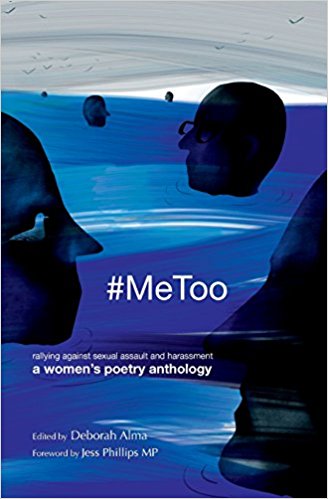
 DEBORAH ALMA (Emergency Poet) is a UK poet, with an MA in Creative Writing, taught Writing Poetry at Worcester University and works with people with dementia and in hospice care. She is also Emergency Poet prescribing poetry from her vintage ambulance. She is editor of Emergency Poet-an anti-stress poetry anthology, The Everyday Poet- Poems to live by (both Michael O’Mara), and her True Tales of the Countryside is published by The Emma Press. She is the editor of #Me Too – rallying against sexual harrassment- a women’s poetry anthology (Fair Acre Press, March 2018). Her first full collection Dirty Laundry is published by Nine Arches Press (May 2018). She lives with her partner the poet James Sheard on a hillside in Powys, Wales.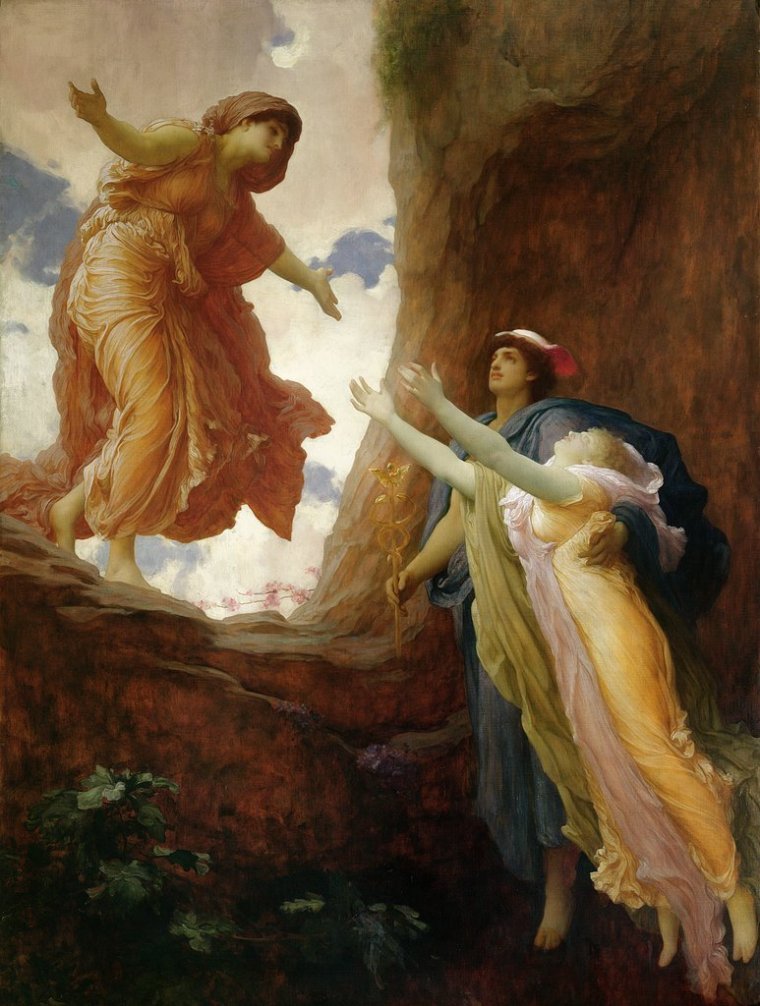






 Jamie Dedes' THE POET BY DAY Webzine