Page 339 of 433

CELEBRATING AMERICAN SHE-POETS (19): Silva Zanoyan Merjanian, Borrowed Sugar Borrowed Time – from war-torn Lebanon to peace in California
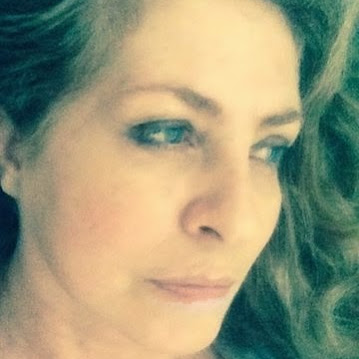
Armenian/Lebanese American poet, Silva Zanoyan Merjanian
Silva Zanoyan Merjanian

Silva Zanoyan Merjanian is an Armenian ethnic who was born in Lebanon. She escaped the civil war there and lived for a time in Geneva, ultimately settling to build a family life in California. Silva has two published collections. Most recently Rumor (Cold Water Press, 2015), which received the Best Book Award from NABE in the 2015. Three poems from Rumor were nominated for a Pushcart Prize. Silva’s first collection is Uncoil a Night (CreateSpace, 2013).

73f533_9cc020b992f94d93a6acdd49383341f5

Falling

In rind of wishes sticky on lips
and sermons’ echo on facepsalms slipping
in envies squirted on spruce and cedar
whims twirling, spiraled, speckled
gossamer visions of friendships withered
in crevices of an upbeat mien
Your name hidden in prayer embers
I mend among buds of poems
flying on a trapeze
with no one at the other end

Rumor is a stunning tour de force of passionate, life-affirming poetry. Silva Merjanian evokes time and place with both grace and authority. Poetry is obviously a tool for her own healing and in that she brings us face to face with the human condition in all its complexity, beautiful and loving and devastating cruel, and she does so totally without pretension.

Mornings arriving
Me alone
Poems half written and done
Poems between toes and toast
‘Round Midnight and Monk
Nostalgia
Right reasons
Brave decisions
Thoughts that glow in the light
Just love
Always, in absence of rats and such
fresh sheets and I
between over and under

from Between the Sheets

She writes with immediacy of war:

bounce of gold crosses between breasts
colorful hijabs ’round others’ bare face
friendships seeded in borrowed sugar, borrowed time
she, unaware of borrowed wailers on their way
makes plans on a sunny balcony as she hangs
her blue jeans on a clothesline
moments before war drums ripple through crisp calm

from Borrowed Sugar Borrowed Time

INTERVIEW

JAMIE:  Silva, Rumor is a remarkable collection with many poems that stay with one. It’s also quite generous of you to donate proceeds to the Syrian-Amenian Relief Fund (SARF). How are sales going and how is the fundraising?

SILVA: Thank you Jamie. I did not have an event or a formal fundraising with Rumor. The sales were a result of readings, speeches, word of mouth and some ads in newspapers and on Facebook. In July there will be an ad for it in Poets & Writers and it will also be included in five book fairs this summer.

My publisher, Dave Boles of Cold River Press, will release the e-book version soon. He is kind enough to donate all proceeds from the e-book also to the SARF. So with all these developments I expect a boost in sales.

JAMIE: When did you fall in love with poetry? When did you realize you are a poet?

SILVA: I am a late bloomer. I started writing in 2011 and my first book was released in 2013. Even though we grew up with the poetry of Shakespeare, Keats, etc.. and many Armenian poets, the thought of writing poetry hadn’t occurred to me. My education is in Business Administration not Fine Art. It was almost like catching the bug of poetry, very unexpected, once I started writing I couldn’t stop. I didn’t write to be published at first, it was just for the pleasure of it, later when I saw friends publishing books, the idea came to me to publish and make it count for something by donating the proceeds.

JAMIE: What are the reactions to your work that surprise you most?

SILVA: I didn’t expect the level of appreciation for my poetry that I received. Especially from those who themselves write and/or are well read in poetry. I have to thank the Irish first for this recognition. They have such talented poets and they recognized my potential first.

I also didn’t expect the difficulty to be accepted as a writer in the Armenian community. It was almost like they waited for me to be respected in the foreign circles before they’d acknowledge me, instead of reading my work and appreciating it themselves. I am disappointed in that respect.

JAMIE: Tell us something about your travels: How did your family arrive in Lebanon and why did they move from there. How did you end up in the U.S.?

SILVA:  My grandparents had to flee their homes twice, trying to survive the Armenian Genocide. If you are familiar with the book The Forty Days of Musa Dagh by Austrian -Bohemian writer Franz Werfel, first published in German in 1933, it is the story of my grandparents. The French helped the population of seven villages escape and relocate as refugees in the Bekaa Valley in Lebanon. So my grandparents did live under refugee tents for a whole year. Now the area is a buzzing town with three churches and schools and commerce.

I left Lebanon after experiencing eight years of the civil war*. Geneva was the city I healed from the war scars. Later I settled in California to raise my sons with my husband.

JAMIE: What do you think most Westerners don’t understand about the Middle East? What do you know and understand that you would like everyone to know?

SILVA: What most don’t understand about Lebanon, and to a degree parts of the Middle East, is that the vast majority of the people are just the nicest fun loving, peace loving, hard working families. They want for their children everything an American family wants. The number of innocent people who are collateral damage to the events in that part of the world is just heartbreaking.

JAMIE: I understand that your brother is a novelist. Does your family have a history of poets and writers?

SILVA: My brother has two volumes of poetry in Armenian. He is writing his third novel. I am not aware of anyone else in my family who has published books, except a volume of translations by my father.

JAMIE:  You have two well-received collections completed. Where to now?

SILVA:  That’s a question I’ve been asking myself. I think I will keep writing and hope a third book will be in the future for me.

* Lebanese Civil War – 1975-1990

© 2016, portrait, poems, bookcover art and responses to questions, Silva Merjanian, All rights reserved

THE EGYPTIAN ZABBALEEN, JOBS LOST AND GAINED … and therein lies a Wednesday Writing Prompt for you

A Group of Boys at Moqattam Village

It is – unfortunately – not news that in some places (including First World countries) children and adults dig through trash cans or garbage dumps looking for something to eat or for cast-off goods that might be used or sold. There is no story, however, that quite compares to that of the Egyptian Zabbaleen or “garbage people” for sheer industry and inventiveness. From the 1940s these people ran 120 micro-enterprises that collected and recycled Cairo’s garbage. This was the Zabbaleen’s creative solution to the need for jobs and income when farming ceased to be a viable for them.

There was as you might imagine a downside: social stigma, subsistence and disease. Garbage collecting did, however, offer something of a living to an estimated 60,000 – 70,000 people and what these people did was quite remarkable. In fact, it was unique in all the world. They recycled 80-85% of the garbage, which is where their income came from. Most Western countries recycle about 20-25% of garbage.

In 2005, Egypt hired private contractors from Spain and Italy to bring in huge trucks and cart garbage to landfills. This move along with others made in the name of modernization and Westernization cost the Zabbaleen dearly and, in fact, in the end all of Cairo suffered for this decision.

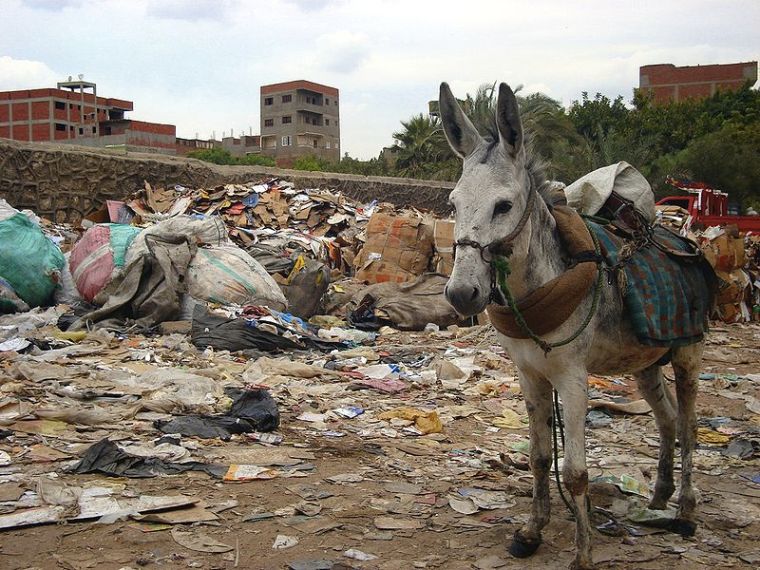
A Donkey at Mokattam Hill in Cairo

I first learned the story of the Zabbaleen from Mai Iskander’s award-winning feature-length film Garbage Dreams, which aired on the PBS Independent Lens program for Earth Day in 2010. While the context and culture of the story is unique, the experience of losing one’s livelihood to corporate giants, funding cuts, social or technological change or other conditions is all too commonplace. Almost all of us and our communities have been touched – if not devastated – and sometimes recreated by such experience.

Some people are remarkably resourceful and inspiring, like the Zabbaleen when they transitioned from farming to garbage collection. During The Depression, my own father’s import & export business was failing.  He got the idea to tell the furriers in the neighborhood that he would clean their offices at night. He made them an offer “they couldn’t refuse.” Then, in the same spirit as the Zabbaleen, while he handled the factory and office maintenance, he’d sort through the trash and save all the tossed away bits of fur. He made them into little bow-ties and earings and little mink teddy bears and sold them to Macy’s. Even in a depression there are people with enough money to buy useless luxury tchotchkes, so that’s the market he went after.  He eventually became a furrier.

WRITING PROMPT: Write a poem, short story or article about the impact of job loss on an individual, family or community. This might be a poem about someone’s grief over job loss or how they reinvented themselves in the face of hard times. It might be a short story about family dynamics in the aftermath of financial catastrophe. Or, it might be an article about your own community and how it survived (or not) the loss of a company or industry that was once the foundation of your town’s economy.  Is there a story in your heart or your own back yard that until now you hadn’t thought of telling?

© 2016, story and prompt, Jamie Dedes, All rights reserved; Photo credits: the boys by Ayoung0131 under CC BY-SA 3.0 License; the donkey by Thousandways under CC BY-SA 3.0 License.


SOMETHING TO THINK ABOUT: Write what you don’t know!

The received wisdom given to writers for as long as I can remember is “write what you know.” I haven’t a clue where on earth that might have come from. I have read that Hemingway’s advice was . . .

“From all things that you know and all those you cannot know, you make something through your invention that is not a representation but a whole new thing truer than anything true and alive.”

That makes more sense to me then “write what you know.” So does Nikki Giovanni’s comment …

I want to be clear about this. If you wrote from experience, you’d get maybe one book, maybe three poems. Writers write from empathy.”

Danny Strong (b. 1974), actor, writer, director and producer
Danny Strong (b. 1974), actor, screenwriter, television and film director and producer

In this video Danny Strong makes the same point in his own colorful way.

If you are viewing this post in an email, you will have to link through to the site for view the video.

Photo credit: Danny Strong courtesy of the Annual Peabody Awards under CC SA 2.0 license

THE SUNDAY POESY: Opportunities, Events and Other Information and News

PBD - blogroll

CALLS FOR SUBMISSION

Opportunity Knocks

POETRY FOUNDATION accepts submissions year round for its Poetry Magazine. Details HERE.

PARIS REVIEW accepts submissions – including unsolicited submissions – year round.  Details HERE.

THE KINDNESS OF STRANGERS, an anthology of Wishing Up Press, invites submissions of poetry, fiction, memoir, creative non-fiction exploring – you got it! – “the kindness of strangers.” The submission deadline is September 1, 2016. Details HERE.

POLYCHROME INK celebrates diversity in literature and is interested in submissions from underrepresented voices writing poetry, fiction and non-fiction. Deadline for the next issue is July 1, 2016, however, the publication does have a “rolling submission policy” … in other words, you may submit year-round. Details are HERE.

MOREL SOUTH&WEST is a regional publication of Ontario currently accepting poetry, fiction, essays and articles on Southwestern Ontario. Poetry submissions are welcome through June 19 for publication in July 2016. Details HERE.

FISSURE is open year-round and offers opportunities to young LGBTQ+ and allies. Submission guidelines are HERE.

JSTOR (pronounced Jay-stor) has been around a long time.  JSTOR Daily – “where news meets scholarly match” is relatively new. It is a paying venue, “an online magazine that offers a fresh way for people to understand and contextualize their world. It features topical essays that draw connections between current affairs, historical scholarship, and other content that’s housed on JSTOR, a digital library of scholarly journals, books, and primary sources. In addition to weekly feature articles, the magazine publishes daily blog posts that provide the backstory to complex issues of the day in a variety of subject areas, interviews with and profiles of scholars and their work, and much more. The magazine makes the content on JSTOR, which most people access via university libraries or other institutions, freely available to the general reader by highlighting timely or otherwise compelling content, and providing free links to that content.” Further details and submission guidelines are HERE.

MSLEXIA (Newcastle) sponsors annual contests and the Children’s Novel Competition is open for submissions though September 19, 2016. Details HERE.

JOURNAL OF NEW JERSEY POETS is accepting poetry submissions from New Jersey poets through October 1, 2016. Details HERE.

THE BeZINE theme for July 2016 is “Faith: In Things Seen and Unseen.” Poems, essays, short-stories (up to 1,200 words), flash fiction, feature articles (up t0 1,200 words), photography, art or video – as long as it can be loaded into a post – are acceptable for consideration. Deadline is July 10.  Details HERE.

SEVEN BY TWENTY,  a journal of twitter literature, reports that its submission que is empty and invites submissions. Details HERE.

CONTESTS/COMPETITIONS

Opportunity Knocks

BATTERED MOONS POETRY COMPETITON is open to U.K. residents and is part of the Poetry Swindon Festival. Deadline is 30 June 2016. Details HERE.

BLACK BOX POETRY PRIZE for poetry collections is accepting submission through the 30th of this month. It is sponsored by Rescue Press. Details HERE.

BARROW STREET PRESS book contest deadline for a previously unpublished book of poetry in English is June 30. Details HERE.

EVENTS/FESTIVALS

Tuesday, September 15, 7:00 PM
U.S. POET LAUREATE INAUGURAL READING, Washington, D.C. 21st Poet Laureate Consultant Juan Felipe Herrera will kick off Hispanic Heritage Month with his inaugural reading. This event is free and open to the public. Co-sponsored by the Library of Congress Hispanic Division.Location: Coolidge Auditorium, Thomas Jefferson Building (ground floor) Contact: (202) 707-5394

Monday, June 13, 8:30 AM–5:00 PM
FROM THE BLACK ARTS MOVEMENT TO CAVE CANEM, Washington, D.C. To celebrate the 50th anniversary of the Black Arts Movement and the 20th anniversary of Cave Canem, a day-long symposium featuring two panels and a Master Class in children’s literature. This event is co-sponsored by the Folger Shakespeare Library’s O.B. Hardison Poetry Series, PEN/Faulkner Foundation,
Contact: (202) 707-5394

GRASSINGTON FESTIVAL, 15 Days of Music and Arts in the Yorkshire Dales (looks like there are about three or four poetry events) from 17th June – 2nd July. Details HERE.

100,000 POETS FOR CHANGE events will take place around the world on Saturday, September 24, 2016. To find an event in your area or to sign-up to organize an event in your area visit 100tpc. On this global day of unity and consciousness raising, literary and other artists and friends around the world will come together in cities, hometowns and even private homes to encourage peace, sustainability and social justice.

The BeZine will host a virtual 100TPC event that day offering you the opportunity to participate electronically no matter where in the world you live and even if you are homebound. Our Contributing Editor, American-Isreali poet Michael Dickel (Fragments of Michael Dickel), is master of ceremonies.

TIDBITS

INDIE AUTHOR NEWS – a go-to place for those of you who self-publish.

THE LAST GOOD COUNTRY  “tells the ambiguous origins of Ernest Hemingway and his transformation into one of the greatest writers/icons the world has ever known. After returning from WWI in Milan, shaken by injury, and shut out by the woman he loved, Hemingway travels to the Upper Peninsula to discover what kind of man he is meant to be. These events would eventually become the inspiration for his Nick Adams tales.”

THE POET BY DAY SUNDAY POESY

Submit your event, book launch and other announcements at least fourteen days in advance to thepoetbyday@gmail.com. Publication is subject to editorial discretion.