Poets, Poetry, News, Reviews, Readings, Resources & Opportunities for Poets and Writers
Author: Jamie Dedes
Jamie Dedes is a Lebanese-American poet and free-lance writer. She is the founder and curator of The Poet by Day, info hub for poets and writers, and the founder of The Bardo Group, publishers of The BeZine, of which she was the founding editor and currently a co-manager editor with Michael Dickel. Ms. Dedes is the Poet Laureate of Womawords Press 2020 and U.S associate to that press as well. Her debut collection, "The Damask Garden," is due out fall 2020 from Blue Dolphin Press.
Brevity might be the soul of wit (Shakespeare) and of lingerie (Dorothy Parker), but it has now evolved to be ubiquitous and fashionable in a wordy kind of way… Twitter stories, flash fiction, even one-sentence poems and one word responses to emails. However tantalizing or practical some of these are, too much abbreviated word-play is a bit like feeding mind and heart on nothing but hor d’oeuvres. I want to shout, “WHERE’S THE MAIN COURSE!”
An appreciation for short snappy creative writing seems somehow inevitable though. While the world lauds mindfulness, it demands multitasking and the expectations for productivity are ever-expanding. We just don’t have time for lengthy reads… and maybe we don’t have patience anymore. In any given moment it seems a thousand things call for our attention.
No doubt we also owe some of the penchant for sound-bites to our explosion of tech toys and social networking. I could certainly give them up if I had to, but I’d rather not. Nor do I want to give up the convenience and economy of my Kindle library, which is perfect for living in small spaces.
Nonetheless, on Saturdays like this – with no immediate deadlines, no appointments, no chores – I love to live in my big chair with a book and an iced coffee mojito. What luxury to get lost for long hours in an imagined world, painstakingly created, served up on paper with good old-fashioned paper binding.
Wishing you a pleasant Saturday. Jamie
______________________________
_______________
IMHO nothing beats a good legal thriller for escape and John Lescroart is the absolute master – my read for the day.
Mixed Remixed Festival will present the annual Storyteller’s Prizes to television and film star Taye Diggs and award-winning illustrator Shane W. Evans on June 11, 2016 at 6:30pm at the Japanese American National Museum in downtown Los Angeles, 100 N. Central Avenue, Los Angeles, CA 90012. The prizes will be presented as part of a live event featuring music, comedy, and spoken word.
The Storyteller’s Prizes are awarded each year to artists, scholars and activists who have shown a dedication to celebrating and illuminating the Mixed and multiracial experience. Past Storyteller’s Prize honorees include Key & Peele, National Book Award finalist Susan Straight, The Daily Show’s Al Madrigal, and best-selling author Jamie Ford as well as Cheerios and Honey Maid.
A hosted dessert reception will immediately follow the prize presentation and performance. Please be sure to register for this event! FREE!
Thank you for sharing your love of words. Comments will appear after moderation.
I think what gets a poem going is an initiating line. Sometimes a first line will occur, and it goes nowhere; but other times – and this, I think, is a sense you develop – I can tell that the line wants to continue. If it does, I can feel a sense of momentum – the poem finds a reason for continuing.”
Billy Collins’ poetry is profound, bazaar or tenderhearted observation expressed with wit; the ordinary expressed in the most extraordinary ways. We love this former U.S. Poet Laureate from New York.
If you are reading this post in an email, please click on the link to the blog in order to view the video.
Thank you for sharing your love of words. Comments will appear after moderation.
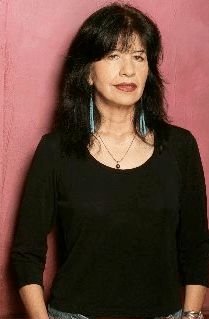
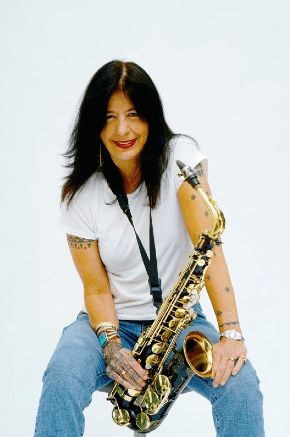
Joy Harjo (b 1951), Mvskoke (Creek) Poet, Musician, author and key player in the second wave of the Native American literary efflorescence
Crazy Brave(Norton & Company, 2012), Joy Harjo’s eminently engaging memoir, flows like a long prose poem. It is rich and well-built on a foundation of tribal mythologies, a strong sense of her ancestry, her difficult childhood and youth and salvation found in poetry and music. From her birth to a handsome much-loved fire-spirit father who inherited Indian oil money, allowing him to indulge a passion for cars, and her beautiful water-spirit singer-mother whose voice was stilled by a bully of a second-husband, Harjo tells the story of girl who survived a physically and emotionally abusive step-father, crushing poverty and the greater cultural obscenities to become one of our most influential poets and a formidable advocate for justice for Native Americans and liberation for women.
I was entrusted with carrying voices, songs, and stories to grow and release into the world, to be of assistance and inspiration. These were my responsibility.”
*****
I can’t imagine the human being who wouldn’t relate to Joy Harjo’s history, but those who have come from “broken” homes, poverty and a family of mixed ethnicity will most especially appreciate it and perhaps find some healing and strength in the pages of Crazy Brave. That Joy Harjo survived so much to become a decent loving person leaves the rest of us with no excuse; and any writer, poet or musician will take to heart the dreams and visions of that long journey to find hope and creative voice in poetry.
Joy Harjo, a member of the Mvskoke tribe was born in Tulsa, Oklahoma, an area where the Native American trail of tears ended, an area to which the indigenous peoples were removed – forced to relocate – as people of European descent moved into their original home places. The removed were the Five Civilized Tribes – Cherokee, Chickasaw, Choctaw, Mvkoke and Seminole – who were living as autonomous nations in what is now the American Deep South.
“I fought through the War Between the States and have seen many men shot, but the Cherokee Removal was the cruelest work I ever knew”. Georgian soldier who participated in the removal
*****
When the World as We Knew It Ended
It was coming.
We had been watching since the eve of the missionaries in their long
and solemn clothes, to see what would happen.
We saw it
from the kitchen window over the sink
as we made coffee, cooked rice and potatoes
enough for an army.
We saw it all, as we changed diapers and fed
the babies. We saw it,
through the branches of the knowledgeable tree,
through the snags of stars, through
the sun and storms, from our knees
as we bathed and washed the floors …
The conference of the birds warned us as they flew over
destroyers in the harbor, parked there since the first takeover.
It was by their songs and talk we knew when to rise,
when to look out the window
Joy Harjo’s poetry and music are influenced by her ethnic heritage and her feminist and social concerns as well as by her love of word and sound and her education in the arts. Largely autobiographical, her poetry is informed with descriptions of the Southwestern landscape and the mythologies, symbols and values of the Mvskoke people. Hers is the sort of writing that sits with you to become part of your own bone and marrow, which is the way of good poetry and good story. A poet of the people but also a critically-acclaimed poet, her many awards include the Wallace Stevens Award of the Academy of American Poets, The William Carlos Williams Award from the Poetry Society of America and the American Indian Distinguished Achiement in the Arts Award. She is the recipient of several grants and is a teacher, musician (saxophone) and singer. She has published some fourteen books and ten music albums.
It was a dance,
her back against the wall
at Carmen’s party. He was alone
and he called to her – come here, come here
that was the firs time she saw him
and later she and Carmen drove him home
and all the way he talked to the moon,
to the stars, to someone riding







 Jamie Dedes' THE POET BY DAY Webzine