to the sweet past
to the savory present
to the hopeful future l’chaim
According to Wikipedia, among Argentine Jews, the Spanish name Jaime (xajme, a Spanish cognate of James) is often chosen for its phonetic similarity to Haim (life). I should change my name from Jamie to Jaime!
I believe “l’chaim” is generally used at weddings though it appears to have a complex history. At any rate, I have taken some liberty here.
With all the horrors in the news these days, there are still moments of peace, hearts at peace, sweet and savory pleasures and we haven’t lost our hope for the future. This week write a poetic toast to Life, to all that is good and blessed and persists even in the face of tragedy. If you are comfortable, please share your work on theme or a link to it in the comments section below. All work shared will be published here next Tuesday.
The variety of responses to the last Wednesday Writing Prompt “Archaic Torso of Apollo,” September 27 are a pleasure to read. Thanks to Renee Espiru, Sonja Benskin Meshery, Gary Bowers and Paul Brookes for coming out to play and sharing their fine work.
Join us tomorrow for the next Wednesday Writing Prompt. All are welcome to take part no matter the status of career. Beginners and experienced are welcome to come, be inspired, share their poems and get to know other poets.
A Life Betrayed
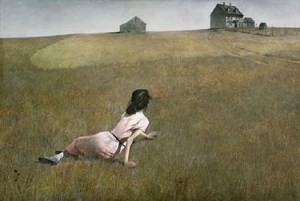
She lives the only life
she has ever known
inside someone else’s home
she wonders how she came to this
miles of fields and distance
a breeze touching her
now frail being
did someone leave her here
without her knowing and
will she wake one day
to find she’s dreaming
for she loved him so in her way
but was he a mirage or
just a ruse she wrote of
in her own knowing
before her body did betray
and stole her life
and youth
the characters for the most part
get themselves into such a muddle
usually intent on mirroring
the messes & muddles of others
closely observed by scheming clowns
with special peculiar insights
how will they get out of the muddle?
a question which keeps you entranced
turning the pages rapidly
never really wanting an unravelling
no linearity just sets of closed circles
of rather bizarre impossibility
occasionally a character will experience
a bright moment of illumination
or clarity which I have come to call
the specificity of the ordinary:
the cat on the terrace dust particles
lizard on a sunny bank
bare gritty floorboards leaves in the wind
ivy climbing on a rock as it might be
to refer it all to myself measuring
the impact of the ordinary
if only the characters had listened
to their author’s commentary
more carefully they might all have been
able to rescue themselves
he grips the tablets in his charge, this
courier of commandmenta, and takes umbrage or looks
askance at some person or
persons on
his left. on his head
are zigguratish lumps,
horns, that should have been
unsculptable rays of
light. julius the pope, the vicar
of christ, has left
his mortal remains entombed
here, and moses to guard
them. the likeness
of julius was to be
the capstone of the tomb
but it was never
done. the militant pope
had need of his hireling
visionary elsewhere,
as plasterer and muralist
for a now-renowned chapel.
the tomb was finished in 1545,
decades after julius’s promotion
to resident of Heaven.
A portrait of poet Rainer Marie Rilke (1875-1926) painted two years after his death by Leonid Pasternak
Ekphrastic poetry is the tantalizing intersection of the art of poetry and the visual arts. HERE‘s an example of one mine that draws on both art and a traditional Chinese Buddhist allegory.
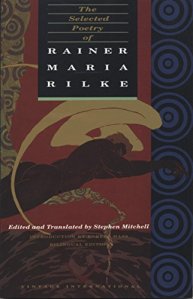
The poem featured below is by Rainer Marie Rilke (1875-1926), Bohemian-Austrian poet and novelist. I am particularly enamoured of it.
There are many stunning features to Archaic Torso of Apollo. It’s certainly meditative and almost prayerful and yet if it is a prayer it is oddly delivered to a dead and broken god. The poem suggests wholeness even though the statue is fragmented. Perhaps most striking, we are somewhat surprised by the turn the Rilke takes in the end.
You will note also that this poem is not simple physical observation. It recognizes something that is part of our history, our culture and mythology, and yet somehow is not earthbound. It points to the ethical and ineffable.
Archaic Torso of Apollo
We cannot know his legendary head
with eyes like ripening fruit. And yet his torso
is still suffused with brilliance from inside,
like a lamp, in which his gaze, now turned to low,
gleams in all its power. Otherwise
the curved breast could not dazzle you so, nor could
a smile run through the placid hips and thighs
to that dark center where procreation flared.
Otherwise this stone would seem defaced
beneath the translucent cascade of the shoulders
and would not glisten like a wild beast’s fur:
would not, from all the borders of itself,
burst like a star: for here there is no place
that does not see you. You must change your life.
– Rainer Marie Rilke
The photograph of the Rilke portrait is in the public domain.
WEDNESDAY WRITING PROMPT
This week pick one of your favorite works of art to write about. Take your time and enjoy the exercise. If you feel comfortable, share your poem or a link to it in the comments section below. All work shared on theme will be published here next Tuesday.
Well, here we are: Tuesday! This brings us to this week’s poetic responses to last week’s Wednesday Writing Prompt, Philosopher’s Stone, September 20. The poems that follow give us an intimate and intense view of our regularly participating poets, either from the perspective of family connection, educational inspiration, or perspectives on art and philosophy. Enjoy!
… and do come out and exercise your poetic imagination tomorrow for the next Wednesday Writing Prompt. All are welcome no matter where in the world you live, no matter your style or your status as a poet: amateur or professional, beginning, emerging or established. These prompts are theme based, not form based. All works shared on theme will be posted in next Tuesday’s collection. You may share your poems – or even prose – or a link to your theme-based work in the comments section below.
how you live in my mind!
genius teacher of boys other than myself
(never in your class) so often floating past me
in your ungainly manner
during those severely wounded years
shortly after the period of reciprocal destruction
known peremptorily as World War Two
you had been caught (I have always imagined)
in a random machine gun volley
down some dark & horrible defile
stinking of blood & death
all in the same old idiot cause
returning after great suffering being pieced together
to Kingston Grammar School to amble disjointedly
along its corridors nick-named perhaps brutally
by previous generations of unkind boys to indicate
that they could hardly understand
a single word of yours whether spoken in fluent
Latin Greek Russian French or German
your command of which survived the wounds
of neck & face as well as arms & legs
and who knows what else now grave secrets
but once I heard you solo speaking loud & clear
in Dvorak’s Cello Concerto playing now
on the gramophone – and it’s not Rostropovich
but Gobbo as it might have been weeping for joy
at his survival in spite of all the suffering
this darkening evening in late autumn
Making up his abode in a distant land
Discerning the blue sea
He pierced beside me
Watery moonbeam playing on his visage
Vehicled abruptly his fervid miraculous fingers
Attiring a necklace of words
A mystic film
A palace of jade
I glowered at him except twinkling of my eyes
Surmising his authentic essence
Of a man a spirit or a god
Relating me his volition
to foozle me in his sea beside his mushy windy casuarina arbors
He left
Hurling his words into the blue bay
But nothing finaled
Albeit I recounter ,counsel
and -grope his lustre
Palping eyes of his verses
Savoring his left pages …
The poet was my father
He read his poems to our family friends
And all were mesmerized by them
How wise, how deep, how entangled but also bold
In a time of dictatorship
The poet was my hero
Till one day when the feeble man crawl from under his own built effigie
Sad day for me
I became deaf to his words
And started writing my own lines
Lines on my own coin
The poet left
Vaporised in some blond vagina
Only then I have found that was his pattern
Sliding slowly from one black hole to the next vortex
Blond haired and with witchy eyes
The poet and me lost track from one another then
I remained with the one instilled by him in the cells of my soul
Later, decades later
The poet have raised again from his pit
He stands besides his trees
The trees that in one of his poems were craving to see a naked woman for they never been in paradise







 Jamie Dedes' THE POET BY DAY Webzine