Life, Poetry, Art and the Wired Universe
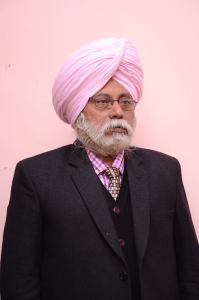
An interview of Dr. Aprilia Zank, poet, artist and lecturer for Creative Writing and Translation in the Department of Languages and Communication at the Ludwig Maximilian University of Munich, Germany, by Dr. Jernail Anand, poet, writer and an established name in the field of education, philosophy, and spirituality. Originally published in Galaktika Poetike “ATUNIS” and shared here with both Aprilia’s and Dr. Anand’s permission. Enjoy! It’s rich.
LIFE, POETRY, ART and the WIRED UNIVERSE
ANAND: Zank, how do you look upon yourself essentially. Do you consider yourself a poet or a teaching professional who is conscientiously touched?

ZANK: I consider myself a many-faceted humanist. I graduated university as a very promising professional, but I did not hesitate to put back my career ambitions for a while for the sake of child raising and education. Transmitting humanistic values to young generations, whether your own children or your students, is possible through both writing and teaching poetry. I was lucky to have the chance to do them concomitantly. Being a poet myself has been an optimal prerequisite for a better understanding of the creative process, and enabled me to select the most appropriate manner of approaching poetry in class.
ANAND: Let us know how you stumbled into poetry. Is there any parental legacy behind your interest?
ZANK: My affinity to poetry and literature dates back to my school time. I was fortunate to enjoy a thorough education both at school and at home. My parents’ professions were not very poetic, they were both judges, but they held literature and art in great esteem. We had a considerable collection of books at home, which offered me the possibility to get an early contact with universal literature. Furthermore, my mother, who had an amazing memory, used to recite poems and quote prose fragments from the most various books and authors. Thus, the challenge was early there for me to try and find my own poetical voice.
ANAND: You are a multi faceted personality. How do you align one aspect of your personality with the others? Don’t you think they overlap at times?
ZANK: My range of interests is indeed very wide. To my main occupations, teaching and writing, I must add my passion for photography, which I experience as a form of art and a most creative act of deciphering the world. There is poetry in photographic images, as well as pictorial effects in verse. I am pleased to say that many of my photos have been awarded in various competitions, and several have been used for poetry book covers or have served as prompts in poetry workshops, or paired with poems in various publications. Further hobbies are travelling, gardening, dancing – to mention just a few.
ANAND: Can you define the role of the poet today? Is it enough that they pour out their art and heart, or do you find a political angle to whatever is being written? Is everything that we write political? Can an author be neutral in a wired universe?
ZANK: There are two main points in this question. The first relates to what T. S. Eliot called the “turning loose of emotions”, a poetic attitude which I absolutely reject. I think there is too much “I” and too much “heart” in the poetic scene, virtual as well as real. Nothing against sentiments in poetic creations, as their denial would contradict the very essence of poetry, but there is too much raw, metaphorically unprocessed feeling in today’s verse. There can be no poetic originality where there is no filtering of emotions through stylistic refinement. That is why many poetic voices sound very much alike.
As for the question whether poetry and politics have anything in common, I must say that being political or not is a matter of definition. Nobody is completely apolitical. Even non-involvement with politics can be an attitude of either rejection and refusal to comply, or tacit agreement to what is going on. Happily enough, there are many poets who overtly challenge social and political issues. Nevertheless, in the same way in which many people nowadays are more concerned to take selfies than to capture the reality around them, a great number of aspiring poets have both ears open for the sighs of their own hearts more than for the cries of humanity.
ANAND: If I say all art, poetry included, is autobiographical, will you contradict my statement? Can you imagine a toy of clay without the presence of clay in it?
ZANK: Each act of creation emerges from a complex interaction of factors which shape one’s personality – it is therefore autobiographical to a certain extent. But no true creator of art or poetry will remain trapped in their own shells. It is the ability to transcend one’s personal feelings and experience in order to reach a dimension of universality that makes art viable and everlasting. Here again I must quote T. S. Eliot with his famous line, “Let us go then you and I”, which points to the “oneness”, to the synthesis of author and reader. Basically, we walk similar ways, we have the same needs and longings, and often enough similar victories and defeats. But then what makes a poet different from one who pens his or her bits of life in a dairy? It is precisely that particular skill of turning personal emotions and experiences into original but generally applicable patterns with which the readers may fully or partly identify and recreate themselves.
ANAND: You are an artist also. How are a poetic work and an artistic creation different?
ZANK: They are only different in the materials used for the end products. The impact, both spiritual and aesthetic, on the receptor can be comparable to a large extent. It is a common place to say that you can paint with words, or tell stories with images and colours. One talks of visuals in poetic lines, as well as of the poetry of photographic or painted images. And of course we can extend these observations to music, too.
ANAND: What are your views on feminism? Is it essential for a woman writer to write against their menfolk? How can you reconcile feminism with home?
ZANK: Feminism is a word of many shades, depending on the time, place and intention of its use. I am not a programmatic feminist. When necessary, I am a combatant against injustice, abuse, exploitation in all domains. I speak up on behalf of children as well as of adults irrespective of gender; I am also active in animal protection. And when wrong is done by men, I raise my voice against those particular men, not against menfolk as a whole. Unfortunately, women are still underprivileged in many cultures, and I am positive you know it better than I do, so they need lots of loud voices to bring about the necessary changes for fair chances and equal social acceptance.
ANAND: Most of poetry erupts out of a broken mindset and the major role in it is played by love rejection, dejection and disruption in marital affairs. Who after all is at the centre of your poetry?
ZANK: There are indeed many examples of literary geniuses with distorted mindsets, but this is in no way a must for brilliant creative works of any kind. Marital, or more often extra marital dramas, also play a role, but when literature focusses on this alone, it is not, in most cases, truly great art. As far as I am concerned, it is not about who, but about what is important in poetry. Love? Again, it depends on the semantics of the word. There are tons of poems and anthologies dedicated to love – one must wonder why, with so much love around, there are so many conflicts in the world. Maybe precisely because most people keep rotating around their one-and-only own self, with no intention or ability to look beyond and above it, to cast a glance to other realms of human love and life, or even further, to other issues of this poor blue planet with its multitude of problems. And, back to your question, there is no central concern in my poetry, but the attempt to explore and feature as many facets of our existence as possible.
ANAND: Every author exhales a feeling of half fulfilment. What more do you think you wish to accomplish?
ZANK: Basically, artists of all kinds are never content with their accomplishments. But then neither are scholars, scientists, educators, even honest politicians. There are many things I would still like to do, foremost activities in collaborative projects with poets and artists from around the world. My experience so far has shown that these intercultural exchanges are most enriching in every respect: not only literary, artistic and scholarly targets are met, but also the cherishing of great humanistic values such as friendship, peace, harmony within the mankind and in people’s relationship to nature and environment.
ANAND: How do you react to the idea of virtual literature? Can it be considered literature proper? How you relate it to the futuristic projections of literature?
ZANK: I think there is no such thing as virtual literature, not yet anyway. Literature is always real, only the new media of transmission are different. More and more literature reception happens in the virtual space with its amazing availability and visibility. But, as I have already stated in a previous article, it is precisely this easiness of accessibility that renders the encounter with e-media contents accidental, fugitive, and often enough perfunctory. Will we from now on write with this awareness in mind? Will the cyber-space engender new stylistic and aesthetic dimensions? Let us hope that we will live to see it. I think there is no point in trying to solve the quandary whether the virtual world with its social networks are a blessing or a curse. Living without them has become unthinkable, so why not make the best of it. The possibility to display our work and creativity here, to enjoy borderless visibility and access, and to have the chance of getting feedback from the most unexpected corners of the virtual but also of the real world is priceless.
© 2018, Dr. Ananad and Dr. Zank

DR. JERNAIL S. ANAND is the author of two dozen books in English poetry, fiction and non-fiction, Dr. J. S. Anand is an established name in the field of education, philosophy, and spirituality. Born on 15th Jan., 1955, he hails from village Longowal [Distt. Sangrur,Punjab, India]. He got his school education from the best schools in Ludhiana, the highly industrialized city of Punjab, famous for its hosiery and cycle parts industry. He was a student of famous Govt. College, Ludhiana, during his graduate studies, and he did his M.A. in English literature from Punjabi University, Patiala, securing 2nd position in the University. His doctoral thesis, submitted to Panjab University, Chandigarh, was on “A Comparative study of Mysticism in the poetry of Walt Whitman and Prof. Puran Singh”. Dr. Anand is an educationist, an able administrator, a talented writer, a novelist, a poet, and a philosopher, who is a multi-dimensional personality, particularly, in view of his interest in Saving the Earth. He planted around 20 thousand saplings in and around Bathinda. He has also delivered lecturers on Spirituality, Human Rights, and Moral Values. “We are inheritors of the wealth of this earth and this sky, and it belongs equally to us all” – Anand
A Million Desitines is Dr. Anand’s English language collection.
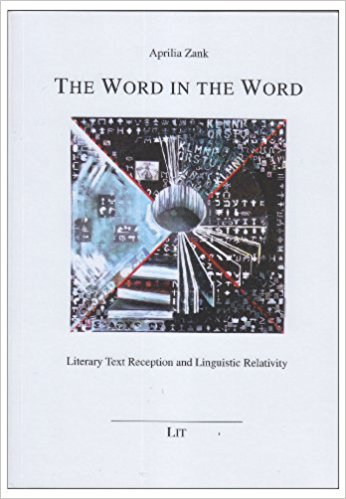 DR. APRILIA ZANK is a lecturer for Creative Writing and Translation in the Department of Languages and Communication at the Ludwig Maximilian University of Munich, Germany, where she received her PhD degree in Literature and Psycholinguistics for her thesis THE WORD IN THE WORD Literary Text Reception and Linguistic Relativity. She is also a poet, a translator and the editor of two anthologies: the English–German anthology poetry tREnD Eine englisch-deutsche Anthologie zeitgenössischer Lyrik, LIT Verlag, Berlin, 2010, and the anthology POETS IN PERSON at the Glassblower (Indigo Dream Publishing, April, 2014). She writes verse in English and German, and was awarded a distinction at the “Vera Piller” Poetry Contest in Zurich. Her poetry collection, TERMINUS ARCADIA, was 2nd Place Winner at the Twowolvz Press Poetry Chapbook Contest 2013. Aprilia Zank is also a passionate photographer: many of her images are prize-winners and several have been selected for poetry book covers.
ABOUT THE POET BY DAY
- The Poet by Day, an information hub serving poets and writers
- The BeZine, founding and managing editor
- Beguine Again, regular contributor
- Second Light Network of Women Poets, professional affiliation
- Testimonials
- Disclosure







 Jamie Dedes' THE POET BY DAY Webzine