changing cities
as easily as another might
switch coffee mugs or find a new cafe
with a different baker for pastries and
a different source for roasted beans
as if life
might change
at a new address
or on the single quaff of a new brew
as if he could find himself
in the company of strangers,
of unknown neighbors
sitting at anonymous tables
in silent camaraderie with
smart phones and tablets
he sits, stares
looking past – not at – his iPad
a woman walks by, shoots a smile
into the dark heart of his alienation
he receives it
like a dying man receives chest compression,
a jump-start to his imagination and he could
envision her that night, looking at the same
moon, mooning over the same stars and
revisiting dreams once thought dead
Cafés are wonderful places to observe human behaviour and the human condition as people visit, hold meetings, take a break, write, sit lonely or peacefully in the noise and crowd. Paint a word portrait in prose or poem of someone you noted and remember from a recent visit to a neighborhood café. If you feel comfortable, please share your response – or a link to it – in the comments below. All shared work will be featured here next Tuesday.
“My genes are in mice, and not in the banal way ….”
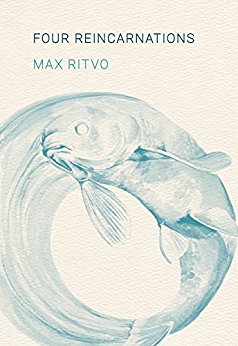
Max Ritvo (December 19, 1990 – August 23, 2016) was an American poet. Milkweed Editions posthumously published a full-length collection of his poems, Four Reincarnations, to positive critical reviews.
Max Ritvo was born in Los Angeles, California on December 19, 1990 A graduate of Harvard-Westlake School in Los Angeles, Ritvo earned his BA in English from Yale University, where he edited a literary magazine and performed with a sketch comedy troupe, and his MFA in Poetry from Columbia University. In 2014, he was awarded a Poetry Society of America Chapbook Fellowship for his chapbook AEONS. On August 1, 2015, he married Victoria Jackson-Hanen, a Ph.D. candidate in psychology at Princeton University, in a ceremony officiated by the poet Louise Glück. He was a poetry editor at Parnassus: Poetry in Review and a teaching fellow at Columbia.
Ritvo was diagnosed with Ewing’s sarcoma (a rare pediatric cancer) at age sixteen and died from the disease at his home in Los Angeles on August 23, 2016.
Ritvo’s work has appeared in Poetry, The New Yorker, Boston Review and as a Poem-a-day on Poets.org. He gave numerous written and radio interviews before his death.
Four Reincarnations, a full-length collection of Ritvo’s poems, was published by Milkweed Editions in September 2016.
According to Lucie Brock-Broido of Boston Review, Ritvo is
“a Realist, a gifted comic, an astronomer, a child genius, a Surrealist, a brainiac, and a purveyor of pure (and impure) joy. His work is composed, quite simply, of candor, of splendor, and of abandon.”
Louise Glück wrote of his first published collection that it was “one of the most original and ambitious first books in my experience… marked by intellectual bravado and verbal extravagance.”
“…the poems are equally conscious of impending death and of the next day’s life, having spent time in a pool of self-skepticism and then emerged shining, shockingly clean…”
While noting that Ritvo “seems to have written most of this book with the clarity, the near equanimity, the distance from ordinary reversals and struggles, of much older poets who know that they are dying,” Burt also writes, “But mortality is rarely his only subject: shyness, gratitude, and erotic attachment are as important as death itself.”
Literary critic Helen Vendler reviewed his work and likened him to Keats. She wrote:
“Ritvo had the luck to study at Yale with Louise Glück and at Columbia with Lucie Brock-Broido, and to attract, before his death, many admirers of his ecstatic originality. Although he is inimitable, his example is there for young poets wanting to forsake simple transcriptive dailiness for the wilder country of the afflicted but dancing body and the devastated but joking mind.”
David Orr, reviewing Four Reincarnations for the New York Times, wrote “It is good-humored (“My genes are in mice, and not in the banal way / that Man’s old genes are in the Beasts”), appealingly sly (“Enoch has written / We are made in His image / but God may have many images./ He may want even more”) and at times surprisingly whimsical (“Every day a chicken dies so that my mom may live”). Orr also quoted, then commented on the end of Ritvo’s poem, The Hanging Gardens:
“This is very fine, and if it acquires a sheen of sentiment because of what it suggests will never emerge — that is, more poems from Ritvo — this doesn’t change the fact that a reader knowing nothing of poetry or this author might find it worth rereading. This is the life poetry leads beyond the confines of the poetic career; the life in which lines exist for what they are, not for future lines they might suggest. The life in which an early poem is also a poem, and a first book is also a book.”
In 2017, Milkweed Editions announced the Max Ritvo Poetry Prize, an annual US$10,000 award and publication contract, supported by the Alan B. Slifka Foundation.
Note: I knew Max Ritvo had a fatal cancer but his death somehow didn’t cross my radar until English poet Reuben Woolley posted an obit earlier this week on Facebook. Such an impossibly sad loss. It has been weighing on me and – however belatedly – I wanted to do a write-up as homage but deadlines and other responsibilities are pressing. Hence, this post is from Wikipedia. Forgive me for not doing my own writeup, though that will come one day. It’s on my ever-lengthening to-do list.
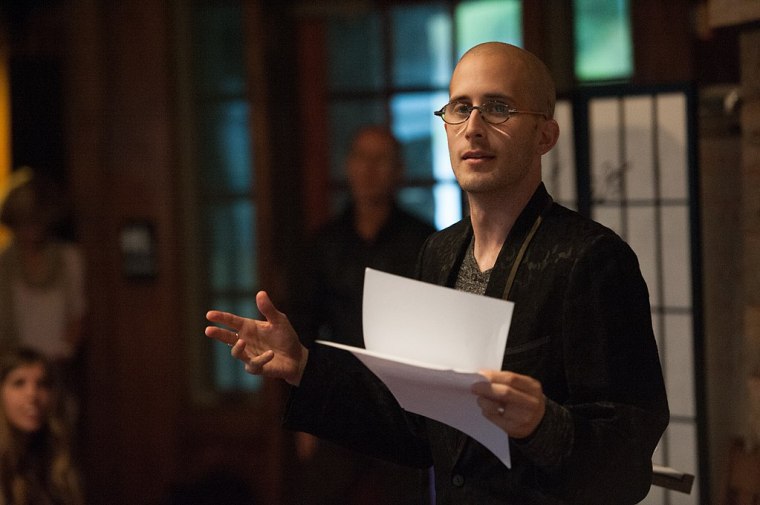
Here is Max reciting My Litter during his self-proclaimed “final tour.” (If you are reading this from an email subscription, it’s likely you will have to link through to the site to view the video.) Max’s Amazon page is HERE. May he rest in peace and may the healing power of the Universe support his wife and family in their lives and loss.
Thank you for sharing your love of words. Comments will appear after moderation.
there’s a portrait in February of percale sheets
and the tempting rondure of warm shoulders
tucked under a rosy duvet and late mornings,
coffee in bed, playing your hips like the strings
of a harp, the rhyme of a true love’s honor,
soft, the whiff of spring, the meadow violets
their heart-shaped leaves and felicitous flowers
promise of summer peace in damask gardens
wealth of silver roses, tart lemons, frisky mint
finger tip the faded hillock of hair on your neck
and let go of all that is false and mean for this –
the warmth of our ardor, the trust in our kiss
Take the characteristics one specific month – any month that you like – and turn it into a sensual poem … and let’s keep it tasteful please. If you feel comfortable, leave your prompt-inspired poem or a link to it in the comments section below. All shared work will be featured here next Tuesday. The deadline is Monday night at 8 p.m. PST.
at the medical center you put your ear
to the trunk of a birch and listened to my heart
while i roasted potatoes in a snowed-under parking lot
and managed the effects of a shrinking brain
when i heard the door to the crematorium slam shut,
i found myself floating on waves of heat that flayed my skin,
mom held me in mourning and sang Salve Regina
(she was slightly off-key)
but i found the grandmother stone you left in my hand
it pulled me back to the earth and the snow
i heard you say you savored the taste of my blood
in the kalamata olives you ate the day i died
i listened to doves cooing and watched the wind
wrap silver filigree around tree branches
the morning was crisp and fresh
the others came with arms full of flowers to say goodbye
but your arms were empty and heavy with love
i decided to live




 Jamie Dedes' THE POET BY DAY Webzine