Page 132 of 199

Played on the Jersey Shore, a poem . . . and your Wednesday Writing Prompt

My apologies.  When I logged in this a.m. I saw that I accidentally scheduled two prompts today.  I’m leaving them both up since poets have started responding.  😦  At any rate, if you want to participate – and I hope you do – please feel free to do so for both if so inclined.  Thank you! 

.

The days were as golden as the sunsets

when we played on the Jersey Shore,

sandy and fevered in the summer heat,

the sun fading our hair and swim suits,

the evenings finding us a motley bunch,

hungry, ready to ply some old tin forks

to my aunt’s mac and margarine.

.

After dinner we tossed our gritty bodies

into a claw-footed bathtub. Sand swirls

where once the tub was white and scoured.

We’d move on, impish, soap-scented and

clean from the bath to our cots and lay on

worn sheets. We were quick to transition to

a sound-proof sleep, comforted by breezes

lapping at the open windows, leaking

promises of more romp and wrestle days.

.

While the moon-lighted nights pondered and

kissed broken shells and unkempt seaweed,

a cold custard of salty-wet beach waited …

for us, the dawn and our small bare feet

in blithe dance to a rowdy morning swim.

.

But these were short stays. Sunday would

arrive, unwholesome and unwelcome, time

to pack our bags and our laundry, our aunt

and uncle – raw-edged nerve – and we kids,

our spirits subdued, our skin browner-hued.

.

© 2013, poem, Jamie Dedes; I have no photographs of the Jersey Shore. This one is of Seal Beach in Northern California


WEDNESDAY WRITING PROMPT

Well, this one is akin to the first composition assignment on returning to school after summer vacation:  Tell us about your most fondly remembered vacations.  Perhaps you enjoyed it because it involved family and childhood.  Perhaps it was a dream vacation come true. Or, maybe it was an unexpected adventure.  Or, perhaps your best vacation is the one you are planning now. Tell us about it in poetry or prose and, if you feel comfortable, share your work in the comments section below or leave a link to it.  Responses will be published here next Tuesday.


We continue with the current recommended read: On Tyranny: Twenty Lessons from the Twentieth Century by Timothy Snyder. Left, right or center – American or not – it’s a must read.

LESSON SEVEN Be reflective if you must be armed. “If you carry a weapon in public service, may God bless you and keep you.  But know that evils of the past involved policemen and soldiers finding themselves, one day, doing irregular things.  Be ready to say no.” Prof. Snyder,  On Tyranny, Twenty Lessons from the Twentieth Century

THE WORDPLAY SHOP: books, tools and supplies for poets, writers and readers

softly speaking … and other poems by readers

LAST WEDNESDAY’S WRITING PROMPT: When people can’t speak-up and speak-out, they can give “voice” to their frustrations in odd ways. What kinds of strange rebellions have you observed? Tell us about that experience in poem or prose.


. softly speaking .

no need to talk, there is no one here.

no need to shout, we have no anger.

those were the early days, younger,

filled with grit and useless sentiments.

now we mindfully watch, envy old fabrics,

hear the sounds of another time, know

this is entertainment, a soothing way

to live now.

she said i looked sad,

perhaps i am.

i have a sense of wellbeing.

© 2017, Sonja Benskin Mesher


***PEBBLES IN SAND***

She walked down a solitary path
left behind her mistakes made
like pebbles in sand dissolving

she drove a car into the night
along a desert highway

until all she could see were stars
twinkling jewels of light

she plucked pearls of wisdom
caught upon her hand from the wind

no one would miss her absence
life would resume without stopping
her choices a dissipating mist

this as she stood outside a house
realizing another day beginning

her children broke the silence
calling

© 2017, Renee Espiru


Not good

wi words
she hugs him.
He shrugs her off.

She shows him
a lot of thigh
and her breasts.

“tha boring”
she tells him
leanin’
strokin’ his leg.

“Got thee ‘ed
in chuffin books
all the bleeding time.”

“‘Ow do I look?”
she says.

He shrugs.

© 2017, Paul Brookes


WEDNESDAY WRITING PROMPT, March 22: What would be your fantasy about the moon? Tells us in poem or prose and share the link to the piece in the comments section below if you are comfortable doing so that we all might read it. This is light one. Enjoy!

Invitation to Daring

Flimsy silver ladder
Dropping across the velvet black
Invitation to daring.
Climb to the silvery sand
Dazzling dunes
Dark gorges.
No moon shines above
The light shines from within.
In that gentle light
Fair beings dwell
Runaways from earth.

© 2017, Sarmishtha Basu (Sharmishtha has sixteen beautiful sites, all illustrated with her charming paintings.  Visit her Gravatar page to link to Sharmishtha’s blogs.)


WEDNESDAY WRITING PROMPT, March 29: How do you generally receive the night? With joy, reluctance or fear? Do you sleep well or not? Tell us in poem or prose.

This is the first time we’re featuring a poem by Colin Blundell so an introduction is in order.  Colin has what is probably the most eclectic blog I’ve encountered over the years. A former teacher, Colin says he escaped the daily humdrum of employment in 1999. I believe he was a teacher and quite a devoted one at that, but self-employment does offer its own special joy.

Colin now facilitates workshops on Neurolinguistic Programing, change management, problem-solving, time management in addition to Stephen Covey’s Seven Habits of Highly Successful People. He also gardens, writes, paints, and composes music. He  makes hand-bound books and goes on long solo motorcycle trips. Colin Blundell doesn’t give in to the sound-bite world of the blogospher and entertainment news.  His posts are long, luxurious reads with marvelous detail that betrays an acute mind and sense of irony.

Two haiku…

full moon
through a slatted blind
cuts me into white strips

*

midnight:
the moon’s chimneypot
on the back lawn

© 2017, Colin Bludell


Juli is also new here. She’s a U.K. poet, Juli (Juxtaposed, Subject to Change) and she responded to the April 3 post – The Spoon Theory or How To Continue to Be Happily Artful Despite Chronic, Catastrophic and/or Life-threatening Illness – with this treasure of a poem.

Juli says, “We are as cosmic prisms, reflecting, connecting, with infinite vibrations that shake the physical and consume the spiritual. Intense awareness is ours – experience is sharp. We are our teachers and our pupils: scholars of the wisdom well; plunging into Truth and emerging as fountains, sprinkling little drops of consequence and potential.

“Thought, made manifest…

Spoons

When I wake to the day
And straight away
Feel bereft for the theft
Of my spoons in the night,
I must reset my pace
For the hours I face
And the fact I don’t keep
All my spoons in one place,
Is what lessens my plight
Though the day’s still a fight
And I grieve at the waste
Unless I stop pretending,
Surrender to fate and
Just focus on mending
And wait.

When I wake up renewed,
With all spoons am imbued,
I feel hope that I’ll cope
With the basics, at least –
Unless there’s a treat
Or appointment to keep.
I will try for an even keel
Mostly, unless I feel
Daring – spoons sparing.
And, if I succeed –
Which means no extra need –
I retire to bed with
A positive head.

My spoons are my wealth
For my life is defined
By the soundness of health
In my body and mind.
It is measured and treasured by
One simple goal:
That of having control
Just as much as I’m able,
But, oh! For a ladle
To hold in reserve that
Makes up for how much
I rely on my nerves.

© 2017, Juli

Thanks and kudos to these adventurous souls who participated in Wednesday Writing Prompt challenges. They are not only devoted artists. They’re fine people with good values. I do hope you’ll visit their blogs, explore their work, and get to know them better. The next writing prompt will post tomorrow and responses will be featured here next Tuesday.  


We continue today with the current recommended read: On Tyranny: Twenty Lessons from the Twentieth Century by Timothy Snyder. Left, right or center – American or not – it’s a must read.

LESSON SIX Be wary of paramilitaries.  “When the men with guns who have always claimed to be against the system start wearing uniforms and marching with torches and pictures of a leader, the end is nigh.  When the pro-leader paramilitary and the official police and military intermingle, the end has come.” Prof. Snyder, On Tyranny, Twenty Lessons from the Twentieth Century

THE WORDPLAY SHOP: books, tools and supplies for poets, writers and readers

not with a bang but a whimper, three poems

BARUCH, THE BAKER

Your heart is smarter, my Baruch,
then your head,
which is smart indeed –
and your hands and gnarly fingers
are smarter still.
They fashion bread from
cream-colored flours,
silky to the touch.
Kneading the dough
patiently, patiently
letting it rise
while I sleep –
safe, in my bed.

Up at six a.m. we walk sleepily
down a lavender-gray street,
an apricot sun peeking at us
and, rising higher in the sky,
it seemingly follows us to you.

Cheer-filled arrival with greetings
and smiles from dear Baruch and
warm sugar smells, yeasty scents
and the sight of golden loaves,
some voluptuous rounds and
others, sturdy rectangulars.
You have baked cinnamon rolls,
a child’s delight, pies and
sticky buns too…and cookies!

“We’ll take a French bread” my Mom says
pointing to a crispy brown baguette.
“And a raisin bread.”
She adds …
“We’ll need that sliced.”

I watch your hands flit gracefully
like butterflies in a green valley
stopping here and then there
to pull fragrant loaves from display
and slicing them, neatly packaging,
then reaching down over the counter
you hand me a little bag of rugelach.

As I look up, reaching for your gift
I stop breathing, arrested by
a wisp of blue on your forearm.
I am studious, a reader, dear Baruch,
I know what that tattoo means …
Looking down, with a whisper I choke
“Thank you, Baruch!”
swallowing that lump of sadness,
trying not to show my tears.
What right have I to tears?
But then you, dear Baruch, come
bounding round the counter
with warm hugs and soft tissues,
as though I was the one hurt.
From that day forever more,
I saw you only in long sleeves.

At lunchtime, I demanded –
“Mom, tell me about Baruch.”
And she does.
I am pensive over our meal,
canned marinara and slices of
of your baguette.
Dear Baruch, with each salty bite
I eat your tears and
the blood of your daughter.
Nights she stares at me from that
sepia photo by your register.

Baruch, did she, like me, assume
a grown-up life
of school and jobs,
marriage and children?
And you! You must have assumed
the tender comfort of
her love in your old age.
Do you hold the vision of her
young and happy in your
brave, kindly old heart?
Does your ear still play back
her childish laughter,
the sound of her voice
begging for a story?
Do your warm brown eyes still hold
her smile in remembrance?
When you see little girls like me,
does your anguish grow?

Dear Baruch, our dear Baruch
how will you set your child free
from that faraway land and
cold, unmarked mass grave?

The eyes are not here
There are no eyes here
In this valley of dying stars
In this hollow valley
This broken jaw of our lost kingdoms
The Hollow Men, T.S. Elliot

© 2008, poem, Jamie Dedes, All rights reserved; photograph of a holocaust survivor displaying his arm tattoo courtesy of Frankie Fouganthin under CC BY-SA 2.0 license


SOME MOTHERS HEARTS HAVE STOPPED

Some mothers’ children stare unseeing
No sweet, wet baby kisses from blistered lips,

. . . . songs unsung

No wedding portraits to dust and treasure
No graduations or trips to the sea

. . . . just their bodies to bury

crushed
beaten
stilled

by the engine of nihilism

Limbs cracked and broken, bellies torn
Faces purpled, hearts stopped

Hearts stopped …
. . . . hearts stopped

Some mothers’ hearts have stopped

Some mother's children
Some mothers’ children

“It was a slow and brutal death for so many,” Trump said as he announced the attack on a Syrian airbase, retaliating for the use of chemical weapons by the Assad regime. “Even beautiful babies were cruelly murdered in this very barbaric attack. No child of God should ever suffer such horror.” 

“Mistah Kurtz-he [lives]
….. A penny for the Old Guy …

Leaning together
Headpiece filled with straw. Alas!”

The Hollow Men, T.S. Elliot

© 2015, poem, Jamie Dedes, All rights reserved; photograph of some mothers’ children killed in the Syrian Civil War, Ghouta massacre/uploaded by Bkwillwm to Wikipedia under CC BY 3.0 license (I believe it may be a screen shot from a news video)


THE DOVES HAVE FLOWN

what must it be like for you in your part of the world?
there is only silence, i don’t know your name, i know only
that the fire of Life makes us one in this, the human journey,
trudging through mud, by land and by sea, reaching for the sun
like entering a ritual river without a blessing or a prayer
on the street where you lived, your friends are all gone
the houses are crushed and the doves have flown
there is only silence, no children playing, no laughter
here and there a light remains to speak to us of loneliness,
yet our eyes meet in secret, our hearts open on the fringe,
one breath and the wind blows, one tear and the seas rise,
your grief drips from my eyes and i tremble with your fear

This is the way the world ends
Not with a bang but a whimper.”
The Hollow Men, T.S. Elliot

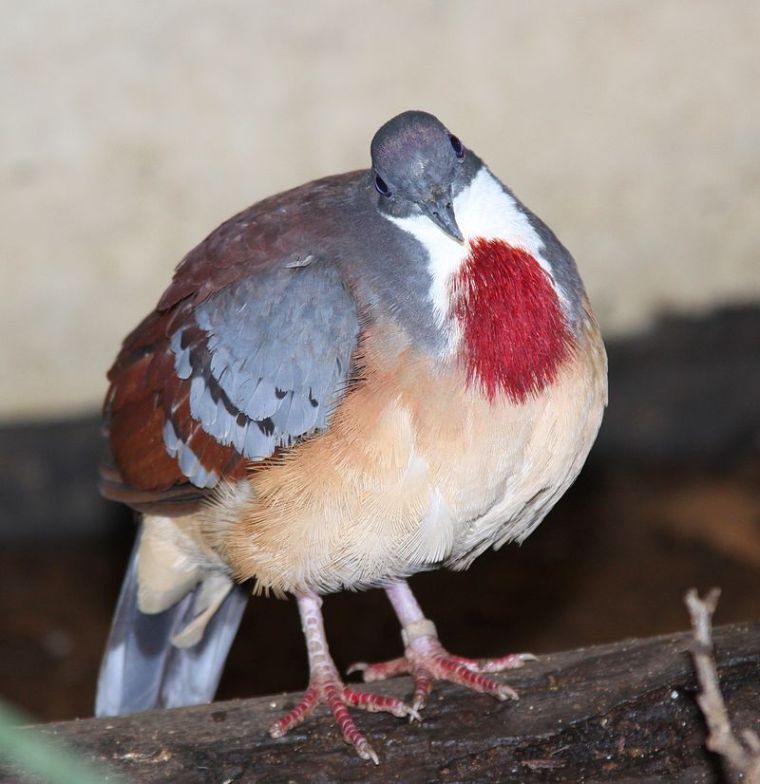
© poem, 2016, Jamie Dedes, All rights reserved; Mindanao Bleeding-heart at London Zoo, England courtesy of Drew Avery under CC BY-SA 2.0 license

At 6 p.m.: The Scent of Onions, a poem . . . and your Wednesday Writing Prompt

Seriously, she considered murder by food,
sausage, potatoes, and Boston Cream Pie
Gleeful, she stuffed his arteries with salami,
used suet in pasties and plum puddings,
sought quietus from onions fried in bacon fat
Strategizing slow-death by Swiss fondue,
she dreamed of being single while sharing
broccoli trees with the toddler on her knee

© 2012, poem, Jamie Dedes, all rights reserved


WEDNESDAY WRITING PROMPT

When people can’t speak-up and speak-out, they can give “voice” to their frustrations in odd ways.  What kinds of strange rebellions have you observed? Tell us about that experience in poem or prose.  If you feel comfortable, share the link to your work in comments section below or, if the piece is short enough, share the piece itself.  Responses will be featured here next Tuesday.


“In politics being deceived is no excuse.” Leszak Kolakowski

Recommended read: On Tyranny: Twenty Lessons from the Twentieth Century by Timothy Snyder. Left, right or center – American or not – it’s a must read for our chaotic times … and not just the list of lessons but Prof. Snyder’s commentary on each. This book is a rational enlightening little gem and a powerful wake-up call.

Lesson Three: Beware the One Party State. “The parties that remade states and suppressed rivals were not omnipotent rom the start.  They exploited a historic moment to make political life impossible for their opponents. So support the multiparty system and defend the rules of democratic elections  Vote in local and state elections while you can.  Consider running for office.”

THE WORDPLAY SHOP: books, tools and supplies for poets, writers and readers