“Concentrate on what you want to say to yourself and your friends. Follow your inner moonlight; don’t hide the madness. You say what you want to say when you don’t care who’s listening.” Allen Ginsberg
Follow your inner moonlight! I like this from Ginsberg. Sharing it because Campbell’s “follow your bliss” is getting a bit tired and madness and moonlight have a certain perverse appeal … meanwhile …
You’ll note in the photo above that it’s raining here (storming actually), too heavy in some parts (flooding) and yet not enough in others. Having said that, it looks like we will actually get some relief from our years of drought. Maybe this summer won’t as hot and dry as the last few.
DROUGHT-FULL
it’s “drought-full” she says,
my japanese friend –
as though it were “dreadful”
which it is, dreadful
the five-year drought
i hunger for rain
drought-full, she says again
pensive, as we stroll B Street
in search of a café, a mojito
sugar, mint, caffeine, ice!
a black gentleman passes
with a nod at her he says . . . . .Nǐ Hǎo
shizuko keeps walking, . . . . .says nothing
the man looks puzzled, a bit hurt
he’d meant a courtesy,
greeting her in chinese,
i stop, rest my hand on his arm
“she’s japanese,” i say
by way of explanation,
he smiles then, and
on we walk, shizuko and me
on this hot drought-full day
seeking relief in a mojito
Reuben Woolley’s poetry is minimalist, sinuous on the page – or sometimes scattered like landmines waiting to explode. I find his work addictive and his latest book Skins (Hesterglock Pess, 2016) is going to be a gift to myself next month. Proceeds from sales go to CalAid.
Reuben’s poems, while exquisitely trimmed of all excess, are still rich with imagery and emotion.
Stylistically, I’m reminded of e.e.cummings.
Yes! I like the way he writes. More importantly, I’m glad Reuben chose to use his deft pen and kind heart to bring more awareness to the darkness in humanity, hanging our dirty laundry out to be seen and not denied. He tells the hard truth. If you are not devastated then you have grown numb to the injustices of our world. This is why we need poets like Reuben, to sound the clarion call and to bare witness.
With Reuben’s permission, here are two poems and look for more of Reuben’s work in the January 15 issue of The BeZine.
lessons
this is the fear
of a first breath
start counting
now
this is laughter
through bleeding membranes
don’t hope for wings
or terminal
stations
we walk the subway
mazes.the painted
maps & all their changes
…………drilling
skulls gives no answers
& death itself
is rarely clean
to this we came.not this
wrapping
a mind round wires
& razors ……………..cut
i’ll wear the given
shoes so well in these
white
streets
……………....it isn’t
the same
the running from metal
……………….the bombs
they make who give
the shoes but
still
they’re laughing at us
mother
THE FOURTH INTERNATIONAL FESTIVAL OF POETRY, MARRAKESH
Reuben is invited to the Fourth International Festival of Poetry in Marrakech, Morroco in April. He plans to take poems from I am not a silent poet, his online magazine. The Festival covers hotel and catering costs but doesn’t pay anything towards transport. Like all of us who live off the proceeds of poetry, his purse is a little light. Reuben set-up a crowd funding page to raise the money for the airfare. That’s the main reason I wanted to introduce Reuben to you today. Here’s the invite. The “Mrs.” is a typo and festival organizers have promised to correct it. Reuben’s crowd-funding site is HERE.
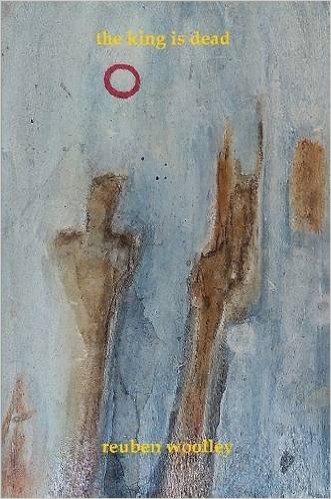
Reuben Woolley is published in various magazines including Tears in the Fence,The Lighthouse Literary Journal, The Interpreter’s House, Domestic Cherry, The Stare’s Nest and Ink Sweat and Tears. His collection, the king is dead was published in 2014 with Oneiros Books and a chapbook, dying notes, in 2015 with Erbacce Press. Reuben was runner-up in the Overton Poetry Pamphlet competition and the Erbacce Prize in 2015. A new collection on the refugee crisis, skins, was published by Hesterglock Press, 2016:
Reubensays, he “pretends to be busy editing the online magazines: I am not a silent poet and The Curly Mind.”
I am not a silent poet is a zine dedicated to poetry and artwork of protest against abuse in all shapes and forms. Reuben’s motivation for founding the site: “I have seen such increased evidence of abuse recently that I felt it was time to do something. I am not a silent poet looks for poems about abuse in any of its forms, colour, gender, disability, the dismantlement of the care services, the privatisation of the NHS, the rape culture and, of course, war and its victims are just the examples that come to mind at the moment.”
The mind in chatter mode will do you in
Like a car without a driver
It’s a good tool gone rogue
It will numb you with its burden of
old stories and wishing wells
could have beens, should have beens
crowd teasers and ego pleasers
It will desecrate your sacred space
with the rotting carcass of old resentments
tired rivalries, rigid renunciations
It will domesticate your dreamscape with
the dreck of times gone by and
tedious, trivial, trumpery thinking
With mind in chat mode trapped in earthy ken
your most wonderous inner worlds go sadly
unimagined and unexplored and you – YOU! fully chattered, shattered, scattered
will never even know
“The means by which we live have outdistanced the ends for which we live. Our scientific power has outrun our spiritual power. We have guided missiles and misguided men.”
This isthe great paradox of our times. Thanks to science and technology we have the means to modify or control the external landscape but our internal landscape languishes. Anxiety reigns in the Western world and one article I read recently said that one-in-four CEOs suffers from depression.
The scriptures of our various religions provided us with spiritual technologies that have been well-tested in the laboratories of time. The Vedic scriptures teach us to use devotion, education and culture to address the internal enemies: lust, greed and anger.
The Christian scriptures teach us that there are seven deadly sins: pride, greed, lust, envy, gluttony, wrath and sloth. The Catholic Church suggests we counter them with the four virtues derived from the wisdom of the ancient Greeks: prudence, justice, restraint, and fortitude. These are to be partnered with the three theological virtues of faith, hope, and charity.
The Buddhist’s have the best – in my opinion – technology for addressing anxiety and depression: meditation.
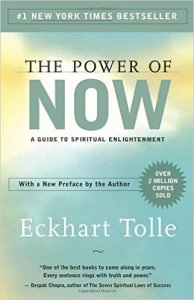
Echart Tolle in The Power of Now suggests that mind-chattering represents a false self and that accessing the “Now,” the present moment where everything is complete, is the antidote. When Tolle’s book came out – a good valuable book – the idea of living in the Now was seen by many as a new idea. It’s actually an old wisdom. It’s very Buddhist and, among others, the great German theologian, philosopher and mystic, the Dominican Priest Meister Eckhart (1260 – 1328), said much the same thing.
Prompt: Write a poem or story that illustrates the habits that cause our distress, anxiety and depression. If it feels natural to approach the subject from the point of remedy, do that. If you like, put a link to the piece in the comments section so that I and others might read it.
Mark Twain (a.k.a. Samuel Clemens) famously – or perhaps infamously – was a believer in and adept master of profanity, not as vulgarity, he said, but as release.
“Under certain circumstances, urgent circumstances, desperate circumstances, profanity provides a relief denied even to prayer.” Mark Twain, a Biography
Twain wrote of swearing as “ornamental” when practiced by American miners considered by him to be “gifted among the sons of man.”
I admit I haven’t the gift to turn profanity into art and I have no taste for vulgarity. You won’t catch a swear word on my tongue or even on my mind but I do recognize that there’s a time and place and manner. I don’t know what Twain would think of award-winning American spoken-word poet, Carlos Andrés Gómez, but I like his work. Carlos moves profanity from emotional release or “ornament” to moral high ground. He applies it with searing honesty to the human condition.
Here’s Carlos telling it like it is:
If you are reading this post FROM in email, you will have to click through to view the video.
“Carlos is amazing. Pretty much everything he says, whether a ‘poem’ or not, is pure poetry. His grace and power and humor demand not only that people listen, but also that they act for change — in themselves and the world around them. And especially when it comes to the narrow norms that constrain men, hurt women, and limit us all, he can help deliver exactly the change we need. Carlos makes me laugh, cry, and hope.”
Mallika Dutt, President & CEO of Breakthrough [the global human rights organization dedicated to making violence against women unacceptable] (India)
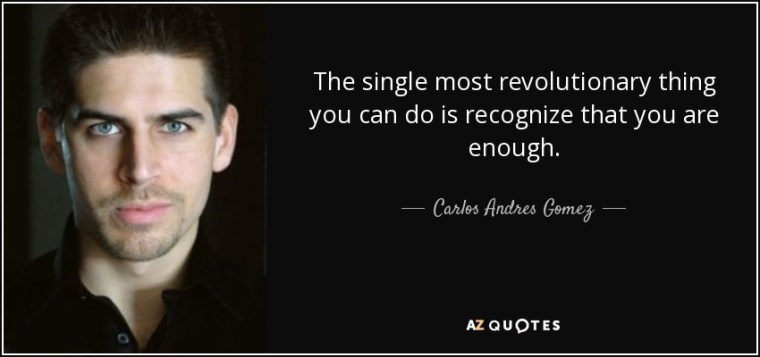
Carlos Andrés Gómez was born in New York City (1983) but he seems very much a citizen of the world. He’s a poet, writer, actor, activist . . . and some say, a prophet. He was a social worker and a public school teacher. He is the son of a United Nation’s diplomat and an indigenous rights’ activist.
His book, Man-up: Reimagining Modern Manhood (Gotham, 2012) is a coming of age memoir that suggests an enlightened masculinity with an open self-embracing emotional life, ready to foster nonviolence and able to see women not as objects but as whole human beings, as equal partners in life and work. The book was written in part to help address some of the crises we are all so concerned about, including school drop-out rates and youth suicide. A worthy read that challenges us to exchange traditional male stereotypes of macho conformity for something more genuine and soul-satifying. Recommended for women as well as men and I’d say for anyone raising and/or educating young men.










 Jamie Dedes' THE POET BY DAY Webzine