Feeding Our Creativity, not just for poets


Leisure

What is this life if, full of care,
We have no time to stand and stare? —
No time to stand beneath the boughs
And stare as long as sheep or cows.
No time to see, when woods we pass,
Where squirrels hide their nuts in grass.
No time to see, in broad daylight,
Streams full of stars, like skies at night.
No time to turn at Beauty’s glance,
And watch her feet, how they can dance.
No time to wait till her mouth can
Enrich that smile her eyes began.
A poor life this if, full of care,
We have no time to stand and stare.”

W.H. Davies, The Collected Poems of William H. Davies


I recently encountered an article that listed over thirty activities – hobbies – with which one might fill leisure time. All well and good, but I find my real leisure joys, the joys that heal me and feed my creativity, are quiet and of the more or less passive variety that involve connecting to Sacred Space:

  • listening (meditation);
  • creative visualization (as in Shakti Gawain’s Creative Visualization), a cognitive process involving mental imagery; and
  • channeling poetry and art, in other words letting poems and drawings come through from the Ineffable without my frail linear interventions.

Hobbist activities are good. They certainly have their place and can certainly be exercised mindfully and often as a kind of meditation, but they are largely about doing and we humans are essentially creative creatures. We need time to simply be.  Perhaps it’s good to remember the root of the word leisure: from Old French leisir, based on Latin licere ‘be allowed.’ We might spin that – “TO allow” … to allow the Sacred a voice in our lives, in our poetry, art and music, through tranquil leisure-time BEing.

– Jamie Dedes


ABOUT THE POET BY DAY


An Unexpected Word, a poem

Some days fall open on an unexpected word,
piercing your too pedestrian obsessions,
pushing you into the doorway of mystery.
You’ve heard all about it: the light, the way!
The truth waiting like a mother for her child ~
and here you are momentarily free, swimming
in the amniotic fluid of your own nascent soul.

not started

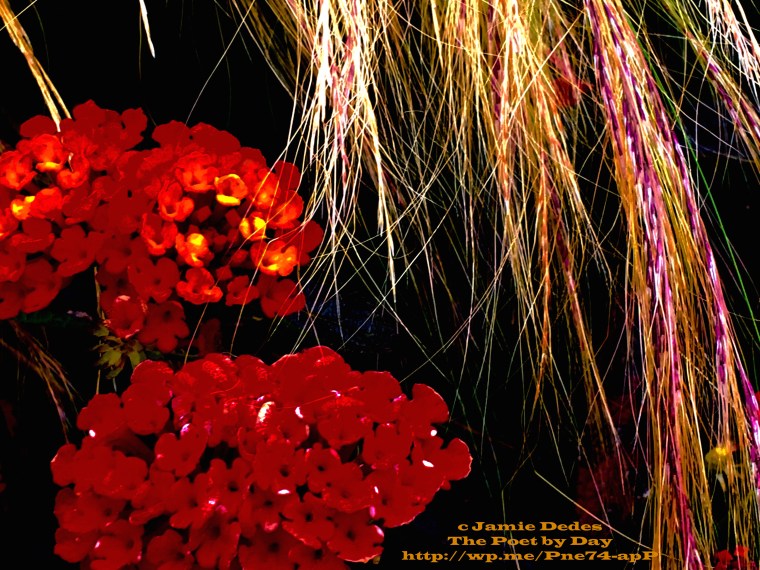
(c) 2016, poem and photograph, Jamie Dedes, All rights reserved

WRITING FROM OUR PERSONAL SACRED SPACE, Henri Nouwen

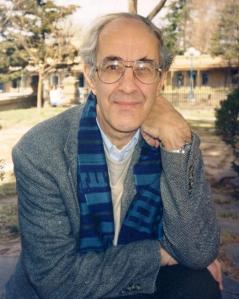
Henri Nouwen (1932-19960 Dutch Catholic priest, professor, writer and theologian
Henri Nouwen (1932-1960) Dutch Catholic priest, professor, writer and theologian

Writing is a process in which we discover what lives in us. The writing itself reveals to us what is alive in us. The deepest satisfaction of writing is precisely that it opens up new spaces within us of which we were not aware before we started to write. To write is to embark on a journey whose final destination we do not know. Thus, writing requires a real act of trust. We have to say to ourselves: ‘I do not yet know what I carry in my heart, but I trust that it will emerge as I write.’ Writing is like giving away the few loaves and fishes one has, trusting that they will multiply in the giving. Once we dare to ‘give away’ on paper the few thoughts that come to us, we start discovering how much is hidden underneath these thoughts and gradually come in touch with our own riches. ‪#‎HenriNouwen‬ REFLECTIONS ON THEOLOGICAL EDUCATION (unpublished) www.henrinouwen.org

My cousin, Father Daniel Sormani C.S.Sp., shared this quotation with me on Facebook. It is from the Dutch Catholic priest, professor, writer and theologian, Henri Nouwen. I very much agree with Father Nouwen on this matter of writing, its meaning, source and value in our lives.

Suggested reading: Dan’s article: What Have We Done That People Can Pick Up Weapons and Kill?, an article also featured in our Waging Peace Collection in The BeZine.

Photo credit ~ by Frank Hamilton under CC BY-SA 2.o license

Sacred Space in What You Are Already Doing!

“Unmasking the God who described himself as the world …” Poets, writers, anyone with a soul, don’t miss Terri Stewart’s post on The Bardo Group blog today …

Terri's avatarThe BeZine

flickr photo by On Being  cc licensed ( BY NC SA ) flickr photo by On Being
cc licensed ( BY NC SA )

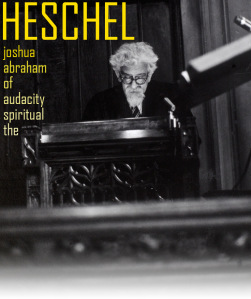
Tonight I went to see Dr. Cornel West along with two young men that I work with. We were all inspired by the passionate energy that Dr. West brings to his presentation! Tonight, he was particularly focused on the work of Abraham Joshua Heschel. He describes the arch of Heschel’s work in a way that I totally relate to the Bardo community!

Pietic–>Poetic–>Prophetic

Meaning, personal piety not bound by religious rules but bound by reverence or seeing the sacred worth in all be-ings. For West’s interpretation of Heschel, the pietic leads to the poetic. A poetry that is not grounded in nihilism or optimism, but grounded in hope. He said, Heschel was “not a person of optimism, but a person of hope.” And that Heschel’s hope as expressed in poetry was hope for the world–not just the Hasidic…

View original post 481 more words