You can listen to the two-hour podcast HERE.Recommended! This post is meant as an alert and also to share my two cents.
As I write, it’s just a few hours after listening to Just My Thoughts with Graffiti Bleu on BlogTalk Radio. The show started with an exploration of What does the revolution look like? with Graffiti Blue, Michael Rothenberg, and the show’s panel and callers comprised of poets involved in 100,000 Poets for Change (100TPC).
Harkening back to Gil Scott-Heron and his poem, The Revolution Will Not Be Televised, part of the discussion was on technology and social networking and their roles in fostering peace, social justice and sustainability. When Heron wrote his poem in 1971, the means to formulate and distribute information and opinion were dominated by mainstream media and corporate interest, which were not in sympathy with the revolution Heron envisioned. Those interests are still dominant and still lack sympathy, but there’s something of a balance occurring – however imperfect – now that we plain folk have access to the tools of technology and social networking. Without social networking, we wouldn’t have 100TPC, which can happily be said to have gone viral since Michael Rothenberg put out a call on Facebook for poets to join in a global peace effort back in 2010. While each of us in the “100,000” has a relatively small “audience” together we touch many, many minds and hearts. We do have an agenda, but it doesn’t foment strife. We’re not in anyone’s pocket. That’s clean power. It’s power to …
On a personal level, one benefit of technology is that people who are homebound – as I sometimes am – can take part in change-making initiatives more actively than simply writing letters-to-the-editor or to our legislators, which is not to say we should give that up. I started a virtual 100TPC via The BeZine and with The Bardo Group Beguines so that disabled people and people who do not live near a 100TPC event would have the opportunity to have their say, to lend their support. Our 2015 commemorative page is HERE.
We need to do more than “talk.” Agreed. And I think that one of things 100TPC gives us is hope … huge hope from seeing that there are people in every nook-and-cranny of the world who share our values and priorities. This helps us to keep on keeping on with our local grassroots initiatives as well as our broader advocacy. This serves to sustain our faith and commitment.
Ultimately for me, 100TPC is about breaking down barriers, crossing boarders. It leads the way in our evolutionary journey toward a sustainable peace. In the documentary film Ten Questions for the Dalai Lama, the Dalai Lama says “we need more festivals.” In other words, if we get to know people, if we break bread with them or share a bowl of rice, we are less likely to think of them as “other.” It will be more difficult to turn around the next day and do harm. 100TPC is our festival. Once we’ve shared hearts, souls and stories through poetry, how can we marginalize anyone? How can we abandon or abuse?
Can the revolution be bloodless? The question is really “will it be?” I don’t think so. I don’t think revolutions are by their very nature “bloodless.” The psychopaths will always be with us and until we stop marginalizing people and leaving them desperate and vulnerable to tyrants, we’ll never have bloodless reform. We’ll never achieve a sustainable peace. Peace is a state that takes awareness and awareness takes growth, which is an evolutionary process. That doesn’t mean we should give up. It means that as poets we should continue to bear witness, to touch hearts, to raise consciousness and to nurture the process of growth. As poet Michael Dickel said in an interview on this site HERE: “. . . it may not be ours to see the work completed, but that does not free us from the responsibility to do the work.”
When we planned this issue we planned to focus on “The Hero’s Journey.” We have done that, but events this past month also led to a spontaneous eleventh-hour addition, a special section, Waging Peace. Thank you to Rabbi Gershon Steinberg-Caudill, Rev. Ben Meyers, Father Daniel Sormani, C.S. Sp., Sophia Ali-Khan, the Unitarian Universalists of the San Francisco Bay/Peninsula, Michael Dickel, the Venerable Bhikkhu Bodhi and to Carla Prater, the assistant director of Buddhist Global Relief for her help.
Rabbi SteinBerg-Caudill is a Jewish teacher who espouses a Jewish Spirituality and Universalist teaching for the future brotherhood of all people. When I wrote to him about this effort he reminded me of what surely should be foremost in our minds and hearts:
“The Hebrew word for PEACE – שלום – does not imply a lack of strife. It implies instead WHOLENESS, COMPLETION. If one is in a state of peace, he can still be whole in a time of chaos.”
Rev. Meyers of the Unitarian Universalists of San Mateo also counsels inner peace with his You are the promise … the one … the hope. Rev. Meyers says:
“I understand and often share the ‘urge of urgency’ over the peacefulness of peace. But this I also know: We live at the intersection of action and reflection.”
Father Sormani, a Spiritan priest (a Catholic) who has lived and worked in Algeria and Dubai and is now teaching theology at Ateneo de Manila University in the Philipines, asks What Have We Done that People Can Pick-up Weapons and Kill. Father Dan says:
“We have become our own worst enemy. Whenever we separate the world into ‘them’ and ‘us’, whenever we accept blind generalizations and cease to see a unique individual before us, whenever we forget we are all victims of carefully orchestrated deceit and deception for wealth and power, the force of darkness wins. Bullets will never win this struggle, only the heart and mind will.”
The Unitarian Universalist clerics of the San Francisco Bay/Peninsula share their open letter – With Faith in Love Beyond All Beliefs – encouraging the support of Muslims in our communities.
Lest you’ve missed Sofia Ali-Khan‘s letter, Dear Non-Muslim Allies, which has been making the rounds on Facebook and was also recently picked up by some mainstream media, we’ve included it here.
We’ve also included a video recitation of Tunisian poet Anis Chouchéne‘s profoundly moving poem against racism and fanaticism. Chouchène speaks directly to radical Islam … but I think you’ll agree that he ultimately speaks to all of us in our fear and ignorance.
“Peace we keep an eye on/while it packs its bags/to abandon our lands, little by little …”
Chouchène concludes as Father Dan does, that we must be able to see the individual.
Michael Dickel‘s poem Mosquitoes (excerpt from his chapbook, War Surrounds Us) is included. The poem starts out with Israelis and Palestinians crossing the artificial lines that divide to offer one another condolences on the deaths of their children. This is a favored poem of mine, especially so because The Bardo Group Bequines was formed to – in effect – cross boarders. Our mission statement is HERE. Michael spins the poem on to show how we are manipulated by the propaganda machine. Michael Dickel, Father Dan and Bkikkhu Bodhi are of a mind on this.
We’ve included a short video presentation on the seven steps to peace developed by peace activist, Rabbi Marc Gopin. Director of the Center for World Religions, Diplomacy and Conflict Resolution (CRDC) and co-owner of MEJDI, “a peace tourism business that embraces the multiple narratives of indigenous peoples.”
The Venerable Bhikkhu Bodhi is Buddhist monk in the Theravada tradition, an author and teacher. He is the founder of Buddhist Global Relief. With permission, we offer his 2015 talk given at the New Year’s Interfaith Prayer Service, Chuang Yen Monastery. In the same spirit as Rabbi SteinBerg Cadhill and Rev. Ben Meyer, Bhikkhu Bodhi says:
“Real peace is not simply the absence of violent conflict but a state of harmony: harmony between people; harmony between humanity and nature; and harmony within ourselves. Without harmony, the seeds of conflict and violence will always be ready to sprout.“
Bhikku Bodhi goes on to analyze the obstacles to achieving world peace, the prerequisites of peace, and the means to realizing these goals.
So here we are attempting to untie the ropes that bind us … certainly a hero’s journey … unchosen as hero’s journeys often are. Under our themed section, we explore the journey in its many manifestations – in its parts and in its whole – with features, fiction, memoir, and poems by John Anstie, James Cawles, Michael Dickel, Priscilla Galasso, Joseph Hesch, Charlie Martin, Corina Ravenscraft, Colin Stewart and Terri Stewart. Under “more light” – we can always use that, eh? – we have photo-stories from Naomi Baltuck, a poem from Brain Crandall and an essay from Michael Watson.
Special Announcement
Last week we unveiled our new community website thanks to long and hard work by Terri Stewart and generous funding by the Pacific Northwest United Methodist Church. You can read all about it HERE. You can visit it HERE. Please enjoy but also be patient, the tech gremlins are still at work. This site is set-up (both design and intention) to facilitate more participation with and among readers.
On behalf of The Bardo Group Beguines and in the spirit of love and community, Jamie Dedes, Managing Editor
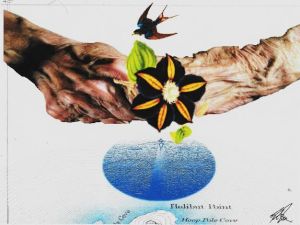
Thanks to poet and artist K. A. Brice (Mirror Obscura) for our fabulous December header.
Welcome to our first issue that is focusing on at-risk youth. Our mission today in our topical section is to share stories and poems that cause us to think about youth in a different way. Who are at-risk youth? Where are they?
Often, they seem invisible to the world until they are splashed across the news in dramatic headlines. We can all remember the photos of dead children washing up on the seashore…refugees fleeing Syria. And in the US, just a few days ago, a young boy, age 8, killed a 1 year old. Why? Because he was the babysitter in charge and she would not stop crying. I am often appalled at the reactions we have to children with extreme behaviors. What skills do we expect an 8 year old to have?
Sigh.
And so, we, at The Bardo Group, have written of the children of the world that are marginalized and at-risk for a wide range of disasters. This is a special topic for me. I run the Youth Chaplaincy Coalition which provides chaplaincy and mentoring to incarcerated youth. I have included three pieces in this edition that are close to my heart. One, Eli, Eli, lama sabachthani. This poem is the first one I wrote in reaction to the stories I heard in detention. I wanted to put the parents, and God, on trial. And so I did. I wasn’t happy with the answer I received! And yet, it gave me so much hope. The second piece, an essay titled Mentoring At-Risk Youth, tells you a little more directly about who I am and what I do. Last, is the poem, A True Story. You may guess that it is a true event and you would be correct! It happened this year and it made me very angry.
St. Augustine says, ““Hope has two beautiful daughters – their names are anger and courage; anger at the way things are, and courage to see that they do not remain the way they are.”
Hope, anger and courage have driven me to move through the pain and challenge of working with these particular youth.
A small collection from people I work with that all explore what it is like to work with incarcerated youth. They are all new to the BeZine so let’s give them a resounding welcome! Justin Almeida offers an essay, Finding Life in Detention. Lisa Ashley, MDIV, has a poem, at risk youth, that names what is really at risk when you work with youth in detention—your heart is at risk! And Natasha Burrowes drops the mic in Untitled.
Closely related to Natasha’s discussion of who is really at risk is Charles Martin’s, at risk…It is a great question. Who is really at risk when we allow our children to be the victims of poverty, crime, and other forces? Is it really just the child? Or is there something larger?
Incarcerated youth, across the board, have increased rates of trauma when compared to other youth. The ACES test (Adverse Childhood Experiences) scores incarcerated youth as having a 92 out of 100. I think I would be a bowl of jello if I had that high of a trauma score. Christina Conroy explores living through a traumatic childhood in her autobiographical poem, Legacy. Also writing autobiographically is Kimberly Wilhelmina Floria in Validating Myself. It made my heart grow two more sizes! Also cracking my heart is Jamie Dedes’ Heading Homeautobiographical poem regarding suicide. Sometimes, I wish I knew what that special something is that manages to give children resiliency. Heart breaking. Or I wish I had a magic wand that would right the world’s wrongs.
Also writing from experience is Trace Lara Hentz’s essay, Angel Turned Inside. Lara was introduced to us by Team Member Michael Watson and is new to these pages. Her essay explores the tragedy that was the movement westward in the US and the use of adoption as a weapon against American Indians and First Nations. I am aware of this tragic history because of my knowledge of church history which is horrifyingly replete with church support of taking children from their families and putting them into orphanages.
Knife Notes—a Poem, from Michael Dickel, explores the relationship between the past and the future for Joe. I am especially moved by the truthful reflection of how kids who are hurting treat each other.
“It is the paramount duty of the state to make ample provision for the education of all children residing within its borders, without distinction or preference on account of race, color, caste, or sex.” That is a quote from Washington state’s constitution. Unfortunately, we simply fail our children. John Antsie’s article, Education, Common Sense … and The Future, explores two simple things regarding education-one thing to change and one thing to hope for.
One thing that the youth I work with almost unanimously face is addiction issues. Jamie Dedes’ piece,scag dancing, explores in vivid, concise imagery the relationship between addiction and poverty.
With “Thinking Continually of Those at Risk,” by Priscilla Galasso, you will be surprised at where she starts and where she finishes! She speaks a truth that resonates, “We can so easily provide food, shelter, and opportunity to our youth with the systems we have devised, but those systems have become mine fields where kids are sabotaged on the journey.”
Sometimes we attempt to sabotage journeys with needless judgment regarding what makes a real parent. John Nooney explores his experience of adoption and the sometimes senseless absorption of people asking, “Have you found your birth-mother?” in his essay, Some Thoughts on Adoption.
In my research of how to interrupt the school to prison pipeline, I have found two interesting statistics. One, children who miss 24+ days of Pre-K or Kindergarten are more likely to become incarcerated. And two, children who personally own five books of their own have better life outcomes than those who do not. I have also recently run across an article pointing towards the importance of librarians in achievement for children. CorinaRavenscraft points out the importance of libraries in “These Hallowed Halls of Hope.” Libraries are, indeed, an oasis of peace in a concrete jungle.
One thing is trite but true, it does indeed, take a village to raise our children.
Thank you for moving through my rambling reflections with me. I hope that your heart is moved to consider how we support and work with those who are at-risk.
I “met” Terri Stewart online in 2011 when I visited her blog Beguine Again, which at that time was entitled Cloaked Monk. “Beguine” Again – after the Beguines, a lay semi-monastic Christian order of the 13th-16th centuries in Northern Europe. It was committed to – among other things – caring for the sick and the poor.
I was impressed with Terri’s commitment to spiritual ritual and her openness to the wisdom and beauty in religious traditions, including traditions other than her own. I valued her respect for diversity, both social and spiritual, so I eventually invited her to become the Sunday Chaplain for what was then a blog entitled Into the Bardo.
Since that time, we’ve evolved into a group (The Bardo Group) of clerics and poets, writers and other creatives representing varied traditions and cultures and sharing the core values of respect and nonviolence. We work in the interest of peace, sustainability and social justice. We publish The BeZine. Our thirteenth issue comes out on November 15th. The theme is At-risk Youth. Terri is taking the lead for that issue, making this the perfect time for readers and colleagues to get to know her better. Hence this interview … Enjoy!
Youth Chaplaincy Program Founder, Terri Stewart. Christmas at the King County Youth Detention Center, Seattle, Washington
Jamie: I have a sense that you were committed to social justice long before you decided to study theology and become a minister. Is that correct? What was the stimulus and what was the first project on which you worked?
Terri: When I first joined the church in 2001, I was looking for a connection to community. What I discovered was inequality in the church and an avoidance of social issues that drove wedges between people. It was like that uncomfortable Thanksgiving dinner. Everybody is at the table, but only a few were allowed at the grown-up’s table. And! disagreements were glossed over for the sake of unity.
My biggest issue with the church was its lack of inclusion for LGBTQIAP individuals. In response to that, and as a mirror of the greater structure of the United Methodist Church (UMC) world-wide church, I founded the Church & Society committee. This was an attempt to get people talking and to be able to step into social issue learning and leadership. I soon found myself embroiled in controversy as two issues marched through Washington state. In 2004, there was a church trial in the town next to my home town that was an attempt to defrock a lesbian pastor. Also, just prior to the trial, I was involved in a march on the capitol in Olympia for marriage equality.
The upshot was that I was yelled at like I was a child! “Are you trying to destroy the church?”
As my first forays into social justice was basically full inclusion for LGBTQIAP individuals within the UMC church, I would count myself unsuccessful. The UMC church continues to have harmful language in its official rulebook (the ominously named Book of Discipline). I continue to advocate and am on the national board of Reconciling Ministries Network. Our goal has been full inclusion. I think we are beginning to realize that we need a second goal, that of creating safe space.
Also! At the same time this was all swirling around, I started volunteering with Kairos Prison Ministry in 2003. Kairos provides spiritual renewal retreats within the prison setting. Working with Kairos (Ancient Greek for “the right time” as opposed to chronos which is “watch time”) started me on a path towards understanding the full systems that impact the lives of those who are incarcerated.
Jamie: How and when did the focus transition to incarcerated youth? What is the most important thing you would like us to understand about the youth being served?
Terri: As I worked with Kairos, I started out working with incarcerated men. Then with incarcerated women. And then with women whose loved ones were incarcerated. I worked my way into leadership positions. Eventually, we thought, “What about youth whose loved ones are incarcerated?” So we wrote a program just for them.
At the same time, I was called into ordained ministry. I went to seminary. In my second year of seminary, I was required to do an internship. My internship was at the King County Youth Detention Center (KCJDC), Seattle, Washington. I basically never left.
The thing to know about the youth at KCJDC and at the state level institutions I serve, is that they are traumatized youth. The average ACE (Adverse Childhood Experiences) score for incarcerated youth is 92 out of 100. Most of us would be in therapy with that high of a score! Instead, these youth are incarcerated. We could change that by having trauma informed teaching practices in communities where generational trauma has occurred or by having mental health centers with trauma treatment available. Destigmatizing therapy would be grand!
Jamie:Tell us about Youth Chaplaincy Coalition, how other ministers may get involved and what the public can do to help.
Terri: The Youth Chaplaincy Coalition developed out of my internship at KCJDC. We realized that there was a need to organize, train, and supervise religious volunteers so that the youth would get the best care possible.
While we started at KCJDC, we now are state-wide. I run a mentoring program called MAP that aids youth in developing transition plans for when they go home. Since the kids go home all over Washington, I need volunteers in every city!
My dream is to teach people across the world how the MAP program works and how easy it is to walk with those affected by incarceration. There is also a training called “Healing Communities” that teaches communities how to use their gifts in aid of those affected by incarceration. If every church was a Healing Community and every city had trained mentors, we could transform the world! Well, we could at least change one child’s life. If you want to be involved or talk to me, you can email me at YCC-Chaplain@thechurchcouncil.org
My biggest need is financial support. I take a very small stipend and am responsible for all my own fundraising needs. I often make decisions this way, “Should I do my work today? Or should I do fundraising today?” Although I should view fundraising as work, I often give it a lower prioritization! So donations would be especially appreciated. I persuaded the Church Council of Greater Seattle to adopt the organization so we are a legit 501c3 and we have an accountant doing all the financial stuff! That is a great gift to me!
Donations can be sent to:
Youth Chaplaincy Coalition
PO Box 18467
Seattle, WA 98118
Be sure and put YCC or Youth Chaplaincy on the memo line.
Jamie:What made you decide to go into ministry? What is the most rewarding aspect of that commitment?
Terri: When I first experienced a call to ministry, I thought I was going bananas. My first reaction was, “Who me?” or “I must be over-tired!” The call I experienced felt like a direct communication from the Divine telling me to go deeper. As I went deeper into understanding the call of ministry, I discovered it was a call to ordained ministry.
The most rewarding part of the commitment to a sacramental ministry is when I see a person’s eyes light up with the understanding that they are, indeed, holy and good—a living sacrament.
Jamie:Tell us about “cloaked monk” and the place of ritual in our lives.
The Cloaked Monk developed out of a commitment to daily spiritual practices in ordinary life (the monk part) and that I was kind of disguised—like wearing a cloak!
I believe that ritual marks out sacramentality in our daily lives. Sacramentality is that connection to one another and to the Divine. It is a way of marking time that moves away from chronological time (Greek: chronos) and into marking the fullness of time (Greek: kairos). It also allows us to fully be present without living in the past or rushing into the future. This is especially important in our transient age of moving here and there faster and faster. Rituals grounded in generational practices connect us through time and space to another age. There is also the place for new rituals created that uplift new and modern experiences that our ancestors would never have imagined. They can be a celebration, a grounding, a remembering, or a lament.
The ancient Celts had thin places. They were places that the veil between the earth and beyond seem especially vulnerable to one another. Places where the things of heaven could pass to the earth and where things of the earth could pass to heaven. Stonehenge is one such place. Or labyrinths. Ritual, when it is meaningful, creates this thin place.
Jamie: Why should readers care about people and issues that don’t seem to touch their lives directly?
Terri: Unfortunately, it seems that issues of justice and mercy do not intersect with ordinary lives. Incarceration seems far away from us. Refugees in Syria seem far away. Violence in Palestine seems so very far away. But it all tangles together like my bag of knitting yarn. I am a very poor knitter. My yarns always get tangled and I don’t know what to do. And when it is in my bag, it will suck in all the other little things in there! Resources or things I might need become tangled up in the yarn. Those are resources that I need. They might be resources that others need.
In Washington, we spend about $9,600 per student to educate them. We spend about $45,000 per prisoner to incarcerate them. What we know is that by reading scores in the 4th grade, we can predict incarceration rates because we do not fully fund our schools. What if we were able to direct our resources into education? All students would benefit.
I imagine that it is like boats rising in a tide. A rising tide raises all boats. Yours, mine, everyone’s!

 When we planned this issue we planned to focus on “The Hero’s Journey.” We have done that, but events this past month also led to a spontaneous eleventh-hour addition, a special section, Waging Peace. Thank you to Rabbi Gershon Steinberg-Caudill, Rev. Ben Meyers, Father Daniel Sormani, C.S. Sp., Sophia Ali-Khan, the Unitarian Universalists of the San Francisco Bay/Peninsula, Michael Dickel, the Venerable Bhikkhu Bodhi and to Carla Prater, the assistant director of Buddhist Global Relief for her help.
 Thanks to poet and artist K. A. Brice (
 Welcome to our first issue that is focusing on at-risk youth. Our mission today in our topical section is to share stories and poems that cause us to think about youth in a different way. Who are at-risk youth? Where are they?


 Jamie Dedes' THE POET BY DAY Webzine
