
CONNECT WITH US

Daily Spiritual Practice: Beguine Again, a community of Like-Minded People
Facebook, The Bardo Group Beguines
Twitter, The Bardo Group Beguines
August 15, 2017
In the introduction to his translation of Beowulf, Seamus Haney comments that “as a work of art it lives in its own continuous present.” For me, theatre (whether in its broadest or narrowest sense) is very much the same. Theatre always encourages us to be in that continuous present. As an over-arching art form it can integrate every other form of human (and even animal) expression. It usually rewards our engagement and disdains our detachment. Even when a show runs for a thousand performances, it can never be quite as canned, as mass produced as many of our other entertainments. Human variability is on display every night.
More broadly, theatre tends to mean any place in which we think there is a scripted or specialized drama occurring. In that sense it often indicates that we’re seeing a performance driven by an agenda and perhaps designed to deceive. We criticize this as hypocrisy. In ancient Greece, a hypocrite was merely an actor, i.e. one who had made a judgment or assessment of a script when preparing to perform that script for others. At that time, it was also thought unworthy for actors to become politicians since actors were skilled at impersonation. We could not know their true selves.
In the context of our art, we would probably judge this as unfair. We’ve all had the experience of “donning the mask” or crafting a persona as a way of freeing ourselves. In expressing the lie, we hope to tell the truth.
I’m delighted to be Guest Editor this month. It coincides with a production that I’m currently in. This is an experimental production staged as immersive experience. We’re telling the story of a family in crisis (the passing of parents, dealing with aging and the end of life, and the break-up of relationships). We tell this story in a residence where small audience groups (a dozen to two dozen at a time) sit in the “living rooms” of the characters. This intimacy connects us with our audience. They do not participate in the sense of interacting with the actors. But, they are side-by-side with us as we make the journey, watching us, crying with us, laughing with us and even eating with us. Detachment is not an option. We join together in the continuous present.
This month’s pieces remind us of these connections and touch on so many of the stages on which we act.
Priscilla Galasso speaks of her experience with theatre and its broad impact in her life. “Playing the muck of human behavior” as she says.
Charles W. Martin’s poetry talks passionately of life’s stage, reminding us that, yes, detachment is not an option.
Corina Ravenscraft gets to the root of why we should all spend time in “the seeing place.” It’s a broadside worth taking around when it comes time to fund arts in schools and communities.
Michael Watson recounts an early experience where his personal humiliation also reflected larger and deeper ones around him. He shows us how Playback Theatre is another powerful way to connect.
John Anstie recounts the life of his mother. In reading her story, I think on the many roles we are often forced to play and how we adopt certain personas to help us survive.
I feel that basic joy of theatre in Renee Espriu’s contribution. “The hills are alive…” means a little more to me now than it did before.
Jamie Dedes points us to theatrical entertainment with its golden moments and the theatre of life with it’s chaos and absurdity. [And, seriously, check out Fanny Brice’s physical comedy.]
John Sullivan’s four poems this month are, for me, intriguing and searching meditations on the self. They speak to who we are, the personas we have, the masks we wear, the music we sing. And, he’s allowed us to publish an excerpt from his new play, Hey Fritz, Looks Like You Lost It All Again in the Ghosting.
Naomi Baltuck’s discussion of Come From Away focuses right in on an essential aspect of our experiences both in life and in theatre. Specifically, I’m thinking about what it means to literally commune with strangers, whether it’s the characters in Come From Away or the audience who watches it.
Karen Fayeth shows how, no matter what size or shape the spectacle, there is something profound in the simplest of relationships. Say, between a boy and his horse. Because, whether we’re seeing animals at play or a play about animals we are moved.
In bringing together both her visual art and her poetry, Sonja Benskin Mesher has each explain the other. And, yet, each also enlarges the other and perhaps we see our own actions a little differently, too.
Of course, plays and poetics go hand-in-hand. Michael Dickel thoughtfully discusses how one arises from the other and the personal origins of both.
Paul Brookes’ poems read as very modern, but also touching on things quite old, such as shared rituals and the hypocrisy of actors (in the classical sense).
And, finally, there’s a last word from Denise Fletcher. I hope we’ve achieved a kind of success along the lines of what she describes.
Thank you to all who contributed this month and for letting me join the show. I’m having a wonderful time! I look forward to seeing where the story goes from here. And, to the last one who leaves the theatre, please turn on the ghost light.
Richard Lingua
Guest Editor
How to read this issue of THE BEZINE:
Photograph: Gargoyles as theatrical masks above a water basin. Mosaic, Roman artwork, 2nd century CE. The piece can be found at the Capitoline Museum in Rome, Palazzo dei Conservatori, first floor, hall of the Horti of Mæcenas. From the Baths of Decius on the Aventine Hill, Rome.
Priscilla Galasso
Charles W. Martin
Corina Ravenscraft
Michael Watson
John Anstie
Renee Espriu
Jamie Dedes
John Sullivan
Naomi Baltuck
Karen Fayeth
Sonja Benskin Mesher
Michael Dickel
Paul Brookes
Denise Fletcher
The BeZine, Be Inspired, Be Creative, Be Peace, Be
Daily Spiritual Practice: Beguine Again, a community of Like-Minded People
Facebook, The Bardo Group Beguines
Twitter, The Bardo Group Beguines

July 15, 2017
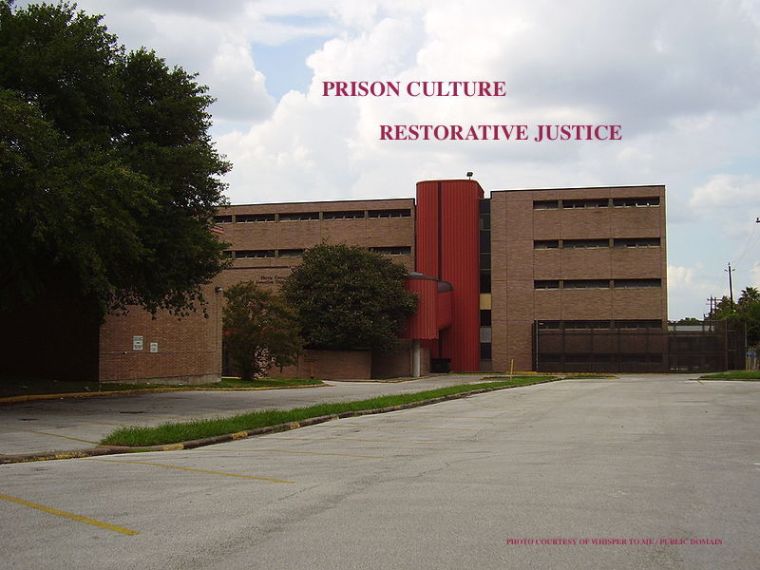
This month’s publication focuses on Restorative Justice. This is a topic that is dear to me. I am the Director of the Youth Chaplaincy Coalition. I have been working with incarcerated folks and those touched by incarceration since 2003. I have seen the ripples of harm that have come. There is harm to the victim, of course. But there is also harm to the person who committed the harmful act, harm to their families, and harm to the communities that encircle all of these people.
Restorative Justice is an en vogue term. Everyone wants it but we don’t know much about how to do it. Most of us look backwards at the ancient ways of first peoples such as the Māori people of New Zealand or the Tagish and Tlingit First Nation people of the Yukon. We lift their practices and bring it forward into a defined court case.
This somewhat misses the point.
The circling process that the first peoples used far pre-dates the term restorative justice. At the same time, restorative justice has become a term to be used by the justice system. And so we create another circling process that is set aside for the courts, jails, and prisons to use.
Circling or Peacemaking Circles, the process given to us by the ancients, is to be used everywhere and with anything: healing, sentencing, discernment. And it involves the entire community. The entire circle of ripples affected by an act. It is a big process. And that’s why we relegate it to the justice system.
Because if we don’t relegate it to the work of the justice system, that means we will have to change and do better. The first principle of the circle: You can only change yourself. As long as we make restorative justice the property of the courts, we don’t have to change. We don’t have to be more welcoming, giving, or inclusive. We don’t have to mentor, feed the hungry, clothe the naked. But I have news! Great news of good tidings! Restorative justice, Peacemaking Circles, is, as the ancients say, the wisdom of the universe. It belongs to no one person and is there for all for the healing and transformation—not of the world, but of each one of us.
This issue about Restorative Justice and new forays into restoration is explored by our core team and guest writers. Each brings their own wisdom to the topic.
Writing on aspects of justice and restorative justice are: Myself, James Cowles, and Chris Hoke. Justice oriented creative writers are Lisa Ashley, Carolyn O’Connell, Paul Brookes, Rob Cullen, Charles W. Martin, Marieta Maglas, Sonja Benskin Mesher, Paul Brookes, Jamie Dedes and a short stories by Joseph Hesch, Lisa Ashley and Rachel Barton. Gail Stone offers a video that speaks to her faith and hope in restorative justice. I have also offered a moderated discussion that I led regarding zero incarceration for youth. Denise Fletcher teaches us how to put together Comfort Kit Baskets for the incarcerated.
We hope this issue will give you pleasure even as it provokes you. Leave your likes and comments behind. As readers you are as import to the The BeZine project, values and goals as are our contributors. Your commentary is welcome and encourages our writers. As always, we offer the work of emerging, mid-career and polished pros, all talented and all with ideas and ideals worth reading and thinking about.
In the spirit of peace, love (respect) and community and on behalf of The Bardo Group Beguines,
Terri Stewart, Guest Editor
How to read this issue of THE BEZINE:
Do You Hear What I Hear?, Terri Stewart
Justice the New Old Way, Terri Stewart
Hearing Voice Underground, Chris Hoke
Refuge, Reconciliation, Recidivism, James R. Cowles
Of Pirates and Emperors, Jamie Dedes
Comfort Kits, Denise Fletcher
Hope and Faith in Restorative Justice, Gail Stone
Zero Incarceration for Youth, Terri Stewart
Room at the Table, Terri Stewart
I Can Trust You, A True Story, Lisa Ashley
Walking Along the Edge, Rachel Barton
Comin’, Joseph Hesch
A Child’s Touch, Lisa Ashley
Full Buck Moon, Lisa Ashley
(ANGERONA) Sunstead, Paul Brookes
Prisoner, Paul Brookes
The Boy in the Park, Rob Cullen
Oscar Wilde in Prison, Marieta Maglas
Restorative Justice for Sale, Charles W. Martin
before it began … , Charles W. Martin
teach a man to fish …, Charles W. Martin
#what more do you expect, Sonja Benskin Mesher
.verdict., Sonja Benskin Mesher
Confrontation, Carolyn O’Conner
Sacrificial Lambs, Carolyn O’Conner
Except where otherwise noted,
ALL works in The BeZine ©2017 by the author / creator
Daily Spiritual Practice: Beguine Again, a community of Like-Minded People
Facebook, The Bardo Group Beguines
Twitter, The Bardo Group Beguines


June 15, 2017
The environmental challenges are complex, an understatement I know.
Our problems are pressing and complex and are made the more difficult as we struggle under a cloud of skepticism and division and the discouraging weight of a Doomsday Clock that was moved forward in January to two-and-a-half minutes to midnight in response to Trump’s election. That’s the closest we’ve been to midnight since 1953.
Access to potable water may be the most pressing of our challenges.
“The world runs on water. Clean, reliable water supplies are vital for industry, agriculture, and energy production. Every community and ecosystem on Earth depends on water for sanitation, hygiene, and daily survival.
“Yet the world’s water systems face formidable threats. More than a billion people currently live in water-scarce regions, and as many as 3.5 billion could experience water scarcity by 2025. Increasing pollution degrades freshwater and coastal aquatic ecosystems. And climate change is poised to shift precipitation patterns and speed glacial melt, altering water supplies and intensifying floods and drought.” World Resources Institute
The good news is that there are many working conscientiously to raise awareness and funds. Some of our readers and contributors are among them. There are good people offering time and expertise, sometimes putting their own lives and livelihoods in danger.
This month our core team and guest writers have chosen to focus largely on water, but they also address the need to respect science (Naomi Baltuck) and the need to acknowledge that war is a danger to the environment in general as well as a cause of human hunger. (Michael Dickel). If the Syrian Civil War were to stop right this second, one wonders how long – how many years, perhaps decades – it would take to make that country’s land farmable again.
Michael Watson, Carolyn O’Connell and Joe Hesch touch their experiences of farms before industrial farming. Priscilla Galasso, John Anstie, Paul Brooks, Marieta Maglas and Rob Cullen speak to us of water. Corina Ravenscraft and Sonja Benskin Mesher remind us of the element of greed – as does John – and Sonja points to gratitude. Enough is truly enough. Charlie Martin’s poems are poignant, making us think about how sad it would be if we lost it all. Liliana Negoi brings a quiet and practical appreciation of nature. Phillip Stevens paints the earth in all her delicacy and need for tender husbandry.
Thanks to our core team members for stellar, thoughtful work as always: John Anstie, Michael Watson and Michael Dickel, Priscilla Galasso and Corina Ravenscraft, Charles Martin, Liliana Negoi, Naomi Baltuck and Joe Hesch.
Welcome back to Paul Brooks, Phillip Stephens and Sonja Benskin Mesher and a warm welcome to Marieta Maglas and Rob Cullen, new to our pages.
We hope this issue will give you pleasure even as it provokes you. Leave your likes and comments behind. As readers you are as import to the The BeZine project, values and goals as are our contributors. Your commentary is welcome and encourages our writers. As always, we offer the work of emerging, mid-career and polished pros, all talented and all with ideas and ideals worth reading and thinking about.
In the spirit of peace, love (respect) and community
and on behalf of The Bardo Group Beguines,
Jamie Dedes, Founding and Managing Editor
Photo credit: A Mongolian Gazelle, victim of drought, Gobi Desert 2009 courtesy of Mark Heard under CC BY 2.0
How to read this issue of THE BEZINE:
SPECIAL
Children call on world leaders to save the ocean, World Oceans Day
BeATTITUDES
Walking With Water, Rob Cullen
Water Wishes, Priscilla Galasso
Our Albatross Is Greed, But We’re Not Sunk Yet, Corina Ravenscraft
Close to My Heart, Michael Watson
POEMS
Let the Rains Fall, John Anstie
The Value of Water, Paul Brookes
WET KILL, Paul Brookes
What Use Poetry When It Floods, Paul Brookes
Hybrid: Warm Hunger, Michael Dickel
Water, Ralph Waldo Emerson
Don’t Blink, Joseph Hesch
The Desert, Marieta Maglas
Postponed Awareness, Charles W. Martin
off course evolution, Charles W. Martin
death by committee, Charles W. Martin
#what more do you expect, Sonja Benskin Mesher
prints, Liliana Negoi
growth, Liliana Negoi
what remains after the tree, Liliana Negoi
Remember the Farm, Carolyn O’Connell
Guerilla Gardening, Phillip Stephens
Resurrection Restoration, Phillip Stephens
PHOTO/ESSAY
That Was Then, This Is Now, Naomi Baltuck
MORE LIGHT
For My Children, Rob Cullen
Except where otherwise noted,
ALL works in The BeZine ©2017 by the author / creator
Daily Spiritual Practice: Beguine Again, a community of Like-Minded People
Facebook, The Bardo Group Beguines
Twitter, The Bardo Group Beguines

Notice from founders Michael Rothenberg and Terri Carion ~
Dear Friends of 100 Thousand Poets for Change,
It is that time of year again when we begin to sign up organizers and events for the next Global 100 Thousand Poets for Change Day–September 30, 2017. Please let me know if you will be organizing in your town.
Also, as you know, 100 Thousand Poets for Change is a non-profit 501 (c) 3 and we need your donations to keep this movement going strong.
We would be grateful if you would take a moment to make a donation through Paypal at 100 Thousand Poets for Change Donation Link at http://100tpc.org/?page_id=14104 or send a check donation to 100 TPC, Box 180052, Tallahassee, Florida 32318, USA.
We need your support so that we can continue to provide a global platform for poets and artists to speak about peace, justice, sustainability, and community.
Now more than ever! Show your support!
Sincerely,
Michael and Terri
100 Thousand Poets for Change
100TPC.org
The BeZine will host a 100,000 Poets for Change virtual event. Poets are welcome to contribute from anywhere in the world and we encourage disabled poets to participate, especially those who are homebound. Michael Dickel (Meta / Phor(e) / Play) takes the lead.

Deadline for the June issue is tomorrow (June 10th) at midnight PST.
THE BeZINE submissions for the June 2017 issues (theme: Environmental Justice/Climate Change: Farming and Access to Water) should be in by June 10th latest. Publication date is June 15th. Poetry, essays, fiction and creative nonfiction, art and photography, music (videos), and whatever lends itself to online presentation is welcome for consideration. Please check out a few issues first and the Intro./Mission Statement and Submission Guidelines. No demographic restrictions.
The theme for the July issue is Prison Culture, Restorative Justice. The deadline is July 10th at midnight PST. Terri Stewart (Beguine Again) takes the lead.
Jamie’s THE WORDPLAY SHOP: books, tools and supplies for poets, writers and readers

 Jamie Dedes' THE POET BY DAY Webzine