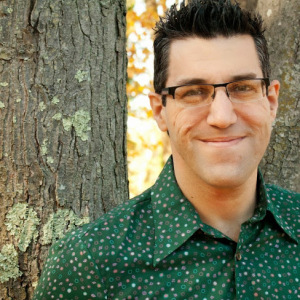
Poet, Matt Pasca, Raven Wire (Shanti Arts Publishing, 2016)Poet Terri Muss, Over Exposed (JB Stillwater, 2013)
POETRY IN BAY SHORE, LI, NY hosted by Matt Pasca and Terri Muuss – food, fun — OPEN MIC — bring your instruments and your poems.
Saturday, July 9 at 7 PM – 10 PM
Locations: Cyrus Chai & Coffee Company
1 Railroad Plz, Bay Shore, New York
POETRY IN DOWNTOWN BAY SHORE! Join hosts Matt Pasca and Terri Muuss every second Saturday at Cyrus’ for the kind of poetry, coffee, treats and open mic experience you’ve been looking for!!! Our features will move and inspire you with their honesty and scintillating presence. Open mic follows features, so bring your ukulele, cello, double bass, guitar, sonnets, spoken word, villanelles and more!
MAYMAY is the former President of Spit, spoken word poetry club at Hofstra University, and still performs her work passionately and often around the NY area.
BRI ONISHEA is a want-to-be gypsy, ardent lover of words and pursuer of a lifetime of art and learning. More specifically, she is a New York poet, artist, editor, tutor and individual case worker for EPIC. A graduate of SUNY Geneseo, where she co-edited the school’s literary magazine, Bri will be an MSW candidate at Stony Brook University in the fall.
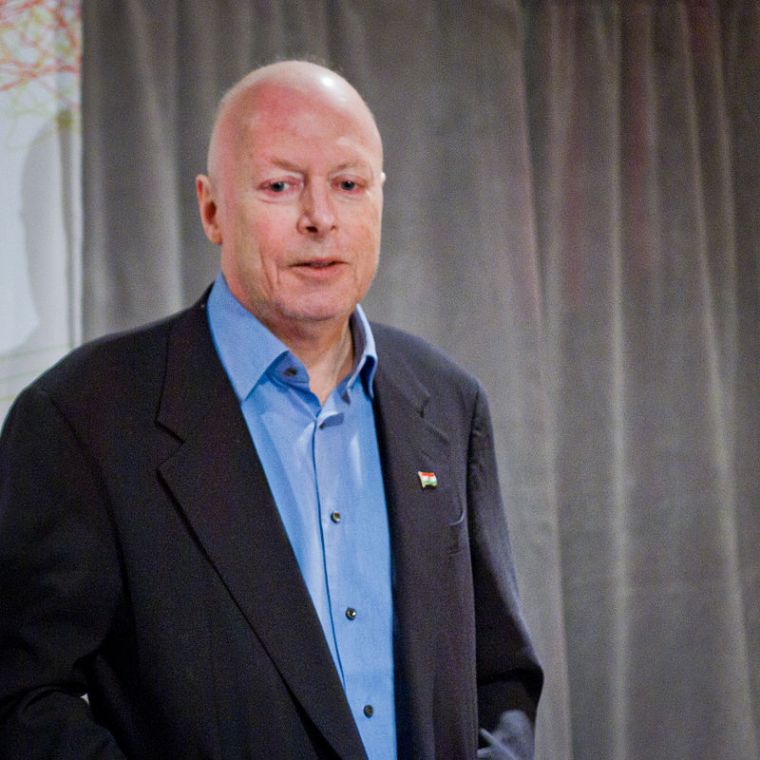
Christopher Hitchens (1949-2011), English-American writer, polemicist, social and literary critic
“I am no prophet—and here’s no great matter;
I have seen the moment of my greatness flicker,
And I have seen the eternal Footman hold my coat, and snicker …” The Love Song of J. Alfred Prufrock, T.S. Eliot
I was reminded once again of Hitch when his name came up in conversation at our last book club meeting on June 26th. CHRISTOPHER “HITCH” HITCHENS died in December 2011 of esophageal cancer. He was sixty-two. Famous or infamous – depending on your view – for his atheism among other things, he was a writer who wrote well and prodigiously, was unapologetic for his views and his lifestyle, and who died gracefully. When faced with death, he made it clear that he hadn’t amended his opinion as expressed in his best-selling book of 2007, God Is Not Great: How Religion Poisons Everything,
His opinions are controversial and debatable and that’s part of what makes him fun. How dull when there are no differences. Life would be an intellectual wasteland. As long as we take our differences to the debate halls (Hitchens was splendid at debate), the op-eds, the magazines/newspapers/blogs and the voting booth and not to the killing fields, it’s okay. When we know who we are, we are not easily shocked or threatened by perspectives and opinions that differ from our own.
I appreciate Hitch’s honesty and acuity. Nonsmoking teetotaler I am, yet I admire the spirit in this – quoted from his New York Times obituary – “He also professed to have no regrets for a lifetime of heavy smoking and drinking. ‘Writing is what’s important to me, and anything that helps me do that…'” He was true to himself right to the end even as he admitted that his lifestyle contributed to his illness.
In his writing and in debates, Hitch did attack our sacred cows. Hitch’s gift was to make us re-examine our dusty old assumptions and the positions we sometimes take for granted, having been spoonfed them since childhood by parents, clergy, teachers and culture. Indeed, upon examination, there is much that comes up lacking, needing to be abandoned, reformulated or expressed in a more coherent manner.
Perhaps more than anything, I admire the grace with which Christopher Hitchens lived with dying. He did a more principled and dignified job of it than many of us in our faith communities. He was diagnosed in June 2010 and wrote about this journey in his Vanity Fair columns. The “cynical contrarian” had heart, perhaps even a kinder more tolerant and generous heart than many an avowed theist.
I sometimes wish I were suffering in a good cause, or risking my life for the good of others, instead of just being a gravely endangered patient.”
He wrote that the …
Prospect of death makes me sober, objective.”
He pursued his craft right to the end.
‘Cancer victimhood contains a permanent temptation to be self-centered and even solipsistic,’ Hitchens wrote . . . but his own final labors were anything but: in his last 12 months, he produced for this magazine a piece on U.S.-Pakistani relations in the wake of Osama bin Laden’s death, a portrait of Joan Didion, an essay on the Private Eye retrospective at the Victoria and Albert Museum, a prediction about the future of democracy in Egypt, a meditation on the legacy of progressivism in Wisconsin, and a series of frank, graceful, and exquisitely written essays in which he chronicled the physical and spiritual effects of his disease. At the end, Hitchens was more engaged, relentless, hilarious, observant, and intelligent than just about everyone else—just as he had been for the last four decades.” Vanity Fair
He wrote with excruciating honesty.
Like so many of life’s varieties of experience, the novelty of a diagnosis of malignant cancer has a tendency to wear off. The thing begins to pall, even to become banal. One can become quite used to the specter of the eternal Footman, like some lethal old bore lurking in the hallway at the end of the evening, hoping for the chance to have a word. And I don’t so much object to his holding my coat in that marked manner, as if mutely reminding me that it’s time to be on my way. No, it’s the snickering that gets me down.
“On a much-too-regular basis, the disease serves me up with a teasing special of the day, or a flavor of the month. It might be random sores and ulcers, on the tongue or in the mouth. Or why not a touch of peripheral neuropathy, involving numb and chilly feet? Daily existence becomes a babyish thing, measured out not in Prufrock’s coffee spoons but in tiny doses of nourishment, accompanied by heartening noises from onlookers, or solemn discussions of the operations of the digestive system, conducted with motherly strangers. On the less good days, I feel like that wooden-legged piglet belonging to a sadistically sentimental family that could bear to eat him only a chunk at a time.” Except that cancer isn’t so … considerate.” MORE [Vanity Fair]
Thank you, Hitch, for making us think and rethink.
Thank you, Vanity Fair, for hosting Christopher Hitchens so regularly for us to read.
We must not forget that only a very few people are artists in life, that the art of life is the most distinguished and rarest of all the arts. Who ever succeeded in draining the whole cup with grace? So for many people all too much unlived life remains over— sometimes potentialities which they could never have lived with the best of wills, so that they approach the threshold of old age with unsatisfied demands which inevitably turn their glances backwards.” Carl G. Jung
Through the past several weeks, I have once-again turned my glances backward over the practical space-saving necessity of shedding and shredding some more of the notebooks and files of one small lifetime. I found that quote of Jung’s written on note almost as if from my younger self to my older self. After some forty or so years, I no longer remember from which of his works it was clipped and I left myself no hint. In those days I always trusted my memory as reliable, something I can no longer do. I’m guessing the quote might have been from his Stages of Life.
The art of life is surely the superior art, but without art – whatever ours is by interest, vocation or avocation – poetry and literature, music, theater, painting or photography – much more of our lives might be “too much unlived” and the glass drained without the hope of any grace. It is our art or arts that help us to savor beauty and to understand – or at the very least sooth – pain and double joy.
Jung said further that “The creative mind plays with the objects it loves.” We come to a specific art as a lover attracted to what appeals most: words, sound, story, vision. Through these gifts of the spirit our lives are enriched and we practice the art of living hugely.






 Jamie Dedes' THE POET BY DAY Webzine