Page 25 of 91

NISHT A’HAIR UN NISHT AHIN (NEITHER HERE NOR THERE), WHAT IT’S LIKE TO BE AN ENGLISH-LANGUAGE POET IN ISRAEL, BY MIKE STONE

“Language as the technology of human extension, whose powers of division and separation we know so well . . . ” Marshall McLuhan


 For Mike’s poetry visit him at Uncollected Works. [recommended] / J.D.

What’s it really like to be an English-language poet in Israel? What’s it like to speak, read, and write in more than one language? I was inspired to write this post after reading an excellent article by Dara Barnat, entitled No One’s Mother Tongue: Writing in English in Israel, appearing in the English & French poetry journal “Recours au Poeme”. It is well worth your reading, but don’t be daunted by the French at the beginning of the article if you are monolingual; the original English follows immediately. For those Francophiles struggling along in English, Sabine Huynh translated Dara’s article into French. Sabine is a talented poet in both French and English, and translates six languages at last count.

To answer the first question, I suppose it’s somewhat like being a Hebrew-language poet in America; not because so few people read English in Israel or Hebrew in America, but because so few people read poetry in any country. More people would rather read a blog post on poetry or see a movie about a poet, than read an actual poem. But seriously, Dara makes a valid point that being an English-language writer in Israel makes one “different”, “not normal”, and casts one in the undesirable role of being an outsider, insiders being those who are “normal”, who eat out of the same mess kit as you, who love what you love and hate what you hate. The funny thing about that is that’s the way I felt in America too. Maybe it’s a Jewish thing, except that’s the way I feel in a synagogue too.

Now would be a good time to explain the title of my post, “Nisht a’hair un nisht ahin”. It’s Yiddish for “neither here nor there”. That’s how a true outsider feels.

As for the second question, I speak, read, and write in English and Hebrew. English is my native language, my mama lushin, but I’ve lived in Israel more than half my life, so I don’t have to translate my thoughts from English to Hebrew. I think in both languages. I used to speak Spanish and German too, but unfortunately those tongues have atrophied in my mouth. So a curious monolingual might ask “what’s it like?” We see the world around us through our eyes but we filter what we see through the structures of our language. Actually there are a lot of different filters that raw reality has to pass through before it enters our minds, such as the structures of culture, of religion, and of nationality, but language precedes them. If we experience something for which we have no word or form of word, then we are not likely to remember that thing. We may not even be aware of it. Most languages possess common structures, or else we’d never be able to translate from one language to another, but every language also has its own unique structures. Hebrew speakers see the world through both common and unique language structures, for instance the concurrency of biblical time with modern time, the timelessness of the Holocaust, the synesthesia between our children and our soldiers, our love-hate relationship with religion and politics, our dependence on and mistrust of the outside world, the suspicion of abandoned baggage, to name only a few of our unique language structures. These will never be translatable into English or any other language. So what I am saying is that I see the world through both sets of language structures at the same time. The realities I see are painted from a richer palette. Richer is not necessarily happier. In my case, it’s sadder.

There is so much to love, but there is so much to lose and it can be so lonely when you’re an outsider looking in.

Mike Stone 

Raanana Israel

© 2019, Mike Stone; illustration, a public domain photograph of The Tower of Babel by Pieter Bruegel the Elder (1563)

MIKE STONE (Uncollected Works)was born in Columbus Ohio, USA, in 1947 and was graduated from Ohio State University with a BA in Psychology. He served in both the US Army and the Israeli Defense Forces. He’s been writing poetry since he was a student at OSU and supports his writing habit by working as a computer networking security consultant. He moved to Israel in 1978 and lives in Raanana. He is married and has three sons and seven grandchildren.


ABOUT

Testimonials

Disclosure

Facebook

Twitter

Poet and writer, I was once columnist and associate editor of a regional employment publication. I currently run this site, The Poet by Day, an information hub for poets and writers. I am the managing editor of The BeZine published by The Bardo Group Beguines (originally The Bardo Group), a virtual arts collective I founded.  I am a weekly contributor to Beguine Again, a site showcasing spiritual writers. My work is featured in a variety of publications and on sites, including: Levure littéraure, Ramingo’s PorchVita Brevis Literature,Compass Rose, Connotation PressThe Bar None GroupSalamander CoveSecond LightI Am Not a Silent PoetMeta / Phor(e) /Play, and California Woman. My poetry was recently read by Northern California actor Richard Lingua for Poetry Woodshed, Belfast Community Radio. I was featured in a lengthy interview on the Creative Nexus Radio Show where I was dubbed “Poetry Champion.”


The BeZine: Waging the Peace, An Interfaith Exploration featuring Fr. Daniel Sormani, Rev. Benjamin Meyers, and the Venerable Bhikkhu Bodhi among others

“What if our religion was each other. If our practice was our life. If prayer, our words. What if the temple was the Earth. If forests were our church. If holy water–the rivers, lakes, and ocean. What if meditation was our relationships. If the teacher was life. If wisdom was self-knowledge. If love was the center of our being.” Ganga White, teacher and exponent of Yoga and founder of White Lotus, a Yoga center and retreat house in Santa Barbara, CA

“Every pair of eyes facing you has probably experienced something you could not endure.” Lucille Clifton

PLEASE CALL ME BY MY TRUE NAMES, Thích Nhất Hạnh’s most famous poem

Nhất Hạnh at Phu Bai International Airport on his 2007 trip to Vietnam (aged 80) Public domain photograph courtesy of Lưu Ly

 I have arrived

I am home

in the here

in the now

I am solid

I am free

in the ultimate

I dwell

Thích Nhất Hạnh , excerpt from The Long Road Turns to Joy, A Guide to Walking Meditation


Thích Nhất Hạnh is a world renown poet, peace activist and Vietnamese Zen Buddhist Monk. He is one of our heroes and this is a favorite poem. He was nominated for the Nobel Prize by Martin Luther King, Jr., in 1967, and is the author of many books , including the best-selling The Miracle of Mindfulness, An Introduction to the Practice of Mindfulness. His Amazon page is HERE.

PLEASE CALL ME BY MY TRUE NAMES

May all sentient beings find peace.

Link here to Plum Village International Sanga, France.

Visit Plum Village on Facebook.

Link here to Deer Park Monastery, Escondido, CA


ABOUT

Testimonials

Disclosure

Facebook

Twitter

Poet and writer, I was once columnist and associate editor of a regional employment publication. I currently run this site, The Poet by Day, an information hub for poets and writers. I am the managing editor of The BeZine published by The Bardo Group Beguines (originally The Bardo Group), a virtual arts collective I founded.  I am a weekly contributor to Beguine Again, a site showcasing spiritual writers. My work is featured in a variety of publications and on sites, including: Levure littéraure, Ramingo’s PorchVita Brevis Literature,Compass Rose, Connotation PressThe Bar None GroupSalamander CoveSecond LightI Am Not a Silent PoetMeta / Phor(e) /Play, and California Woman. My poetry was recently read by Northern California actor Richard Lingua for Poetry Woodshed, Belfast Community Radio. I was featured in a lengthy interview on the Creative Nexus Radio Show where I was dubbed “Poetry Champion.”


The BeZine: Waging the Peace, An Interfaith Exploration featuring Fr. Daniel Sormani, Rev. Benjamin Meyers, and the Venerable Bhikkhu Bodhi among others

“What if our religion was each other. If our practice was our life. If prayer, our words. What if the temple was the Earth. If forests were our church. If holy water–the rivers, lakes, and ocean. What if meditation was our relationships. If the teacher was life. If wisdom was self-knowledge. If love was the center of our being.” Ganga White, teacher and exponent of Yoga and founder of White Lotus, a Yoga center and retreat house in Santa Barbara, CA

“Every pair of eyes facing you has probably experienced something you could not endure.” Lucille Clifton

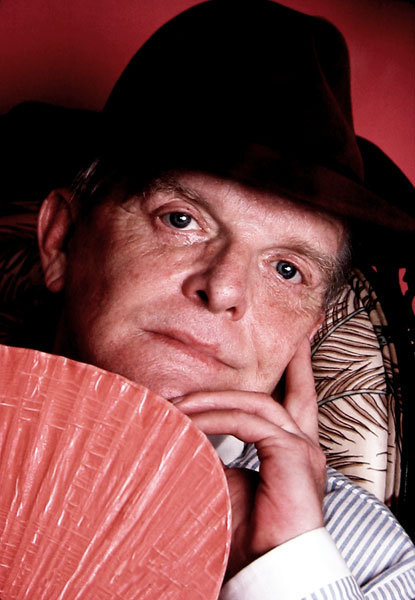
“Brooklyn: A Personal Memoir” by Truman Capote with the lost photographs of David Attie … not just for my Brooklyn peeps

Truman Capote (1924 – 1984)

“I am always drawn back to places where I have lived, the houses and their neighborhoods.” Truman Capote, Breakfast at Tiffany’s


by Truman Capote (Author), David Attie (Photographer), George Plimpton (Introduction), Eli Attie (Afterword)

Of the books I read this year, this birthday gift from my son and my daughter-in-law is by far my favorite … and not just because I’m from Brooklyn and it’s a bit of nostalgia and a stellar homage. I’m a Capote fan and a David Attie fan and Brooklyn: A Personal Memoir by Truman Capote With the Lost Photographs of David Attie brings the writer and photographer together in the most delightful way.

“I live in Brooklyn by choice.”

If you’re a Capote fan, you’ll learn about his life in Brooklyn and just why he loved it. There are two photographs of a young Truman that some fans might find worth the price of admission. One is on the book cover (above) the other is included in the video below. The photographic collection in this book was originally commissioned to use as a promo for Capote after the publication of his novella, Breakfast At Tiffany‘s (1958).

Capote captures the essential Brooklyn in his writing, the singular gentility of the time and place, the grittiness of certain quarters, and the ways in which it could be excentric. Attie’s  photos – taken in 1959 – document the tenor of a time now alive only in the memory of a generation that is slowly passing.

David Attie’s photographs were never published and thought to be lost. When Attie’s son Eli found them, he merged them together with Capote’s narrative and they were published at last, a visual feast, engaging for Brooklynites, Capote fans, literary history and photography buffs.

Photo credit: Jack Mitchell under CC BY-SA 4.0; signature is public domain.

The short video below gives a brief overview of the book and includes many of David Attie’s photographs. If you are reading this post from an email subscription, you’ll likely have to link through to the site to view the video.


What would you find pleasant or helpful on The Poet by Day in 2019?  What have you found helpful to date? Link HERE to let me know.


ABOUT

Testimonials

Disclosure

Facebook

Twitter

Poet and writer, I was once columnist and associate editor of a regional employment publication. I currently run this site, The Poet by Day, an information hub for poets and writers. I am the managing editor of The BeZine published by The Bardo Group Beguines (originally The Bardo Group), a virtual arts collective I founded.  I am a weekly contributor to Beguine Again, a site showcasing spiritual writers. My work is featured in a variety of publications and on sites, including: Levure littéraure, Ramingo’s PorchVita Brevis Literature,Compass Rose, Connotation PressThe Bar None GroupSalamander CoveSecond LightI Am Not a Silent PoetMeta / Phor(e) /Play, and California Woman. My poetry was recently read by Northern California actor Richard Lingua for Poetry Woodshed, Belfast Community Radio. I was featured in a lengthy interview on the Creative Nexus Radio Show where I was dubbed “Poetry Champion.”


The BeZine: Waging the Peace, An Interfaith Exploration featuring Fr. Daniel Sormani, Rev. Benjamin Meyers, and the Venerable Bhikkhu Bodhi among others

“What if our religion was each other. If our practice was our life. If prayer, our words. What if the temple was the Earth. If forests were our church. If holy water–the rivers, lakes, and ocean. What if meditation was our relationships. If the teacher was life. If wisdom was self-knowledge. If love was the center of our being.” Ganga White, teacher and exponent of Yoga and founder of White Lotus, a Yoga center and retreat house in Santa Barbara, CA

“Every pair of eyes facing you has probably experienced something you could not endure.” Lucille Clifton


AN INTERVIEW WITH POET LINDA E. CHOWN & A SAMPLER OF HER POETRY, PART II

“Poetry refreshes who we are and opens our eyes. It is a second sight on all that we’ve known and done. It penetrates into the invisible world we don’t speak of often and thus can bring us together . . . Poetry is the biggest surprise. It can be our double, echo, enhance our solitudes and tell us how the world is in its mysterious questioning ways. Poetry is a beautiful agent of radicalism in all ways.” Linda E. Chown


In Part I – published yesterday – we served up two of Linda’s poems along with her interview. Today, we share six more of Linda’s poems.  A rare and rich treat for all of us. Thank you, Linda Chown.


POETRY SAMPLER

Uncle Sasha

Dear Sasha. Great Sasha.

You were something very special.

In Moscow’s somber streets, flagellated

and smothered by summer’s heat

and simmering peat bog fires,

you in that outrageously dignified hat

and cane, sickness pushing your bones,

overcame these pains and your daughter’s

shame of you to cut a swathe of finesse.


Haunted man who knew prison.

Proud man whose family split and fissured,

warred in the expected Russian Jewish way.

Sick man just three days out of bed.

I’d watch you as patriarch at your end

of all the tables heavy with food and talk.

You barely had the energy to smile sometimes

but you did and lectured about smoking

through all-conveying looks

of emotion when you caught our eyes.

My grandmother grew red from the efforts

of translation.

I babbled in smiles while the women

stroked and rubbed the top of my head.

I felt a volcano in you.

A bursting open in the long gray hair.


There.

Two worlds

barely touching in the air:

American blue jeans. Chekhov in English

My Darling Clementine Slavicized on a dusty Victrola.

You’d look at me, the youngest,

wanting and getting something

but all my claims, living in Spain,

the bases, were wanting.


My mother’s birthday dinner night

on the 25th floor of Moscow’s swankest hotel

I read the speech you wrote

in English the whole afternoon long

and you stood up speaking in Russian,

saying things that made all the relatives cry,

the agility of Fred Astaire in your body’s texture,

the weight of a visionary in your eye

and I felt an unexperienced pride in family,

the inherited forms.


Dead of pneumonia and gone

you fused so much and played so lonesome

light, so honor driven.

Man who knew pogroms and the family’s

leaving you and war and jail and revolution.

Uncle who said my name like I used to

as a little girl, Yinda,Yinda.

I didn’t get enough of you.

© 2018, Linda E. Chown


Time of terror

Then, when they killed

the Rosenbergs

for espionage

it was

a time of terror

for my family

eyes peering everywhere

no iPhone, no tv,

rumors turned to fact

in a mystery.

We turned to poetry

which would howl

and music with a whole

lotta shakin goin’ on

which spoke us true

stranded as we were

then in the quicksands

of conformity.

© 2018, Linda E. Chown


My Father Had a Dream

He had a dream


My father taught me to dream,

to take bigger steps,

his eyes flashed with happy need.


At the Lincoln Memorial

whose steps he went up like the tall giant he was with

his bad knees and flappy cane tap tap tap.


Us-all at the top like a vision

marble white we saw greatness,

something you can’t measure or fathom,

My father did more than smile:

he beamed, he purred peace and salvation,

like his life’s work had been done

by taking us there.


My father such a simple good man

whose light reached beyond

our messy, contentious, lives.

© 2018, Linda E. Chown


The Three Kings: Later

It is not that we don’t have

gifts and luxurious robes:

the child robbed the cradle

and his daddy’s not home.

The mare is in the kitchen

and the pope’s just on loan.

The food’s all dried out now

and the whistle doesn’t blow.

The roads have all been polished

and the stars don’t hardly show.

The roots are somewhat buried,

the times a passing slow,

we’re moving into darkness

where the candles rarely glow.

Where the gifts we bring

are seldom seen,

where there is no place to go.

© 2018, Linda E. Chown

     When all fell away from me

Paul Celan

 No Ballroom Dancing

in the stark stare of wide-snow and beggars hiding under the Blue Bridge

in the stark slant of a pilgrim’s walk to the plenty of the poor
silk slack people with their lips plunged in
to the silence of their dark thoughts
of the endless ending cursing and coming in this pen, sneering

when that old woman there with a Red Hat

can not go in without her teeth
she clinks and the pauper people point and peer stare

like pauper people are wont to do


where her Red Hat falls into a pea soup of fear
just a happenstance


no ballroom dancing here

© 2018, Linda Chown


A day they say to remember

It’s Memorial Day again,

a day they say to remember

those missing in action

remember missing those

long blue sky sailor stripes

remember your father in action

when you were little remember the Marne

and he was in action burning the brush

fire mixed black soot on white

fog drifts remember when you were

little with that big frown

and your mother sat there waiting

pulling down on her red skirt

© 2018, Linda Chown

PART I includes Linda’s interview and two poems HERE.


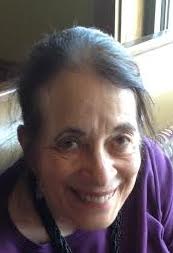
LInda E. Chown

LINDA E. CHOWN grew up in Berkeley, Ca. in the days of action. Civil Rights arrests at Sheraton Palace and Auto Row.  BA UC Berkeley Intellectual History; MA Creative Writing SFSU; PHd Comparative Literature University of Washington. Four books of poetry. Many poems published on line at Numero Cinq, Empty Mirror, The Bezine, Dura, Poet Head and others. Many articles on Oliver Sachs, Doris Lessing, Virginia Woolf, and many others. Twenty years in Spain with friends who lived through the worst of Franco. She was in Spain (Granada, Conil and Cádiz) during Franco’s rule, there the day of his death when people took to the streets in celebration. Interviewed nine major Spanish Women Novelists, including Ana María Matute and Carmen Laforet and Carmen Martín Gaite.


ABOUT

Testimonials

Disclosure

Facebook

Twitter

Poet and writer, I was once columnist and associate editor of a regional employment publication. I currently run this site, The Poet by Day, an information hub for poets and writers. I am the managing editor of The BeZine published by The Bardo Group Beguines (originally The Bardo Group), a virtual arts collective I founded.  I am a weekly contributor to Beguine Again, a site showcasing spiritual writers. My work is featured in a variety of publications and on sites, including: Levure littéraure, Ramingo’s PorchVita Brevis Literature,Compass Rose, Connotation PressThe Bar None GroupSalamander CoveSecond LightI Am Not a Silent PoetMeta / Phor(e) /Play, and California Woman. My poetry was recently read by Northern California actor Richard Lingua for Poetry Woodshed, Belfast Community Radio. I was featured in a lengthy interview on the Creative Nexus Radio Show where I was dubbed “Poetry Champion.”


 The BeZine: Waging the Peace, An Interfaith Exploration featuring Fr. Daniel Sormani, Rev. Benjamin Meyers, and the Venerable Bhikkhu Bodhi among others

“What if our religion was each other. If our practice was our life. If prayer, our words. What if the temple was the Earth. If forests were our church. If holy water–the rivers, lakes, and ocean. What if meditation was our relationships. If the teacher was life. If wisdom was self-knowledge. If love was the center of our being.” Ganga White, teacher and exponent of Yoga and founder of White Lotus, a Yoga center and retreat house in Santa Barbara, CA

“Every pair of eyes facing you has probably experienced something you could not endure.” Lucille Clifton