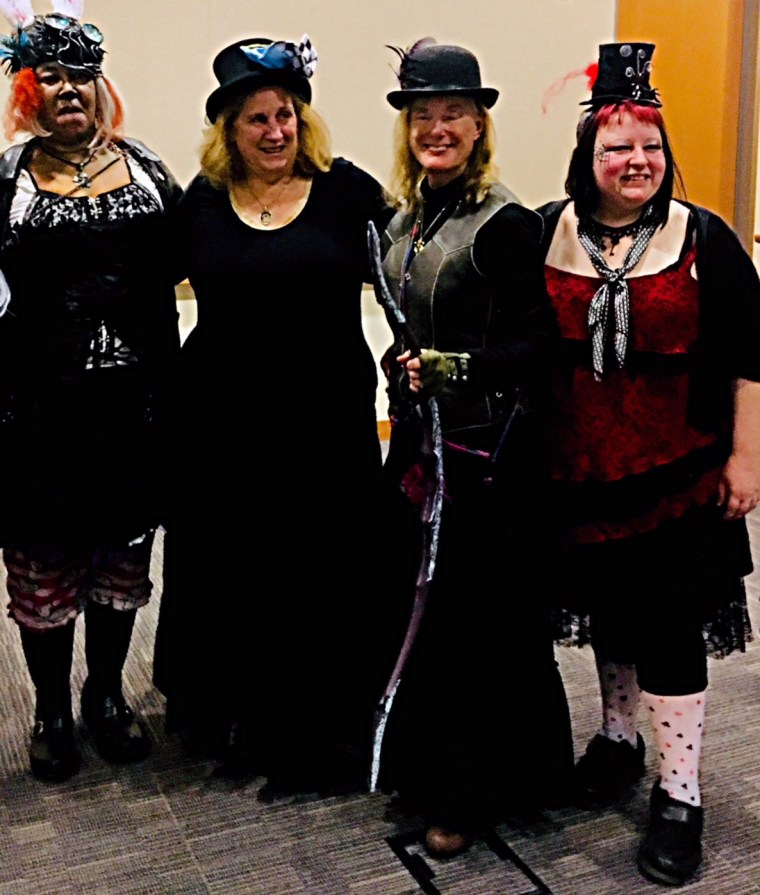
Horror writers: Sumiko Saulson, Trinity Adler, Laurel Ann Hill and Emerian Rich
With Halloween a scant two weeks away, it’s that time of year when many poets and writers turn their minds and pens to the macabre. There are more than a few of you in our community who actually spend almost all your time there as triple threats: poets, short-story writers and novelists. So, thanks to my friend and neighbor, Candice, who did the driving, I bring you last night’s ~
Horror at the San Mateo Public Library
The evening treats were delivered by four smart and inventive writers from horroradicts.net. It was a fun few hours with readings, thoroughly enjoyed by all, and featuring:
Sumiko Saulson, a science-fiction, fantasy and horror writer, the 2016 recipient of the Horror Writer Associations’ Scholarship from Hell. Her novels includeThe Moon CriedBloodand the bestselling horror comedy, Warmth.
Trinity Adler‘sshort story, Clockwork Justice, is featured in Horror Adicts Press 2017 anthology, Clockwork Wonderland. Her inclinations embrace Steampunk*, which is, she says, “a perfect fit for blending fantasy and the wild west.
Laurel Ann Hill, a prolific writer of novels and short stories (many anthologized), authored the award-winning spirits-meet-steampunk novel, The Engine Woman’s Light, which tells of the life-saving mission of a young Latina spiritualist in the Nineteenth Century. The book received a Kirkus Star and the 2017 Independent Press Award, Steampunk Category.
Emerian Rich, vivacious and all smiles, is adept at pushing reality aside and engaging in fantasy. Emerian is also a prolific writer and her latest work, Artistic License is due out this fall. She is the author of The Night’s Knight Vampire Series.
*Steampunk is a subgenre of science fiction or science fantasy that incorporates technology and aesthetic designs inspired by 19th-Century industrial steam-powered machinery. Although its literary origins are sometimes associated with the cyberpunk genre, steampunk works are often set in an alternative history of the 19th Century’s British Victorian era or American “Wild West”, in a future during which steam power has maintained mainstream usage or in a fantasy world that similarly employs steam power. MORE
HorrorAdicts.Net, For Horror Addicts, By Horror Addicts, an organizaton through which the women are affiliated, features writer interviews, stories, publishing news and calls for submissions. There is also on ongoing call for volunteer writers and interns to help run the site. It would appear to be an excellent go-to place if you are a horror fan and writer.
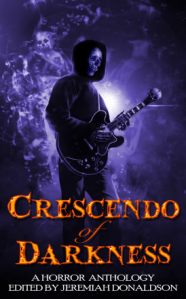
THE CALL FOR SUBMISSIONS is for Crescendo of Darkness, A Horror Anthology edited by Jeremiah Donaldson. The theme is music. Fiction from 2,000 to 5,000 words is welcome for consideration. If accepted the payment is $10 and a digital contributor copy. The deadline is October 31, 2017. Details are HERE.
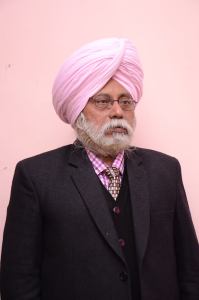
Living more and more trapped in cyberspace (statistics can attest that we spend daily more hours in the virtual than in the real world), we may at a certain point be inclined to demonise it, but the fact of the matter is that the virtual space does offer us an unparalleled range of opportunities. Through it, I have been bestowed the privilege of coming into contact with a large number of amazing personalities from various fields of culture and creativity, among whom I am happy to mention Dr. Jernail S. Anand, an Indian poet, philosopher, teacher, educator, to name just the main aspects of his proliferous career.
Dr. Aprilia Zank
Due to both my profession and my passion for literature and art, I had been familiar with creative people before the Internet, but it was the sort of closeness which one finds in the seclusion of libraries, museums, university halls and the like. With the new generations ‘born’ with notebooks, tablets or smartphones in their hands, the encounter with knowledge or creativity acquires new coordinates. The notion of reception needs to be reshaped and reconstructed. What sounds like self-evidence at first view needs though critical questioning. Do we really experience and process literary and artistic contents in a new way in the virtual space? Does it make a difference if I hold a paper book in my hands, or if I read it on a screen, or is its impact on me the same? Perhaps we need indeed to pay new consideration to Marshall McLuhan’s declaration that “the medium is the message.” Extensive research is necessary, and scientists of all domains are busy attempting to transmute their findings into relevant statistic data, but beyond all scholarly devices are the unique literature and art recipients with their particular premises for the reception and processing of literary writings and of works of art.
My encounter with Dr. Anand has taken place – so far and I hope it will change soon – in the virtual space only. I have had no opportunity to meet him in person, yet I have the feeling that we are good old friends. Furthermore, we both belong to a tremendous network of friends and friends’ friends who are in a permanent and immediate encounter and exchange of information, opinions and critical views. For there is no denial of the fact that accessibility of all types is practically borderless in cyberspace. A sheer number of readers can and do access Dr. Anand’s poems, essays and philosophical work in bits or as full books on the Internet. This unparalleled intercourse occurs within our beloved social networks in which communication is possible at any time, from every place and with everybody. But what sounds like a tremendous achievement in general and a huge chance for writers and artists in particular comes at a price. It is precisely the easiness of accessibility that renders the encounter with e-media contents accidental, fugitive, and often enough perfunctory. Under the ‘burden’ of the stupendous offer we are confronted with in cyberspace, we race from stimulus to stimulus in a feverish attempt to absorb as much information as possible. Under these circumstances, we run the risk of being superficial in our assimilation and, accordingly, far from optimal in our response.
Dr. Jernail S. Anand
Dr. Jernail S. Anand
Now, Dr. Anand is a renowned personality with a remarkable retinue of followers and admirers who always search for his presence and newest publications in the virtual world. And he does indeed regale them with exquisite poetry, thought-provoking quotes, or deep-reaching philosophical musings. The readers’ response is there, but it has evolved into a new language, semiotic to a great extent. We use ‘like’, ‘love’, ‘angry’, ‘sad’ and more signs to save time, or in the best case, we type ‘excellent’, ‘profound’ ‘congratulations’, to attest due consideration. Can this be a satisfactory type of feedback? On looking at Dr. Anand’s literary items shared the day I am writing this article, I spot a poem titled “HOW POOR IS THIS LIFE”. A quick analysis reveals that a response is there: 23 readers have liked and/or loved the poem, two have provided comments of one and of four words respectively, but that is about all. I miss some, to my mind, almost compulsory remarks, e.g. a reference to the Eliotian echo of the lines:
I write so much yet the feeling … of half fulfilment stays.
or a few words of appreciation for the exquisite metaphors below:
I could not digest the winds I could not drink the seas
The poet further complains about the unsatisfactory living we are trapped in:
Life! How poor you are!
It is, of course, the spiritual poverty he is is weary of, a recurring theme in Dr. Anand’s writings and a major potential starting point for a debate among the readers of the poem. Decay of traditional values, lack of genuine communication with one’s own kind, failure in the attempt to connect with God – it is all there craving for introspection and deliberation. But here, too, things seem to be doomed to fail to meet expectations:
Things remained half loved Hence half lived.
Is there any chance left for mankind to find its way back to primeval joy? In the poem “JOYS PAINS”, Dr. Anand emphasises the inextricable duality of joy/pain by using stylistic devices such as capitalisation and the juxtaposition of words with no punctuation, thus almost creating a proper name with a single ‘signifié’. The last three lines convey one more cry-out-loud testimony of the shallowness of inter-human relationships in a world devoid of true communication:
Nobody listens to the shrieks Which issue from silent lips Coated with red smiles
A look at the feedback on these major issues present in the poem reveals a poor echo to such a challenging piece of writing: a few semiotic ‘likes’, a ‘sad’ sign, and a positive remark illustrated by a line of the poem. No truly deep consideration offered to major existential questions posited in other poems either. Weirdly enough, this is by no means lack of appreciation or interest, since Dr. Anand is well-known as one of the most widely acknowledged contemporary Indian poets and philosophers. It is rather a peculiar aspect of the nature of reception in this kaleidoscopic world which is the virtual space. Aside from the already mentioned fast-paced character of this medium, which urges us to move on and on to the next items of interest, further components come into play or better said interplay among its users. Visibility and transparency, which per se are positive features of the virtual space, may become inhibitory under the realisation that people ‘can read your mind’ when you express your ideas, opinions and the like on various issues. Direct comparison with other minds can occur, with an uncertain outcome. A reason for many to refrain from a too obvious display of their own facets of spirit or intellect.
Luckily, Dr. Anand’s prolific work has been extensively and skilfully dealt with by scholars who have assuredly taken more than a glance at his literary and philosophical writings. For there is no doubt that thorough reading and rigorous research is still being practised, even in our high-speed world and in the fugacious virtual reality.
Summing up, I think there is no point in trying to solve the quandary whether the virtual world with its social networks are a blessing or a curse. Living without it has become unthinkable, so why not make the best of it. The possibility to display your work and creativity in it, to enjoy borderless visibility and access, and to have the chance of getting feedback from the most unexpected corners of the virtual but also of the real world is priceless. And in this respect I am grateful to have had the opportunity to meet the tremendous personality of Dr. J. S. Anand in this scintillating world. This notwithstanding, I am of course looking forward to an early encounter with the man in person.
– Aprilia S. Zank
October 12th, 2017
Munich, Germany
DR. APRILIA ZANK is a lecturer for Creative Writing and Translation in the Department of Languages and Communication at the Ludwig Maximilian University of Munich, Germany, where she received her PhD degree in Literature and Psycholinguistics for her thesis THE WORD IN THE WORD Literary Text Reception and Linguistic Relativity.She is also a poet, a translator and the editor of two anthologies: the English–German anthology poetry tREnD Eine englisch-deutsche Anthologie zeitgenössischer Lyrik, LIT Verlag, Berlin, 2010, and the anthology POETS IN PERSON at the Glassblower (Indigo Dream Publishing, April, 2014). She writes verse in English and German, and was awarded a distinction at the “Vera Piller” Poetry Contest in Zurich. Her poetry collection, TERMINUS ARCADIA, was 2nd Place Winner at the Twowolvz Press Poetry Chapbook Contest 2013. Aprilia Zank is also a passionate photographer: many of her images are prize-winners and several have been selected for poetry book covers.
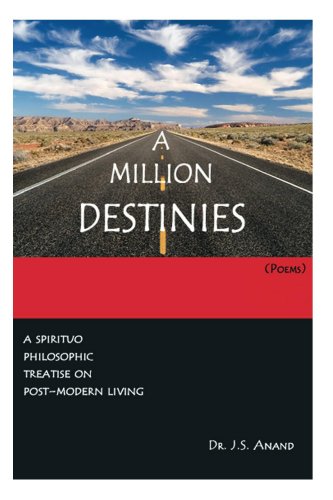
DR. JERNAIL S. ANANAD is the author of two dozen books in English poetry, fiction and non-fiction, Dr. J. S. Anand is an established name in the field of education, philosophy, and spirituality. Born on 15th Jan., 1955, he hails from village Longowal [Distt. Sangrur,Punjab, India]. He got his school education from the best schools in Ludhiana, the highly industrialized city of Punjab, famous for its hosiery and cycle parts industry. He was a student of famous Govt. College, Ludhiana, during his graduate studies, and he did his M.A. in English literature from Punjabi University, Patiala, securing 2nd position in the University. His doctoral thesis, submitted to Panjab University, Chandigarh, was on “A Comparative study of Mysticism in the poetry of Walt Whitman and Prof. Puran Singh”. Dr. Anand is an educationist, an able administrator, a talented writer, a novelist, a poet, and a philosopher, who is a multi-dimensional personality, particularly, in view of his interest in Saving the Earth. He planted around 20 thousand saplings in and around Bathinda. He has also delivered lecturers on Spirituality, Human Rights, and Moral Values. “We are inheritors of the wealth of this earth and this sky, and it belongs equally to us all” – Anand
There are many fine poetry sites but Poetry Translation Centre (PTC) deserves special note. It’s a good place to stop and spend time among poets from Africa, Asia and Latin America. The world-wide poetry community is certainly diverse but we in the West tend to miss a big chunk of it.
At PTC there are poet biographies and photographs along with a sampling of poems in the poet’s first language, literal translations into English, and final translations.
PTC hosts a shop where you are able to purchase the poetry collections of your favorite featured poets. These are books you’re unlikely to see on Amazon, at Barnes & Noble, or in your local independent bookshop. There are also some very excellent feature articles.
“The Poetry Translation Centre was established by the poet Sarah Maguire in 2004, to introduce new audiences to leading poets from around the world, as well as better understand and celebrate the diverse communities who have made their home in the UK. We focus on poetry from Africa, Asia and Latin America, working collaboratively with poets and translators to bring new work to English-speaking audiences in the UK. International poets we have worked with include Coral Bracho, Mohan Rana and Al-Saddiq Al-Raddi.” MORE
A visit to PTC is definitely recommended. You may find to your delight a whole new world opening up to you, a world of strange and beautiful poesy.
“What if you slept
And what if
In your sleep
You dreamed
And what if
In your dream
You went to heaven
And there plucked a strange and beautiful flower
And what if
When you awoke
You had that flower in you hand
Ah, what then?”
“My genes are in mice, and not in the banal way ….”
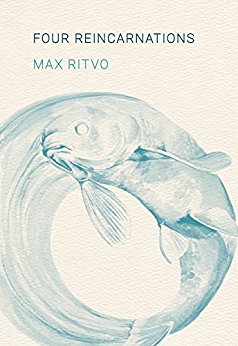
Max Ritvo (December 19, 1990 – August 23, 2016) was an American poet. Milkweed Editions posthumously published a full-length collection of his poems, Four Reincarnations, to positive critical reviews.
Max Ritvo was born in Los Angeles, California on December 19, 1990 A graduate of Harvard-Westlake School in Los Angeles, Ritvo earned his BA in English from Yale University, where he edited a literary magazine and performed with a sketch comedy troupe, and his MFA in Poetry from Columbia University. In 2014, he was awarded a Poetry Society of America Chapbook Fellowship for his chapbook AEONS. On August 1, 2015, he married Victoria Jackson-Hanen, a Ph.D. candidate in psychology at Princeton University, in a ceremony officiated by the poet Louise Glück. He was a poetry editor at Parnassus: Poetry in Review and a teaching fellow at Columbia.
Ritvo was diagnosed with Ewing’s sarcoma (a rare pediatric cancer) at age sixteen and died from the disease at his home in Los Angeles on August 23, 2016.
Ritvo’s work has appeared in Poetry, The New Yorker, Boston Review and as a Poem-a-day on Poets.org. He gave numerous written and radio interviews before his death.
Four Reincarnations, a full-length collection of Ritvo’s poems, was published by Milkweed Editions in September 2016.
According to Lucie Brock-Broido of Boston Review, Ritvo is
“a Realist, a gifted comic, an astronomer, a child genius, a Surrealist, a brainiac, and a purveyor of pure (and impure) joy. His work is composed, quite simply, of candor, of splendor, and of abandon.”
Louise Glück wrote of his first published collection that it was “one of the most original and ambitious first books in my experience… marked by intellectual bravado and verbal extravagance.”
“…the poems are equally conscious of impending death and of the next day’s life, having spent time in a pool of self-skepticism and then emerged shining, shockingly clean…”
While noting that Ritvo “seems to have written most of this book with the clarity, the near equanimity, the distance from ordinary reversals and struggles, of much older poets who know that they are dying,” Burt also writes, “But mortality is rarely his only subject: shyness, gratitude, and erotic attachment are as important as death itself.”
Literary critic Helen Vendler reviewed his work and likened him to Keats. She wrote:
“Ritvo had the luck to study at Yale with Louise Glück and at Columbia with Lucie Brock-Broido, and to attract, before his death, many admirers of his ecstatic originality. Although he is inimitable, his example is there for young poets wanting to forsake simple transcriptive dailiness for the wilder country of the afflicted but dancing body and the devastated but joking mind.”
David Orr, reviewing Four Reincarnations for the New York Times, wrote “It is good-humored (“My genes are in mice, and not in the banal way / that Man’s old genes are in the Beasts”), appealingly sly (“Enoch has written / We are made in His image / but God may have many images./ He may want even more”) and at times surprisingly whimsical (“Every day a chicken dies so that my mom may live”). Orr also quoted, then commented on the end of Ritvo’s poem, The Hanging Gardens:
“This is very fine, and if it acquires a sheen of sentiment because of what it suggests will never emerge — that is, more poems from Ritvo — this doesn’t change the fact that a reader knowing nothing of poetry or this author might find it worth rereading. This is the life poetry leads beyond the confines of the poetic career; the life in which lines exist for what they are, not for future lines they might suggest. The life in which an early poem is also a poem, and a first book is also a book.”
In 2017, Milkweed Editions announced the Max Ritvo Poetry Prize, an annual US$10,000 award and publication contract, supported by the Alan B. Slifka Foundation.
Note: I knew Max Ritvo had a fatal cancer but his death somehow didn’t cross my radar until English poet Reuben Woolley posted an obit earlier this week on Facebook. Such an impossibly sad loss. It has been weighing on me and – however belatedly – I wanted to do a write-up as homage but deadlines and other responsibilities are pressing. Hence, this post is from Wikipedia. Forgive me for not doing my own writeup, though that will come one day. It’s on my ever-lengthening to-do list.
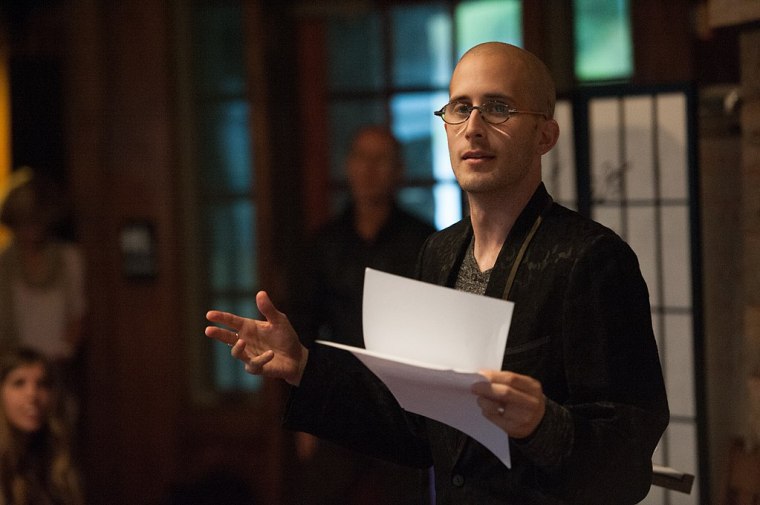
Here is Max reciting My Litter during his self-proclaimed “final tour.” (If you are reading this from an email subscription, it’s likely you will have to link through to the site to view the video.) Max’s Amazon page is HERE. May he rest in peace and may the healing power of the Universe support his wife and family in their lives and loss.
Thank you for sharing your love of words. Comments will appear after moderation.






 Jamie Dedes' THE POET BY DAY Webzine