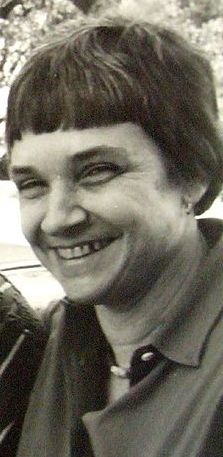
Adrienne Rich (1929-2012)Audre Lorde, Meridel Le Sueur, Adrienne Rich
Madeline Ostrander wrote this article for YES! Magazine, “a national, nonprofit media organization that fuses powerful ideas with practical actions.” Madeline was YES! Magazine‘s senior editor at the time of this writing. She is now an independent journalist and contributing editor to Yes! Magazine.
“I know you are reading this poem listening for something, torn between bitterness and hope…”
I was 19 when I first read Adrienne Rich and these words from “An Atlas of the Difficult World,” which seemed to tear down the barriers between the poem and me, and let me in.
Like Rich, I grew up at a distance from true poverty: “reader reading under a summer tree in the landscape of the rural working poor,” she writes. But I knew how fractured and unstable the world around me was becoming. I was part of the first generation to grow up knowing about climate change, brought to world attention by James Hansen and to my school classroom by a forward-thinking science teacher. I was in high school when the Soviet Union collapsed; as a child, I had nightmares about nuclear war. Rich’s poetry gave me hope that stories could change things—could force us to confront and heal what is painful and give us hope, strength, and compassion.
Rich belonged to an activist strain of poetry; she believed words needed to be reclaimed by the people who have been left out of the history books.
When Rich died a profound loss at a time when we urgently need more storytelling that reaches across our fragmented, politically divided culture. “Atlas” is still one of the most searing and honest descriptions I’ve read about how broken and divisive the modern world is. It’s a 26-page poem that sweeps across the landscapes and histories of North America and elevates people and scenes that are ordinary, neglected, and counted out—farmworkers made sick from pesticides, a woman beaten by her partner, the wasting of our ecological landscapes, weedy fields of Jerusalem artichoke “that fed the hobos, could feed us all.”
Here is a map of our country …
This is the haunted river flowing from brow to groin
we dare not taste its water
This is the desert where missiles are planted like corms …
This is the cemetery of the poor …
This is the sea-town of myth and story when the fishing fleets
went bankrupt … processing frozen fish sticks hourly wages and no shares
Occupy didn’t exist then, of course, but Rich was crafting poetry for the 99 percent: “a poetry older / than hatred. Poetry / in the workhouse, laying of the rails.”
Rich’s long, image-dense lines could seem of out-of-step with a world obsessed with rapid-fire information, Twitter, and text messages. But Rich knew that the marginalization of poets is always a detriment to civil society. In the early 1980s, she traveled to Nicaragua, where she felt the culture “manifested a belief in art, not as commodity, not as luxury, not as suspect activity, but … one necessity for the rebuilding of a scarred, impoverished, and still-bleeding country.”
Rich belonged to an activist strain of poetry; she believed words needed to be reclaimed by the people who have been disempowered and left out of the history books. Her own life is a testament to the power of story in creating cultural change. Rich started college in the late 1940s, when she says even Elizabeth Barrett Browning’s writing was radical for a university campus and certainly no one spoke of feminist ideas in the classroom.
Early in her career, Rich had to scrape together a new kind of language. She used poetry to utter ideas that were almost unspeakable at the time: her poetry pulled back the veil around women’s sexuality and lesbian love and exposed the power and politics that enable war and violence: “I felt driven—for my own sanity—to bring together in my poems the political world ‘out there’—the world of children dynamited or napalmed, of the urban ghetto and militaristic violence—and the supposedly private, lyrical world of male/female relationships,” she said. She published Snapshots of a Daughter in Law, which she calls her first book to overtly tackle sexual politics, in 1963. Decades later, her poetry is still radical, but it’s also a mainstay in college literature classrooms across the country. Her poetry has been a beacon to feminists and social justice activists for several generations, and is included a digital poetry anthology pieced together by organizers of Occupy Wall Street.
Rich never wanted her poetry to be a medium primarily for academe. And she never believed words alone could solve the abuses and inequalities that she wrote about. But reclaiming, decolonizing, and taking charge of language was for Rich the first step in become personally whole and politically powerful. “Because when poetry lays its hand on our shoulder, we can be to an almost physical degree touched and moved. The imagination’s roads open again, giving the lie to that slammed and bolted door, that razor-wired fence, that brute dictum,” she said in a 2006 speech at the National Book Awards, where she received a Medal for Distinguished Contribution to American Letters.
We owe Rich a debt for unlocking the doors that barred the voices of women from art, academe, and the halls of influence for so long. And though she insisted on marking each poem with a date—so that it would stand in the historical context in which she wrote it—everything about her poetry still speaks with urgency and timeliness. Her work illuminates the dark, messy, often painful territory of sex, race, violence, and poverty in America but holds all of us responsible for taking power, ending suffering, and breaking apart social inequalities. In “Atlas,” she writes, “A patriot is one who wrestles for the / soul of her country / as she wrestles for the soul of her own being.” This is what Rich did her whole life, and her poetry enjoins the rest of us to do the same.
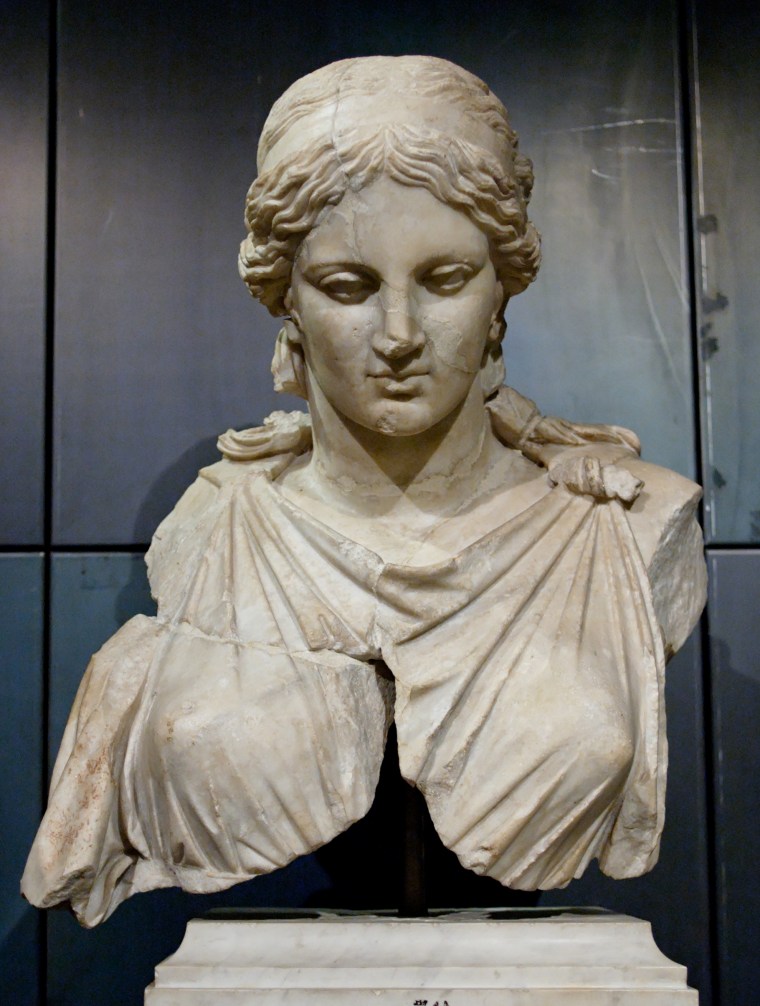
Roman marble Bust of Artemis after Kephisodotos (Musei Capitolini), Rome.
“Women, of course, write good and bad poetry – ‘ambitious’ implies more enterprising subject-matters and approaches, as well as a unique voice for each poet.” Kate Foley and Dilys Wood, Editorial Page, ARTEMISpoetry, November 2015
Here it is April – Poetry Month! – and the month in which I know that Dilys Wood, Anne Stewart and other poets in London at Second Light Network of Women Poets(SLN) are hard at work putting a wrap on the May 2016 issue of ARTEMISpoetry. This biannual literary magazine specializes in the work of women bent on honest self-expression, subjects of substance, and well-crafted poetry.
The issue included poems by Anne Stewart, the featured poet and the author of Janus Hour and Only Here till Friday.
Myra Schneider was the judge for the 2015 poetry contest. The winning poems are featured as well as the commended and we get a bit of the behind-the-scenes look at the hard work of judging.
“I went through over a thousand poems looking for poems that traveled, paid attention to form and made words work. Eventually I reduced a long list of 101 poems to 26 … I was very excited because the winning poems were telling me loud and clear which they were!”
No doubt it is an honor to be selected to judge – and clearly there are rewards – but what a job as well. Certainly a labor of love. The winners for 2015 were: Carolyn King, Margaret Wilmot, Judith Taylor and Kathy Miles.
I was also pleased to read Myra’s feature on one of my own favorites, American poet Louise Glück.
In line with the issue’s theme, politics and eco-politics were explored by Kay Syrad, a regular contributor. She discussed Priscila Uppal’s Sabotage (explores private and public acts of destruction, disruption, and vandalism in the 21st century) and Helen Moore’s Ecozoa(response to the destruction caused by industrial civilization).
Fiona Owen gifted us a thoughtful piece – both homage and exploration – on Anne Cluysenaar‘s eco-poetry.
“… Anne ponders ‘the tenuous job of the poet’ and sees the arts as having an intrinsic evolutionary role …”
In addition to poetry,ARTEMISpoetry always offers book reviews and announcements of publications, events and classes of interest … and lately continues some discussion and promotions of SLN’s last two anthologies Her Wings of Glass and Fanfare.
🙂 I recommend both. 🙂
Below is a sampling (three poems) from Fanfare with thanks to the poets and their publishers, to SLN and especially to Anne Stewart for doing the work of acquiring the permissions for me to share these poems with you here today.
January
Going into the sun
over mud flats skimmed with water
people are walking on ice or glass
their reflections perfect
and you know it’s a new year
walking into the sun
beach and sky cast in light
sheer
gone when you turn
and wave rippled mud
takes your footsteps, softly.
– Caroline Natzler
Caroline Natzler:January and Life’s Work, from Fold (Hearing Eye, 2014)
Untouchable
She shines like Lakshmi through the fields –
a gentle stride, arms at her sides.
By the houses, stooping her beauty
to the earth, she raises the brimming bucket,
its stench sealing her nostrils. Slurry clings
to hair and skin, but nothing changes
on her face, only a puckering of lips
in silent thanks to Kali
for twenty years of women’s work,
this dawn till dusk that’s nurtured seven sons;
thanks that she’s never known the blessing of –
nor visited this curse upon –
a daughter.
– Jill Sharp
Jill Sharp:Untouchable, from Ye gods (Indigo Dreams, 2015)
A Miracle at Iskitim
In Siberia, a symbol –
this is what the locals believe,
a magical birth of water:
a fresh water spring, a spurt
close to the ground, a low white
eternal flame.
We dip our cups
(plastic, from the hotel) and say,
“It tastes pure. The water is pure.”
Some people here heard the last trucks
grind out of sight, after they shut
the ‘lagpunkt’,
the slow-killing place,
left the scar for people like us
in a half circle, dark barrels
in our padded coats, gloves, hats, scarves …
With our white breaths, we breathe out lives
as we raise up transparent cups,
“The future came too late.”
– Dilys Wood
In her Gulag, A History (Penguin, 2004)Anne Applebawm refers to a new fresh-water spring near a former camp at Iskatim.
This slideshow requires JavaScript.
SLN, through community, classes, magazines and books, regularly serves up thought-provoking, often heart stirring and always engaging poetry by women as well as informative explorations and analyses of poems, collections, news and views. Whether you are an experienced professional or an amateur poet, there’s plenty to enjoy here, plenty to learn and think about. I venture to say though that if you are an older woman poet working to find your voice, you’ll discover special inspiration and encouragement through Second Light.
Guerrilla poets strike out for common sense, inclusion, social justice and all our best human ideals:Zero Forbidden Goals (ZFG) is a collective of artists from the Greater Sacramento area. It engages ideals and education through poetry, music and art delivered in a community setting, which is essentially what the “guerrilla” in “guerrilla art” refers to. I just found out about them today. All things considered: rather fabulous.
“In the past year ZFG has worked to bring an innovative brand of guerrilla art to Northern California with events such as Guerrilla Art Flash Mobs, National (Guerrilla) Poetry Month, Gorilla Storytime, Chainlink Poetry, and FLOW Sacramento.”
David Loret De Mola invites guerilla poets to participate in “Guerrilla” Poetry Month by sending in your videos.
“Whether you rap or you slam ZFG invites you and yours to take part in Guerrilla Poetry Month 2016! Just film your piece and send links to ZFGpromotions@gmail.com or hit us @ZFGpromotions.
Find out more at http://www.ZFGpromotions.com
We look forward to hearing from you!”
“Zero Forbidden Goals is a group of young creatives based in Northern California working to cultivate the next generation of art on the West Coast. Since it’s conception in 2014, the collaborative comprised of poets, emcees, musicians, writers, photographers, videographers, engineers, visual artists, and designers have been working to support the creative landscape and general accessibility of the arts on the West Coast by working alongside schools, local businesses, and non-profit organizations to provide and support arts programming.
“In addition to sanctioned art collaborations, Zero Forbidden Goals is known for unpredictable public pop-up art events, installations, and exhibitions. From interactive visual arts to flash mob dance parties, ZFG was founded on the belief that you can turn any slab of concrete into a stage and any empty lot into an art gallery.” from the website




 Guerrilla poets strike out for common sense, inclusion, social justice and all our best human ideals: Zero Forbidden Goals (ZFG) is a collective of artists from the Greater Sacramento area. It engages ideals and education through poetry, music and art delivered in a community setting, which is essentially what the “guerrilla” in “guerrilla art” refers to. I just found out about them today. All things considered: rather fabulous.
 Jamie Dedes' THE POET BY DAY Webzine