Poets, Poetry, News, Reviews, Readings, Resources & Opportunities for Poets and Writers
Author: Jamie Dedes
Jamie Dedes is a Lebanese-American poet and free-lance writer. She is the founder and curator of The Poet by Day, info hub for poets and writers, and the founder of The Bardo Group, publishers of The BeZine, of which she was the founding editor and currently a co-manager editor with Michael Dickel. Ms. Dedes is the Poet Laureate of Womawords Press 2020 and U.S associate to that press as well. Her debut collection, "The Damask Garden," is due out fall 2020 from Blue Dolphin Press.
The spread of “fake news” is reaching a crisis point, PEN America warns in its new report, Faking News: Fraudulent News and the Fight for Truth. The comprehensive, 100+-page report evaluates the array of strategies that Facebook, Google, Twitter, newsrooms, and civil society are undertaking to address the problem, stressing solutions that empower news consumers while vigilantly avoiding new infringements on free speech.
Coming from the leading US free expression organization, the PEN America report argues that even though most “fake news” is protected by the First Amendment, its proliferation creates a flood of disinformation that imperils open expression writ large and demands a concerted response.
“Fake news is mendacious publication gone viral in the digital age,” said Suzanne Nossel, executive director of PEN America, citing the organization’s 1948 Charter which commits PEN to “oppose such evils of a free press as mendacious publication, deliberate falsehood and distortion of facts for political and personal ends.”
“That most fraudulent news may be protected by the First Amendment doesn’t mean it isn’t corroding our discourse and, ultimately, our democracy,” said Nossel. “When the public loses its bearings in terms of what’s true or false, it shakes the foundations that make freedom of speech valuable.”
Faking News rates the range of fact-checking, algorithmic, educational and standards-based approaches being taken to counter the proliferation of fake news. The report identifies sound methods that merit investment, and sounds a warning bell for tactics that risk suppressing controversial speech, such as giving government new powers to regulate or calling on social media companies to block specific content entirely.
The report comes out as tech giants Facebook, Google, and Twitter are being called to Capitol Hill to testify about how their companies’ platforms and technologies were used by Russian actors in an effort to sway the 2016 presidential election. Arguing that these companies—which are many Americans’ primary channels for news consumption—must play a critical and transparent role in curbing the spread of false news, the report spells out a series of specific strategies that center on empowering news consumers with access to fact-checking initiatives and news literacy programs.
In Faking News, PEN America also sets out a News Consumers Bill of Rights and Responsibilitiesoutlining what consumers should expect from the outlets and social media platforms that convey news and how they can protect themselves and others.
In addition to the report, PEN America will host a public panel discussion about “fake news” on October 13 at the Newseum in Washington, featuring Nossel, NPR Editorial Director Michael Oreskes, executive director of the Newseum Institute’s First Amendment Center Lata Nott, media critic Rem Rieder, and George Stanley, award-winning editor of the Pulitzer Prize-winning Milwaukee Journal Sentinel and the Newseum’s Gene Policinski.
PEN America stands at the intersection of literature and human rights to protect free expression in the United States and worldwide. The organization champions the freedom to write, recognizing the power of the word to transform the world. Its mission is to unite writers and their allies to celebrate creative expression and defend the liberties that make it possible
Thank you for sharing your love of words. Comments will appear after moderation.
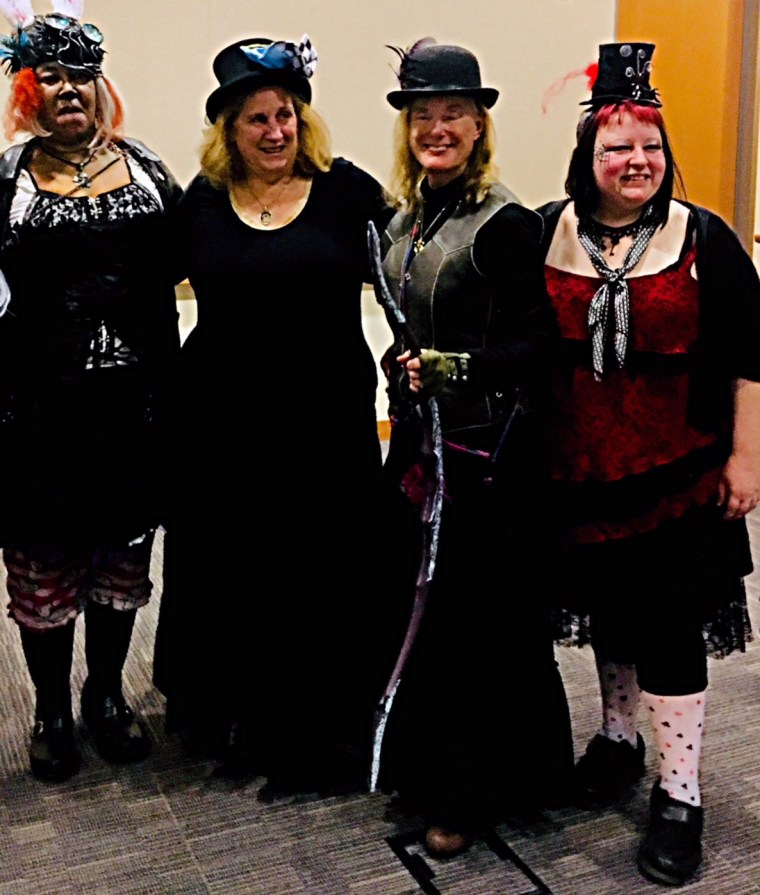
Horror writers: Sumiko Saulson, Trinity Adler, Laurel Ann Hill and Emerian Rich
With Halloween a scant two weeks away, it’s that time of year when many poets and writers turn their minds and pens to the macabre. There are more than a few of you in our community who actually spend almost all your time there as triple threats: poets, short-story writers and novelists. So, thanks to my friend and neighbor, Candice, who did the driving, I bring you last night’s ~
Horror at the San Mateo Public Library
The evening treats were delivered by four smart and inventive writers from horroradicts.net. It was a fun few hours with readings, thoroughly enjoyed by all, and featuring:
Sumiko Saulson, a science-fiction, fantasy and horror writer, the 2016 recipient of the Horror Writer Associations’ Scholarship from Hell. Her novels includeThe Moon CriedBloodand the bestselling horror comedy, Warmth.
Trinity Adler‘sshort story, Clockwork Justice, is featured in Horror Adicts Press 2017 anthology, Clockwork Wonderland. Her inclinations embrace Steampunk*, which is, she says, “a perfect fit for blending fantasy and the wild west.
Laurel Ann Hill, a prolific writer of novels and short stories (many anthologized), authored the award-winning spirits-meet-steampunk novel, The Engine Woman’s Light, which tells of the life-saving mission of a young Latina spiritualist in the Nineteenth Century. The book received a Kirkus Star and the 2017 Independent Press Award, Steampunk Category.
Emerian Rich, vivacious and all smiles, is adept at pushing reality aside and engaging in fantasy. Emerian is also a prolific writer and her latest work, Artistic License is due out this fall. She is the author of The Night’s Knight Vampire Series.
*Steampunk is a subgenre of science fiction or science fantasy that incorporates technology and aesthetic designs inspired by 19th-Century industrial steam-powered machinery. Although its literary origins are sometimes associated with the cyberpunk genre, steampunk works are often set in an alternative history of the 19th Century’s British Victorian era or American “Wild West”, in a future during which steam power has maintained mainstream usage or in a fantasy world that similarly employs steam power. MORE
HorrorAdicts.Net, For Horror Addicts, By Horror Addicts, an organizaton through which the women are affiliated, features writer interviews, stories, publishing news and calls for submissions. There is also on ongoing call for volunteer writers and interns to help run the site. It would appear to be an excellent go-to place if you are a horror fan and writer.
THE CALL FOR SUBMISSIONS is for Crescendo of Darkness, A Horror Anthology edited by Jeremiah Donaldson. The theme is music. Fiction from 2,000 to 5,000 words is welcome for consideration. If accepted the payment is $10 and a digital contributor copy. The deadline is October 31, 2017. Details are HERE.
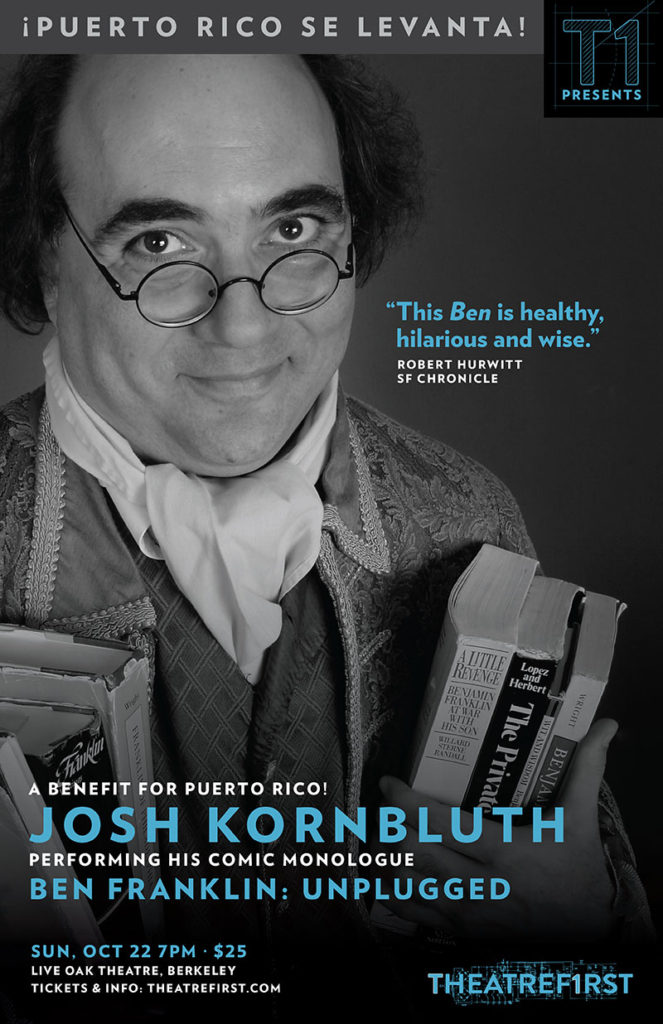
LIVE OAK THEATRE in Berkeley was recently featured by Oakland Magazine as Editor’s Choice for Best Theatrical Turnaround . Kudos to the new management, TheatreFIRST.
With TheatreFIRST came a notable shift focusing on commissioned work and creative teams comprised predominantly of women and people of color.
The current season, which began on the 15th, promises to be exciting and innovating with:
The Farm (currently playing), a song-poem-beat-opera adaption of George Orwell’s Animal Farm;
Participants (opens December 3) is a theatrical exploration that delves into how we individually and communally act in times of social and political unrest. The audience, sitting in a circle and led by a central emcee, will witness twelve new works that aim to incite community discussion.
Between Us (opens on February 18, 2018), which invites you to meet a leader of the Delano Grape Strike, A woman attending her first protest, a voodoo queen, the Uruguayan woman who will fight her government to get justice for her murdered sister, a black woman contemplating the first MLK day, a U.S. general who foils a coup on Roosevelt, a queer icon for the ages, and one of the woman who led the redress movement for the over 100,000 Japanese Americans incarcerated during WWII; and
Waarika (opens May 6, 2018) by Nick Hadikwa Mwaluko.
With their first show of the 2017-18 season, The Farm, TheatreFIRST seeks volunteer help: ushers and people to handle light concessions.
I
If you’re interested in volunteering, please sign up HERE.
*
“Movies will make you famous; Television will make you rich; But theatre will make you good.” Terrence Mann
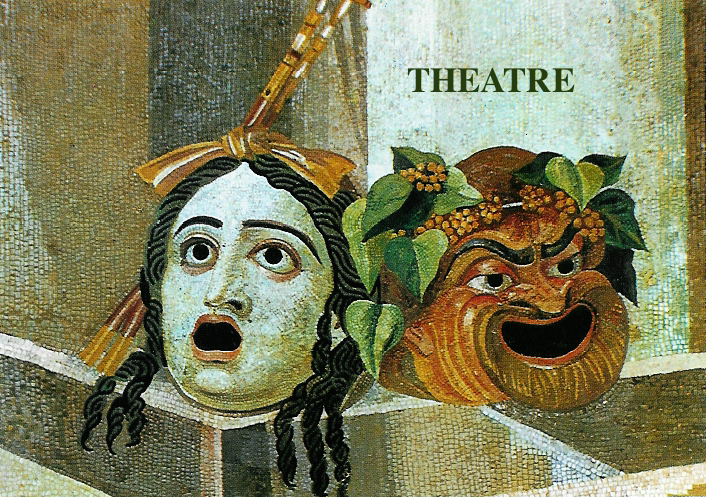
Photograph: Gargoyles as theatrical masks above a water basin. Mosaic, Roman artwork, 2nd century CE. The piece can be found at the Capitoline Museum in Rome, Palazzo dei Conservatori, first floor, hall of the Horti of Mæcenas. From the Baths of Decius on the Aventine Hill, Rome.
Living more and more trapped in cyberspace (statistics can attest that we spend daily more hours in the virtual than in the real world), we may at a certain point be inclined to demonise it, but the fact of the matter is that the virtual space does offer us an unparalleled range of opportunities. Through it, I have been bestowed the privilege of coming into contact with a large number of amazing personalities from various fields of culture and creativity, among whom I am happy to mention Dr. Jernail S. Anand, an Indian poet, philosopher, teacher, educator, to name just the main aspects of his proliferous career.
Dr. Aprilia Zank
Due to both my profession and my passion for literature and art, I had been familiar with creative people before the Internet, but it was the sort of closeness which one finds in the seclusion of libraries, museums, university halls and the like. With the new generations ‘born’ with notebooks, tablets or smartphones in their hands, the encounter with knowledge or creativity acquires new coordinates. The notion of reception needs to be reshaped and reconstructed. What sounds like self-evidence at first view needs though critical questioning. Do we really experience and process literary and artistic contents in a new way in the virtual space? Does it make a difference if I hold a paper book in my hands, or if I read it on a screen, or is its impact on me the same? Perhaps we need indeed to pay new consideration to Marshall McLuhan’s declaration that “the medium is the message.” Extensive research is necessary, and scientists of all domains are busy attempting to transmute their findings into relevant statistic data, but beyond all scholarly devices are the unique literature and art recipients with their particular premises for the reception and processing of literary writings and of works of art.
My encounter with Dr. Anand has taken place – so far and I hope it will change soon – in the virtual space only. I have had no opportunity to meet him in person, yet I have the feeling that we are good old friends. Furthermore, we both belong to a tremendous network of friends and friends’ friends who are in a permanent and immediate encounter and exchange of information, opinions and critical views. For there is no denial of the fact that accessibility of all types is practically borderless in cyberspace. A sheer number of readers can and do access Dr. Anand’s poems, essays and philosophical work in bits or as full books on the Internet. This unparalleled intercourse occurs within our beloved social networks in which communication is possible at any time, from every place and with everybody. But what sounds like a tremendous achievement in general and a huge chance for writers and artists in particular comes at a price. It is precisely the easiness of accessibility that renders the encounter with e-media contents accidental, fugitive, and often enough perfunctory. Under the ‘burden’ of the stupendous offer we are confronted with in cyberspace, we race from stimulus to stimulus in a feverish attempt to absorb as much information as possible. Under these circumstances, we run the risk of being superficial in our assimilation and, accordingly, far from optimal in our response.
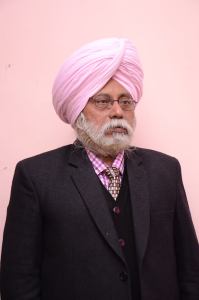
Dr. Jernail S. Anand
Dr. Jernail S. Anand
Now, Dr. Anand is a renowned personality with a remarkable retinue of followers and admirers who always search for his presence and newest publications in the virtual world. And he does indeed regale them with exquisite poetry, thought-provoking quotes, or deep-reaching philosophical musings. The readers’ response is there, but it has evolved into a new language, semiotic to a great extent. We use ‘like’, ‘love’, ‘angry’, ‘sad’ and more signs to save time, or in the best case, we type ‘excellent’, ‘profound’ ‘congratulations’, to attest due consideration. Can this be a satisfactory type of feedback? On looking at Dr. Anand’s literary items shared the day I am writing this article, I spot a poem titled “HOW POOR IS THIS LIFE”. A quick analysis reveals that a response is there: 23 readers have liked and/or loved the poem, two have provided comments of one and of four words respectively, but that is about all. I miss some, to my mind, almost compulsory remarks, e.g. a reference to the Eliotian echo of the lines:
I write so much yet the feeling … of half fulfilment stays.
or a few words of appreciation for the exquisite metaphors below:
I could not digest the winds I could not drink the seas
The poet further complains about the unsatisfactory living we are trapped in:
Life! How poor you are!
It is, of course, the spiritual poverty he is is weary of, a recurring theme in Dr. Anand’s writings and a major potential starting point for a debate among the readers of the poem. Decay of traditional values, lack of genuine communication with one’s own kind, failure in the attempt to connect with God – it is all there craving for introspection and deliberation. But here, too, things seem to be doomed to fail to meet expectations:
Things remained half loved Hence half lived.
Is there any chance left for mankind to find its way back to primeval joy? In the poem “JOYS PAINS”, Dr. Anand emphasises the inextricable duality of joy/pain by using stylistic devices such as capitalisation and the juxtaposition of words with no punctuation, thus almost creating a proper name with a single ‘signifié’. The last three lines convey one more cry-out-loud testimony of the shallowness of inter-human relationships in a world devoid of true communication:
Nobody listens to the shrieks Which issue from silent lips Coated with red smiles
A look at the feedback on these major issues present in the poem reveals a poor echo to such a challenging piece of writing: a few semiotic ‘likes’, a ‘sad’ sign, and a positive remark illustrated by a line of the poem. No truly deep consideration offered to major existential questions posited in other poems either. Weirdly enough, this is by no means lack of appreciation or interest, since Dr. Anand is well-known as one of the most widely acknowledged contemporary Indian poets and philosophers. It is rather a peculiar aspect of the nature of reception in this kaleidoscopic world which is the virtual space. Aside from the already mentioned fast-paced character of this medium, which urges us to move on and on to the next items of interest, further components come into play or better said interplay among its users. Visibility and transparency, which per se are positive features of the virtual space, may become inhibitory under the realisation that people ‘can read your mind’ when you express your ideas, opinions and the like on various issues. Direct comparison with other minds can occur, with an uncertain outcome. A reason for many to refrain from a too obvious display of their own facets of spirit or intellect.
Luckily, Dr. Anand’s prolific work has been extensively and skilfully dealt with by scholars who have assuredly taken more than a glance at his literary and philosophical writings. For there is no doubt that thorough reading and rigorous research is still being practised, even in our high-speed world and in the fugacious virtual reality.
Summing up, I think there is no point in trying to solve the quandary whether the virtual world with its social networks are a blessing or a curse. Living without it has become unthinkable, so why not make the best of it. The possibility to display your work and creativity in it, to enjoy borderless visibility and access, and to have the chance of getting feedback from the most unexpected corners of the virtual but also of the real world is priceless. And in this respect I am grateful to have had the opportunity to meet the tremendous personality of Dr. J. S. Anand in this scintillating world. This notwithstanding, I am of course looking forward to an early encounter with the man in person.
– Aprilia S. Zank
October 12th, 2017
Munich, Germany
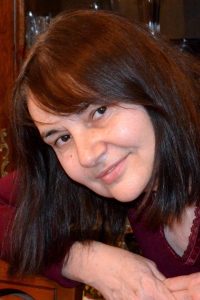
DR. APRILIA ZANK is a lecturer for Creative Writing and Translation in the Department of Languages and Communication at the Ludwig Maximilian University of Munich, Germany, where she received her PhD degree in Literature and Psycholinguistics for her thesis THE WORD IN THE WORD Literary Text Reception and Linguistic Relativity.She is also a poet, a translator and the editor of two anthologies: the English–German anthology poetry tREnD Eine englisch-deutsche Anthologie zeitgenössischer Lyrik, LIT Verlag, Berlin, 2010, and the anthology POETS IN PERSON at the Glassblower (Indigo Dream Publishing, April, 2014). She writes verse in English and German, and was awarded a distinction at the “Vera Piller” Poetry Contest in Zurich. Her poetry collection, TERMINUS ARCADIA, was 2nd Place Winner at the Twowolvz Press Poetry Chapbook Contest 2013. Aprilia Zank is also a passionate photographer: many of her images are prize-winners and several have been selected for poetry book covers.
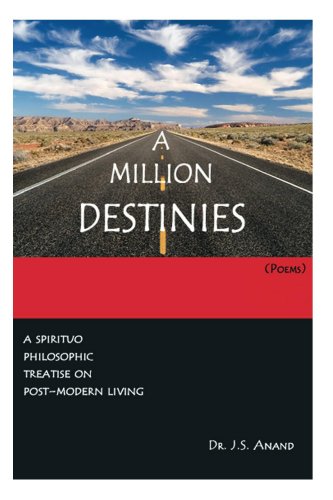
DR. JERNAIL S. ANANAD is the author of two dozen books in English poetry, fiction and non-fiction, Dr. J. S. Anand is an established name in the field of education, philosophy, and spirituality. Born on 15th Jan., 1955, he hails from village Longowal [Distt. Sangrur,Punjab, India]. He got his school education from the best schools in Ludhiana, the highly industrialized city of Punjab, famous for its hosiery and cycle parts industry. He was a student of famous Govt. College, Ludhiana, during his graduate studies, and he did his M.A. in English literature from Punjabi University, Patiala, securing 2nd position in the University. His doctoral thesis, submitted to Panjab University, Chandigarh, was on “A Comparative study of Mysticism in the poetry of Walt Whitman and Prof. Puran Singh”. Dr. Anand is an educationist, an able administrator, a talented writer, a novelist, a poet, and a philosopher, who is a multi-dimensional personality, particularly, in view of his interest in Saving the Earth. He planted around 20 thousand saplings in and around Bathinda. He has also delivered lecturers on Spirituality, Human Rights, and Moral Values. “We are inheritors of the wealth of this earth and this sky, and it belongs equally to us all” – Anand






 Jamie Dedes' THE POET BY DAY Webzine